7 Best Influencer Marketing Platforms for Brands in 2026

You can spend hours looking for influencers, find dozens who seem like a good fit, and still end up wondering why nobody is replying. Then comes the next problem: some influencer marketing platforms are simply too expensive for a small or growing brand, while others give you so many features that you end up paying for tools you barely use.
Even when you finally find creators and get a few responses, the work doesn’t stop. You still have to manage conversations, agree on what they will deliver, keep track of deadlines, and figure out whether the partnership actually worked. And choosing an influencer based only on follower count can leave you with a creator who looks impressive on paper but has little connection with the audience you actually want to reach.
That’s where the right influencer marketing platform can make a real difference. Instead of handling creator discovery, outreach, and partnerships entirely on your own, these platforms can help bring the process into one place.
But not every platform works the same way, and the most expensive option isn’t necessarily the best one for every brand.
In this guide, we’ve put together 7 best influencer marketing platforms for brands in 2026, covering different options for finding relevant creators, reaching out to them, and building influencer partnerships.
7 Best Influencer Marketing Platforms: Quick Comparison
| Platform | Best For | Influencer Discovery | Outreach | Partnership Type |
|---|---|---|---|---|
| BrandsForCreators | Barter collaborations | Yes | Yes | Barter / Product + Cash |
| GRIN | Managing influencer campaigns at scale | Yes | Yes | Paid |
| Upfluence | Finding influencers and managing campaigns | Yes | Yes | Paid / Affiliate |
| CreatorIQ | Enterprise influencer marketing | Yes | Yes | Paid |
| Aspire | Building long-term creator partnerships | Yes | Yes | Paid / UGC |
| Modash | Influencer discovery and audience research | Yes | Yes | Paid |
| Collabstr | Finding and hiring creators directly | Yes | Yes | Paid / UGC |
1. BrandsForCreators
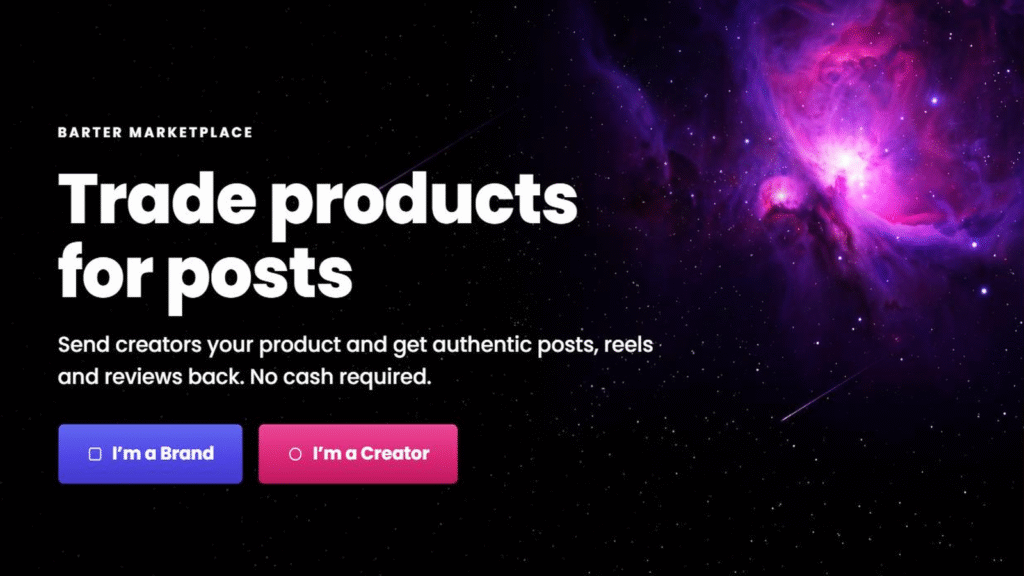
BrandsForCreators is a barter collaboration platform connecting brands with US influencers and creators. Brands can offer their products to creators in exchange for content, create collaboration opportunities, and choose which creators they want to work with after receiving applications. The platform also supports influencer outreach, giving brands a way to connect with relevant creators. Brands can also add a cash top-up alongside the product when needed.
For brands looking for an alternative to traditional paid influencer campaigns, BrandsForCreators works as an influencer marketing platform focused on barter collaborations. Brands can set details such as deliverables, deadlines, creator spots, social platforms, content formats, and usage rights, while creators can find relevant opportunities based on niche, location, follower count, and engagement. This makes it useful for brands looking for an influencer outreach platform or influencer partnership platform built around barter collaborations.
Explore complete details: BrandsForCreators
Pricing:
BrandsForCreators is free for brands to list their products and create collaboration opportunities. There are no upfront platform fees, agency fees, or commissions. Brands can optionally add a cash top-up to the product when they want to provide creators with additional compensation.
Pros:
- Free for brands to list products
- Focused on barter collaborations
- Connects brands with US influencers and creators
- Supports creator outreach and applications
- Brands can add a cash top-up
- Campaigns can include clear content requirements
Cons:
- Mainly suited to brands interested in barter collaborations
- Not designed primarily for traditional paid influencer campaigns
- Creator availability may vary by niche and location
2. GRIN
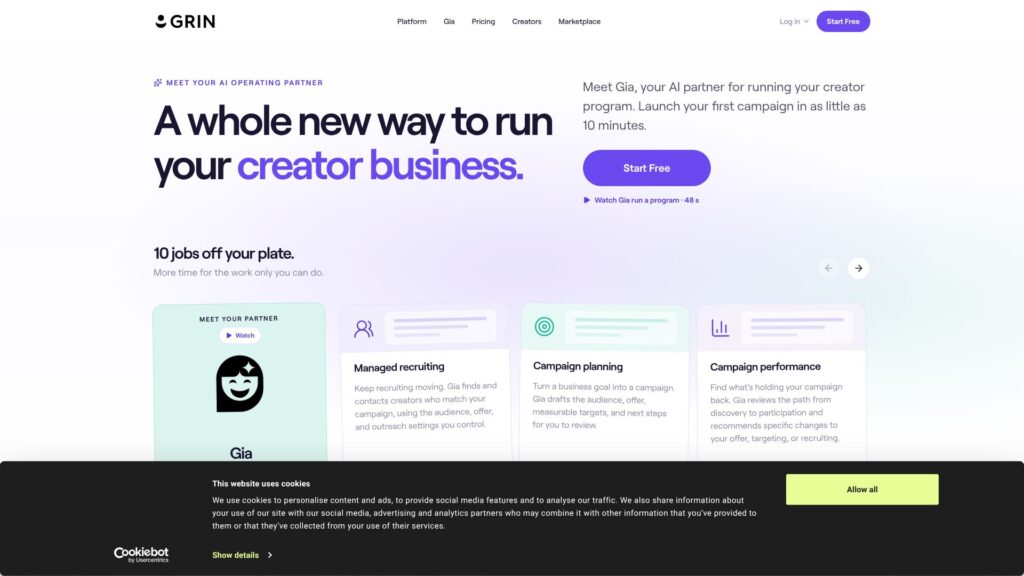
GRIN is an influencer marketing platform built for brands that want to manage creator campaigns from discovery through outreach and ongoing relationships. Its platform helps brands find creators, evaluate their audience and performance, send outreach, manage campaigns, track content, and handle creator payments from one place.
GRIN also uses its AI assistant, Gia, to help with creator discovery and outreach, while its creator network includes more than 700,000 verified creators. This makes it a strong option for brands that want to manage influencer partnerships at scale rather than handle creator research and campaign management manually.
Pricing:
GRIN has a free plan at $0/month. Its current paid plans start at $200/month for Starter, followed by Growth at $500/month and Scale at $1,000/month. New accounts also receive a 30-day free trial of Starter.
Pros:
- Helps brands find and evaluate influencers
- Supports influencer outreach and campaign management
- Offers tools for managing creator relationships
- Includes content tracking and campaign reporting
- Supports creator payments and product giftin
Cons:
Occasional bugs and technical issues
Slow loading and search performance at times
Creator discovery and curated lists do not always return relevant results
Limited customization in some reporting and analytics features
Some workflows take time to learn and navigate
Pricing can be high compared with the value provided
3. Upfluence
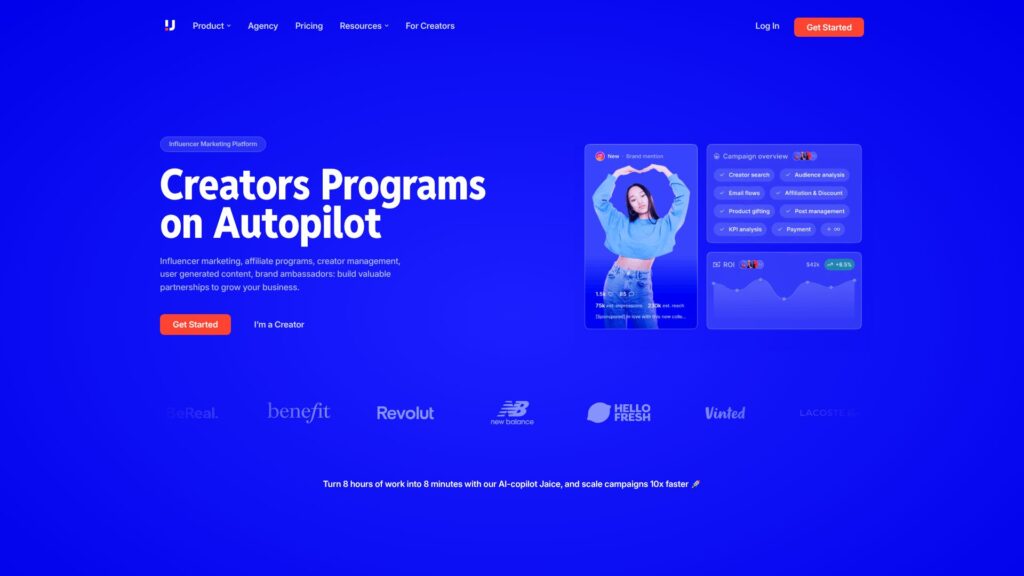
Upfluence is an influencer marketing platform that helps brands discover creators, evaluate their audiences, manage outreach, and run influencer campaigns. It includes creator search, audience and performance data, campaign management, creator relationship management, affiliate tracking, and e-commerce integrations such as Shopify, WooCommerce, Magento, BigCommerce, and Amazon.
The platform also supports mass outreach, automated email sequences on higher plans, creator applications, product shipments, campaign analytics, and creator payments. This makes Upfluence useful as an influencer outreach platform for brands managing creator and affiliate programs.
Pricing:
Upfluence uses custom modular pricing rather than fixed public plans. Its current pricing page offers separate modules for finding creators, scaling creator programs, and running programs on autopilot. G2 currently lists pricing starting at $478 per month, while Upfluence directs brands to request a custom quote.
Pros:
- Strong influencer search and filtering options
- Detailed creator and audience data
- Useful e-commerce integrations
- Helps manage influencer campaigns in one place
- Helpful onboarding and customer support
Cons:
- Creator search can sometimes lack accuracy or depth
- Campaign and list organization can feel clunky
- Limited automation in some outreach workflows
- Some campaign settings cannot be edited after setup
- The platform can take time to learn initially
4. CreatorIQ
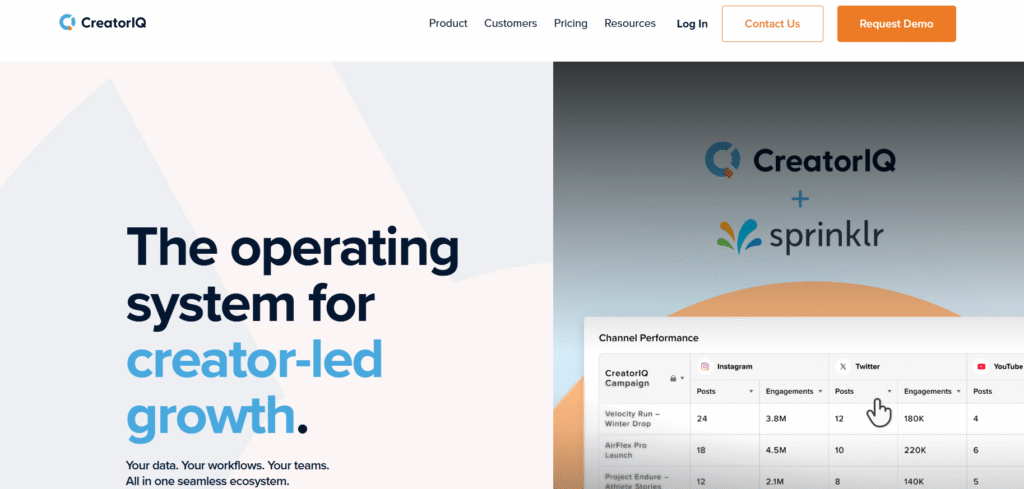
CreatorIQ is an influencer marketing platform designed for discovering creators, managing influencer campaigns, tracking performance, and analyzing creator data. It provides detailed audience and performance insights, campaign management tools, reporting, and creator relationship management.
The platform is particularly focused on managing influencer programs with detailed data and reporting. This makes it useful as an influencer outreach platform for researching and managing creators, as well as an influencer partnership platform for organizing ongoing campaigns.
Pricing:
CreatorIQ does not publicly list its pricing. Brands need to contact the company to get a custom quote based on their requirements.
Pros:
- Detailed creator and audience insights
- Strong analytics and reporting capabilities
- Helps organize influencer campaigns and creator relationships
- Regular platform updates and new features
- Customizable reporting options
- Strong customer support
Cons:
- Creator discovery can be difficult for some searches
- Large amounts of data can make some workflows harder to navigate
- Some creator and campaign information can take time to load
- Content does not always appear in the platform immediately
- Some messaging and payment workflows are not fully automated
5. Aspire
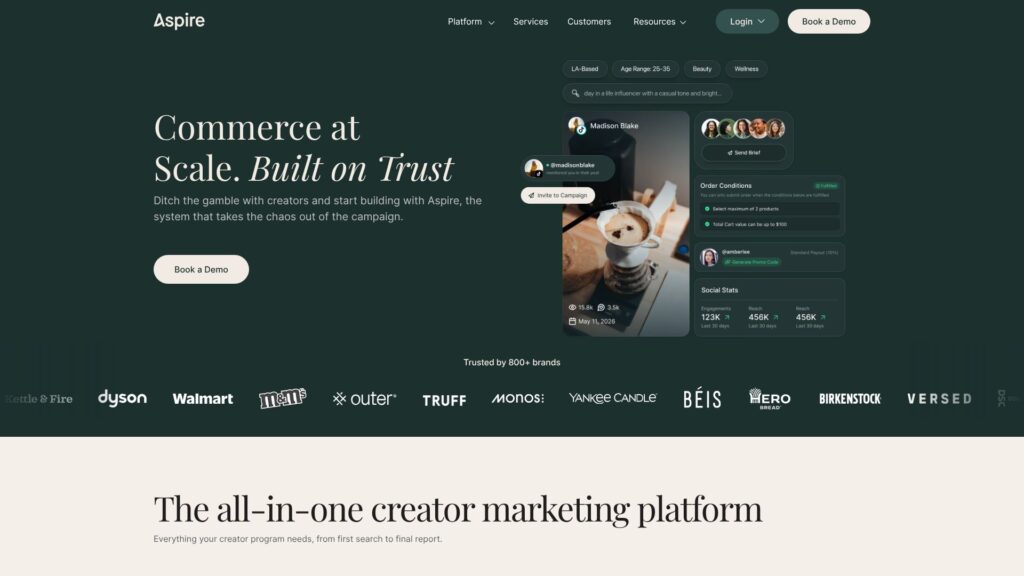
Aspire is an influencer marketing platform built around helping brands build ongoing relationships with creators rather than handling each collaboration as a separate campaign. Brands can use its creator marketplace to find creators, send collaboration opportunities, manage product gifting, and coordinate partnerships from one place.
The platform also brings together influencer campaigns, affiliate programs, content management, and creator payments. For brands looking for an influencer partnership platform that combines creator relationships with gifting and affiliate marketing, Aspire offers a broader approach than a basic influencer outreach platform.
Pricing:
Aspire does not publicly list a standard price for its full platform. Pricing depends on the brand’s requirements, so businesses need to contact Aspire for a quote.
Pros:
- Easy-to-use interface and campaign management
- Strong creator discovery and marketplace features
- Helps manage influencer relationships in one place
- Supports gifting, payments, and affiliate campaigns
- Provides campaign performance and reporting tools
Cons:
- Some workflows have a learning curve
- Certain features can require additional fees
- Checking creator quality can require extra effort
6. Modash
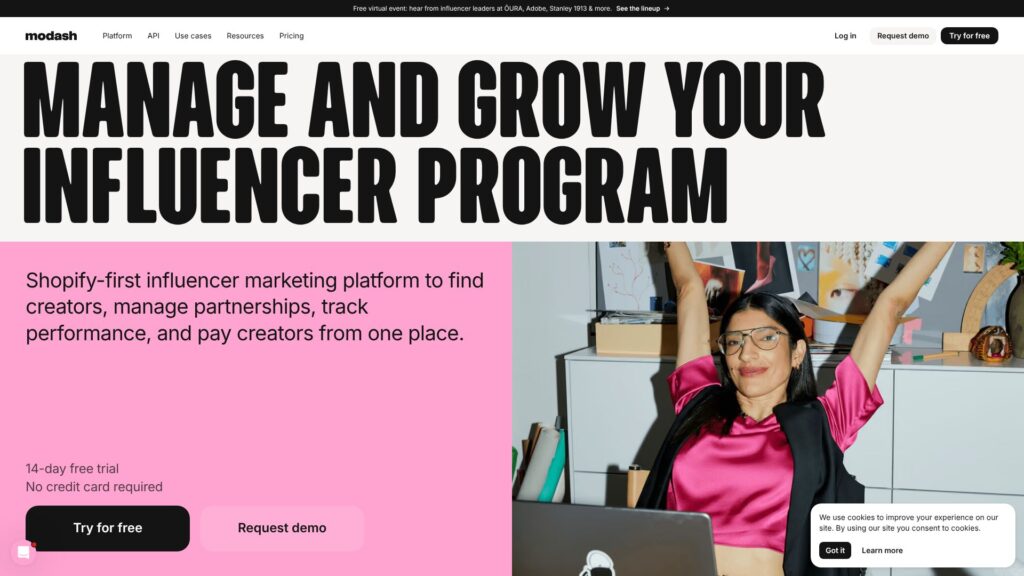
Modash is an influencer marketing platform centered around creator discovery and audience research. Brands can search millions of Instagram, TikTok, and YouTube profiles, filter creators by factors such as location, niche, audience demographics, and engagement, and evaluate creators before reaching out.
Beyond discovery, Modash includes tools for creator relationship management, outreach, campaign tracking, payments, and affiliate management.
Pricing:
Modash offers a 14-day free trial. Paid plans start at $299 per month when billed monthly, or $199 per month when billed annually. Higher plans are available for brands managing larger creator programs.
Pros:
Large creator database across Instagram, TikTok, and YouTube
Detailed audience and creator analysis
Strong search and filtering options
Shopify integration for e-commerce brands
Includes creator outreach and relationship management
Supports campaign tracking and creator payments
Cons:
Usage limits apply to creator profiles and email unlocks
Higher plans are needed for larger creator programs
Some payment features have additional fees after the included limit
The large amount of creator data can take time to work through
The platform is primarily focused on Instagram, TikTok, and YouTube
7. Collabstr
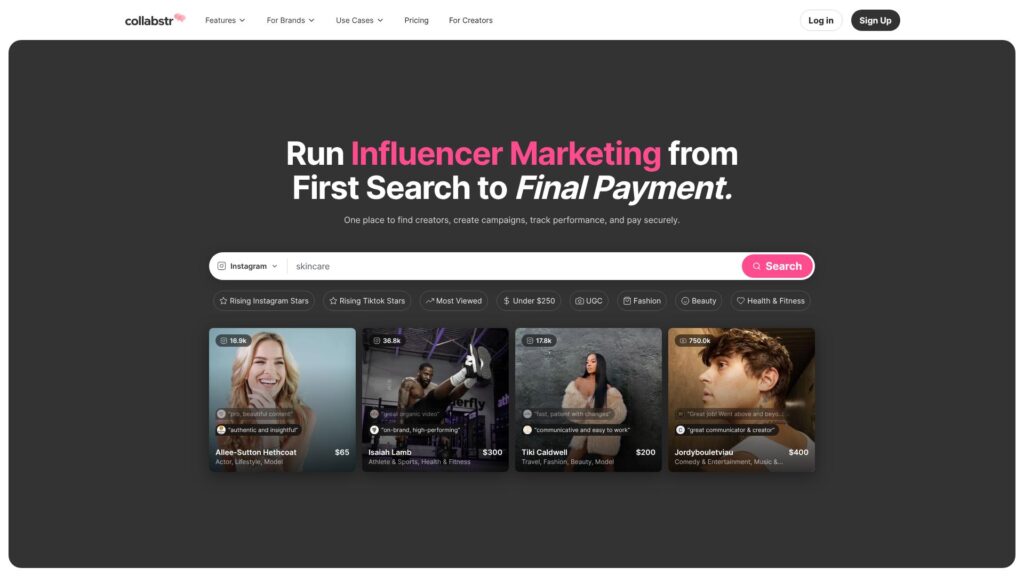
Collabstr is an influencer marketing platform built around a marketplace where brands can search for creators and hire them directly. Brands can browse creator profiles, compare their offerings, view audience information, and place orders through the platform. It covers creators across Instagram, TikTok, YouTube, and other social platforms.
Brands can also post campaigns and let creators apply with their proposed rates, making Collabstr useful as an influencer outreach platform for finding creators who are interested in specific campaigns. Its marketplace and direct-hiring model also give brands a straightforward way to build influencer partnerships without managing the entire process through traditional agency-style outreach.
Pricing:
Collabstr has a free plan that lets brands search and hire creators, with a 10% hiring fee on orders. Paid plans start at $249/month when billed annually, while Premium costs $333/month billed annually and reduces the hiring fee to 5%. Enterprise plans start at $1,000/month.
Pros:
- Free plan available for searching and hiring creators
- Large creator marketplace
- Direct hiring and secure payments
- Clear creator pricing before hiring
- Campaign and analytics tools available
- Easy-to-use platform
Cons:
- 10% hiring fee on the Free and Pro plans
- Advanced filters require a paid plan
- Audience and engagement reports are limited by plan
- Some users report a laggy interface
Frequently Asked Questions (FAQs)
1. Why is finding the right influencer so difficult?
A large follower count does not necessarily mean a creator is a good fit. You need to look at their niche, audience, location, engagement, content style, previous brand partnerships, and whether their audience actually matches your customers. A database can make the search faster, but the final decision still requires some research.
2. Is influencer marketing just about finding creators?
No. Finding creators is only one part of the process. Once a creator agrees to collaborate, brands still have to handle deliverables, product shipments, approvals, deadlines, payments, and campaign tracking. These operational tasks can become a major workload when working with many creators.
3. Does sending free products guarantee that creators will post?
No. A creator receiving a free product does not guarantee that they will publish content or generate sales. Some brands have reported sending products to hundreds of creators and receiving content from only a portion of them.
4. How do you know whether an influencer campaign actually worked?
Views and likes alone do not tell the whole story. Brands should also look at clicks, conversions, sales, affiliate revenue, cost per acquisition, and revenue generated by individual creators. Tracking these numbers makes it easier to see which partnerships are actually contributing to the business.
5. Are influencer marketing platforms worth using for smaller brands?
They can be, but smaller brands do not always need an expensive platform to get started. BrandsForCreators is one option for brands interested in barter collaborations, allowing them to offer products to US influencers and creators in exchange for content. This can reduce the upfront cost of influencer marketing while giving smaller brands a way to start building creator partnerships.
Conclusion
The right influencer marketing platform depends on what your brand actually needs. If you want a full platform for discovering creators, managing campaigns, and tracking results, options like GRIN, Upfluence, CreatorIQ, Aspire, and Modash offer different approaches. Collabstr is more focused on finding and hiring creators directly, while BrandsForCreators offers a different option for brands interested in barter collaborations.
You don’t necessarily need the most expensive platform to get started. The important thing is finding relevant creators, making the partnership worthwhile for both sides, and having a clear way to measure whether the collaboration is bringing real value to your brand.

Harman Singh is the founder of Foundigy and a digital marketing professional building his career in SEO, content, and the technology space. He is passionate about discovering emerging products, understanding how people find them online, and creating content that makes complex digital topics easier to understand. His work combines his experience in SEO with his interest in startups, technology, and the evolving digital landscape.