Business Directory Vs Paid Ads: Which One Truly Benefit Your Business in 2026
Every business wants attention, but the way you earn it matters. Paid ads promise instant clicks, yet they vanish the moment your budget runs dry. Business directories, on the other hand, quietly build organic visibility, credibility, and compounding ROI.
In 2026, global ad spend is projected to surpass $740 billion, with small businesses contributing a significant share. Yet, studies show that 65% of SMBs struggle to measure ROI from paid ads. Whether through Google paid ads, Facebook paid ads, or even LinkedIn paid ads. Meanwhile, organic channels like a business directory listing service consistently outperform in cost efficiency and conversion quality. The smarter question isn’t how fast can you be seen, but how sustainably can you grow.
Why Businesses Need Directories in 2026
Directories have evolved far beyond simple listings. Today, they function as digital trust hubs where customers validate businesses before making purchase decisions. Here’s why they matter:
- Credibility & Trust: Being listed in reputable directories signals legitimacy. According to BrightLocal’s 2025 survey, 76% of consumers trust businesses more when they appear in multiple directories.
- Organic Traffic: Directories rank high on Google. A listing on platforms like Foundigy, Google Business Profile, Yelp, or a free business listing directory can drive up to 40% of local search traffic without ongoing ad spend.
- Cost Efficiency: Many directories charge $50–$300 annually, compared to thousands spent monthly on ads. Even a business directory free listing can generate leads without upfront costs.
- Longevity: Listings remain active, generating leads long after setup. Unlike ads, they don’t disappear when the budget dries up.
- SEO Boost: Directory backlinks improve domain authority, helping your website rank higher in search results.
For small businesses, directories are not just a marketing channel, they’re a foundation for discoverability.
Why Small Businesses Should Avoid Paid Ads
Paid ads can be tempting because they offer instant visibility. But for small businesses, they often create more problems than solutions:
- High Burn Rate: A $5,000 ad budget in 2026 will buys only a few weeks of visibility across major platforms. Once the spend stops, so does the traffic.
- Low Conversion Quality: Research shows the average cost per paying customer via paid ads is $552.93, compared to $126.09 via organic SEO/directories.
- Competitive Bidding: Larger companies and paid ads agencies dominate ad auctions, making it harder for small businesses to compete.
- Short-Term Focus: Ads prioritize impressions, not relationships. They generate spikes, not sustainable growth.
- Ad Fatigue: Consumers are increasingly skeptical of ads. In fact, 42% of users now use ad blockers, reducing reach and effectiveness.
For SMBs, whether it’s Google paid ads, Facebook paid ads, or LinkedIn paid ads, the treadmill effect is the same – expensive, exhausting, and unsustainable.
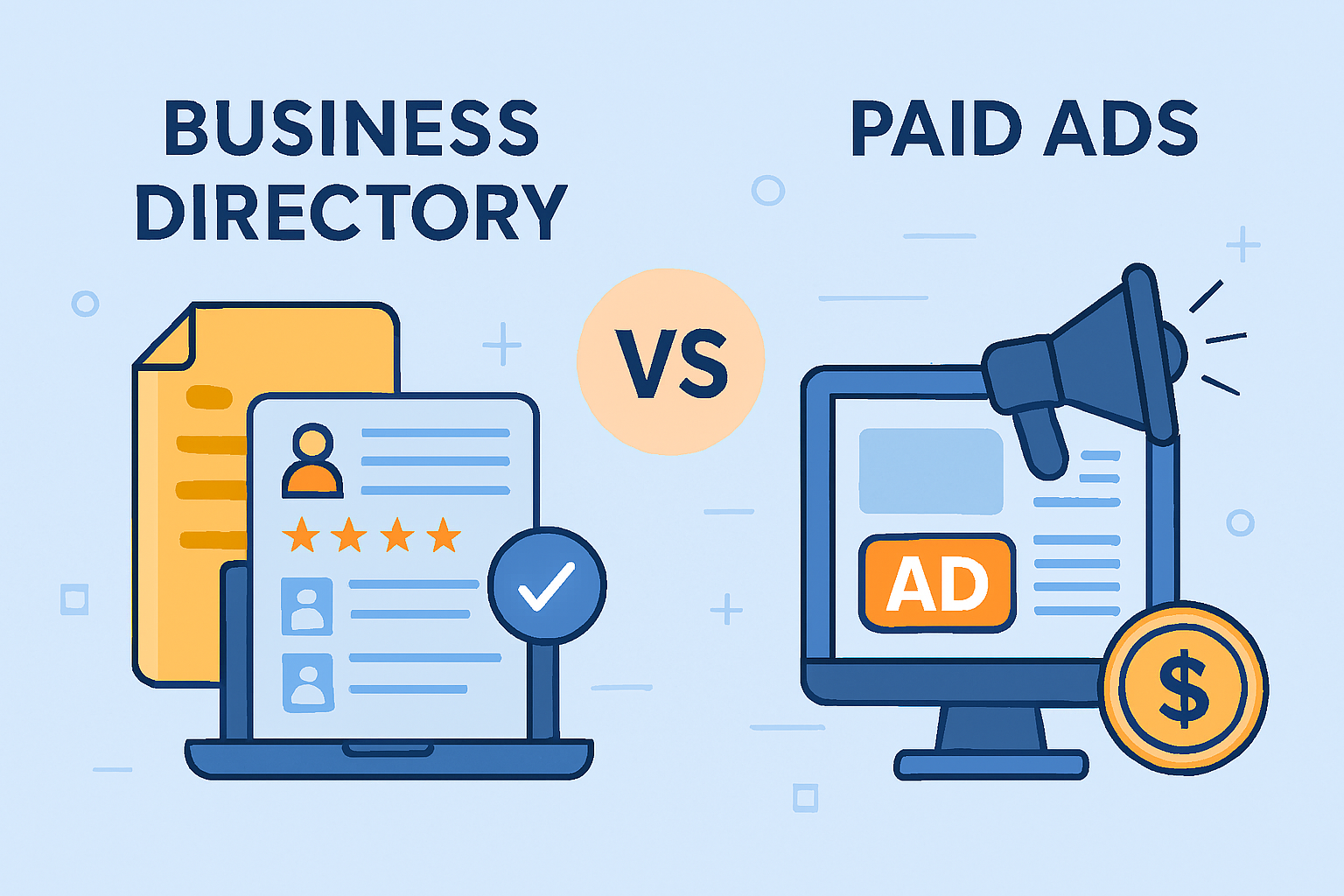
Comparison Table: Business Directory vs Paid Ads
| Aspect | Business Directory | Paid Ads |
|---|---|---|
| Cost Structure | $50–$300/year; many offer free business directory listing | $1–$5 per click |
| Traffic Type | Organic, high-intent | Mixed, often low-intent |
| Longevity | Permanent listing | Ends when budget ends |
| Trust Factor | Build credibility | Seen as promotional |
| Competition | Equal visibility | Dominated by paid ads agencies and big-budget players |
| ROI Potential | 19.9x ROAS (organic SEO) | 4.4x ROAS (ads) |
Real-World Global Examples
- Hospitality Industry (Global): Hotels listed on Booking.com or TripAdvisor consistently report that directory visibility drives 40–60% of their bookings, compared to paid ads that only generate short bursts of traffic.
- Tech Companies (North America & Europe): SaaS startups leveraging directories like G2 and Capterra often see 3x higher conversion rates from directory leads compared to Google Ads.
- Restaurants & Food Chains (Worldwide): Global platforms like Yelp, Zomato, and OpenTable show that directory listings account for over 50% of discovery traffic for small and mid-sized restaurants.
- Professional Services (Global): Lawyers, consultants, and accountants listed on directories such as Clutch or LinkedIn Business see long-term inbound leads. Paid ads often result in high costs per lead (sometimes exceeding $500), while directory listings generate consistent inquiries at a fraction of the cost.
- Foundigy (Global Business Directory Platform): Foundigy, a rising global directory platform, achieved a 17% click-through rate with just two listings in its first 20 days of launch. This early traction demonstrates how even a new directory can outperform paid ads in efficiency. Instead of burning thousands on campaigns, Foundigy’s organic visibility proved that directory-driven traffic is both convertible and sustainable.
- E-commerce Brands (Global): Niche directories like Product Hunt or marketplaces such as Etsy provide organic traction. Many brands report that a single directory launch generates months of sustained traffic, compared to ads that stop the moment the budget runs out.
The Psychology of Trust: Why Directories Win
Trust is the invisible currency of business. Consumers don’t just buy products; they buy confidence, credibility, and reassurance. Directories play a unique role in shaping that trust because they act as third‑party validators. Unlike ad tweets or paid campaigns, which are clearly promotional, directories feel neutral and authentic.
- Perception of Legitimacy: When a business appears in multiple directories, it signals stability.
- Social Proof at Scale: Directories integrate reviews, ratings, and testimonials, reinforcing credibility far more than an ad headline ever could.
- Reduced Skepticism: Ads trigger consumer defenses, people know they’re being sold to. Directories, however, are discovery platforms. Users arrive with intent, not suspicion.
- Consistency Across Platforms: Being listed in multiple directories creates a digital footprint. This consistency reassures customers that the business is real, reliable, and invested in visibility.
In essence, directories win because they align with human psychology: people trust what feels earned, not bought. Ads may grab attention, but directories anchor trust, and trust is what converts browsers into buyers.
The Future of Marketing: Organic First
The marketing landscape is shifting. For years, paid ads dominated strategies, but in 2026 and beyond, organic visibility is becoming the cornerstone of sustainable growth.
- Algorithmic Shifts: Google’s latest updates prioritize authentic signals like directory listings, reviews, and backlinks over paid placements.
- Consumer Behavior: Globally, 42% of internet users now use ad blockers, and Gen Z in particular is more likely to trust organic recommendations than paid promotions.
- Cost Efficiency: Organic channels like – directories, SEO, content marketing. Deliver compounding returns. Unlike ads, which stop the moment funding stops, organic strategies continue to generate leads months or years later.
Global Case Studies:
- SaaS companies listed on G2 and Capterra report 3x higher conversion rates from directory leads compared to Google Ads.
- Foundigy achieved a 17% CTR with just two listings in its first 20 days, proving that even new directories can outperform paid campaigns in efficiency.
- Hotels on TripAdvisor and Booking.com attribute 40–60% of bookings to directory visibility, showing how organic discovery drives real revenue worldwide.
The future is clear: businesses that invest in business directory free listing services and organic credibility will outlast those chasing paid impressions.
Conclusion: Foundations Matter More Than Fireworks
Directories don’t just list your business; they anchor it in the digital ecosystem. For small businesses especially, the ROI gap is undeniable: organic channels deliver nearly 5x better returns than paid ads.
Whether you’re comparing business directory vs paid ads, the verdict is clear: paid ads may give you a quick spike, but directories give you a foundation. And in business, foundations matter more than fireworks.