

10 Best Betalist Alternatives in 2026 to Market Your Startup
Getting your startup noticed is rarely as simple as putting it in front of more people. With hundreds of products launching on major discovery platforms every day, it’s easy for a new product to get buried in the crowd. You can get featured, receive a wave of visitors, and still end up asking the same question: where are the users?
The market isn’t what it was 10 or 20 years ago. In 2026, there are countless products competing for the same attention, and simply having a good product doesn’t guarantee that people will find it. BetaList can help early-stage startups reach potential users, but it won’t necessarily match every product, audience, or growth goal.
That’s why exploring a BetaList alternative can be worthwhile. Different startup launch platforms offer different ways to reach potential users, build visibility, and get your product discovered.
| Platform | Strength | Cost |
|---|---|---|
| Foundigy | SEO & long-term discovery | Free / Paid |
| Uneed | Product launches | Free / Paid |
| Peerlist Launchpad | Professional reach | Free |
| MicroLaunch | Launch exposure | Paid |
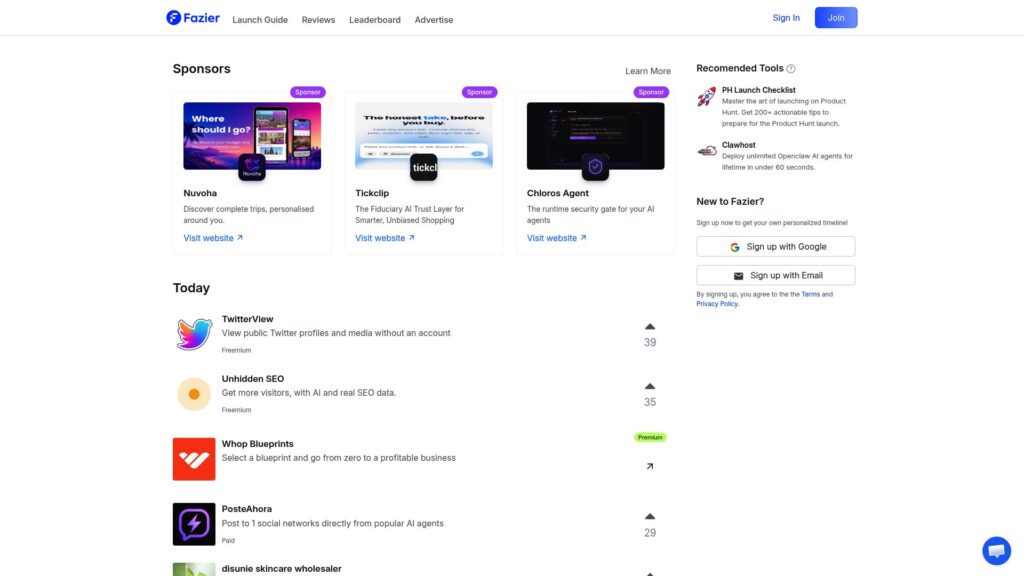
| Fazier | Maker audience | Free / Paid |
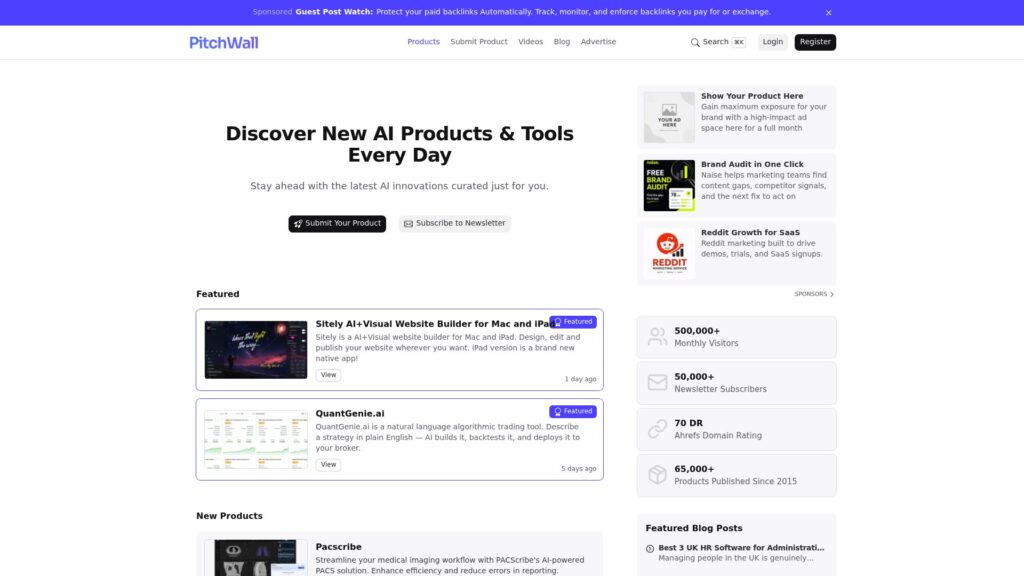
| BetaPage | Early adopters | Free / Paid |
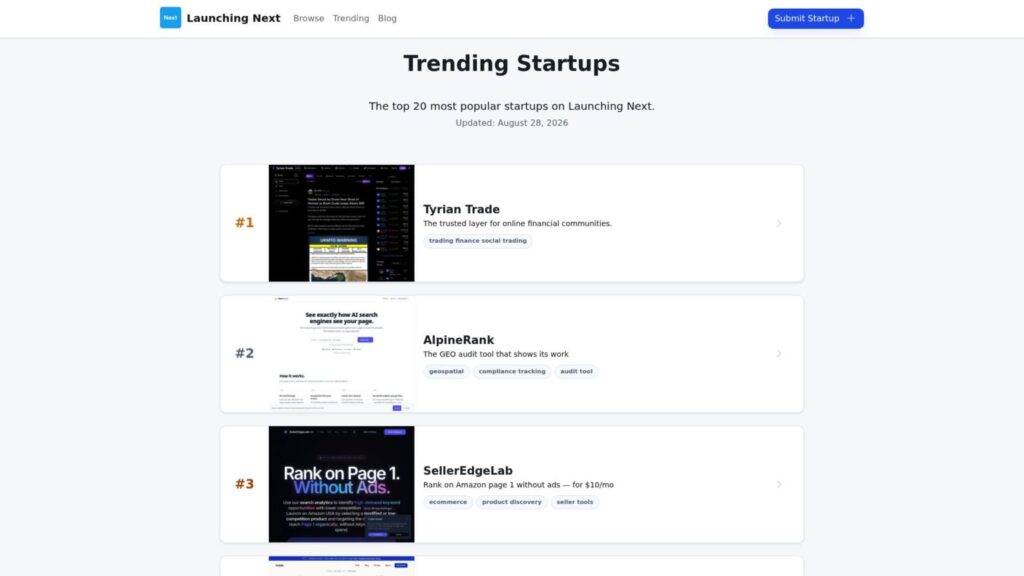
| Launching Next | Startup exposure | Free / Paid |
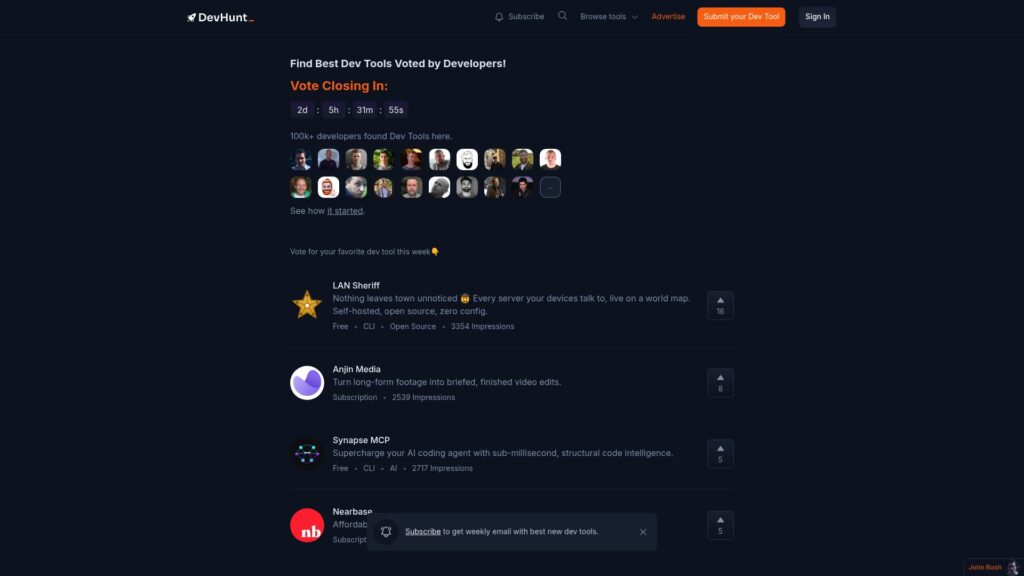
| DevHunt | Developer reach | Free / Paid |
| TinyLaunch | Indie products | Free / Paid |
| Aura++ | SEO exposure | Free / Paid |
Which BetaList Alternatives Are Worth Considering in 2026?
1. Foundigy
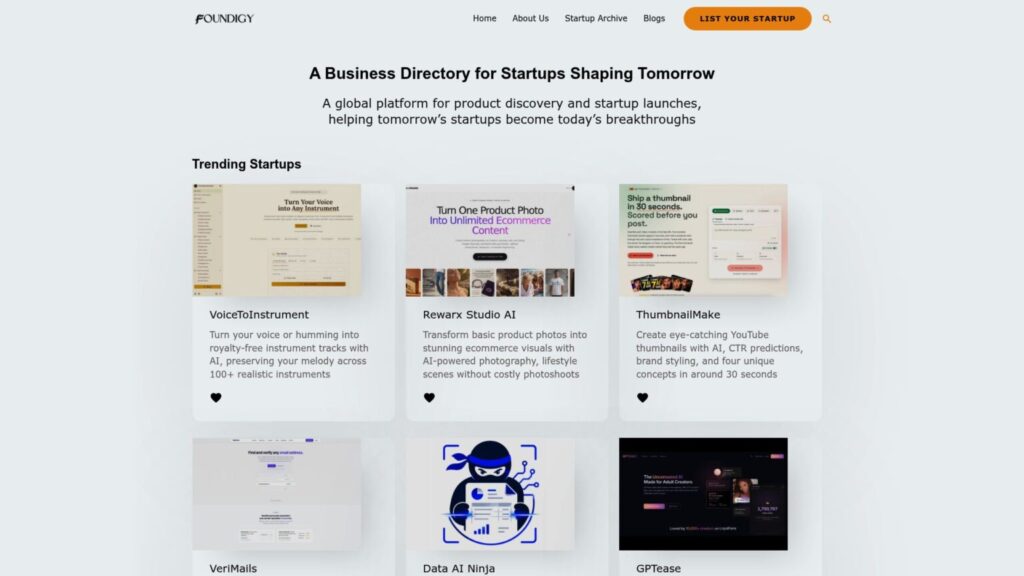
Foundigy is a good option If you’re looking beyond a one-time launch feature and want your product to remain discoverable, Foundigy takes a different approach. It is an SEO-optimized product discovery platform where each listing is created with relevant keywords to help products build long-term search visibility.
Instead of focusing only on launch-day attention, Foundigy is designed to help people discover products through search over time. This can make it a useful BetaList alternative for founders who want both product exposure and ongoing discovery.
What User Say:
FormMill shared its experience after launching on Foundigy and reported getting 50+ signups from the launch. Read their full launch experience
Foundigy has also been discussed on Indie Hackers around a question many founders face: what happens to product discovery once the initial launch is over? The discussion looks at the challenge of keeping a product discoverable beyond launch-day attention. Read the discussion on Indie Hackers
Want to list your product? Submit it to Foundigy
2. Uneed
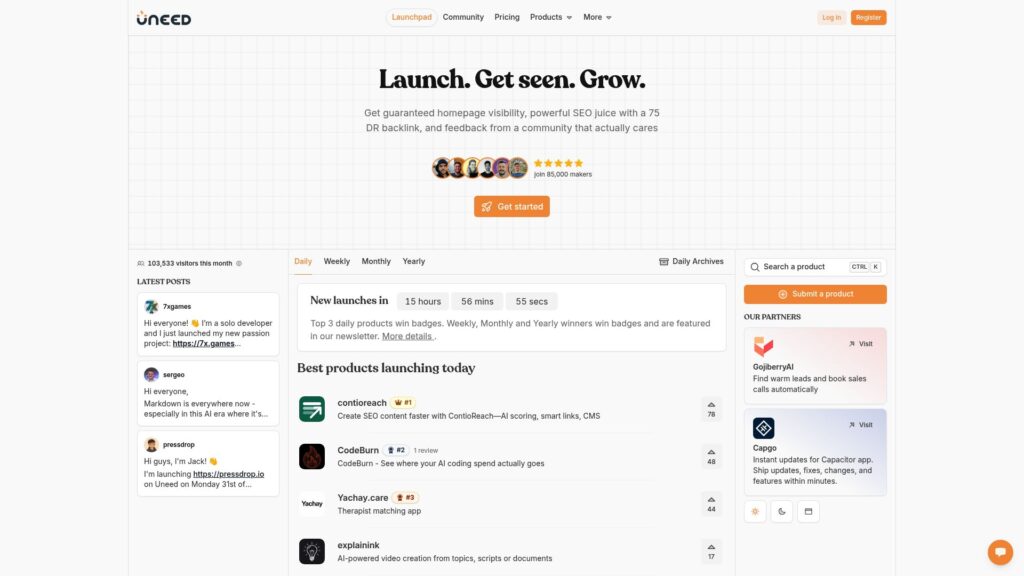
Uneed is one of the startup launch platforms founders can consider when looking for a BetaList alternative. It helps makers launch new products in front of people interested in discovering and trying new tools, with products appearing through its launch feed and rankings. The platform has also evolved toward a more social launchpad where makers can promote products, exchange feedback, and stay connected with the community.
What User Say:
One founder shared their experience of launching on Uneed, “saying their product reached 2nd place and that they received more clicks from Uneed than from Product Hunt.” Read the founder’s experience on Reddit
Uneed also has user reviews on Product Hunt. One reviewer described it as a “Great way to discover new tools,” while another said they were excited about the Uneed Community. Read the Uneed reviews on Product Hunt
If you’re considering other platforms, check out our guide to Uneed alternatives to compare other options for launching and discovering products.
3. Peerlist Launchpad
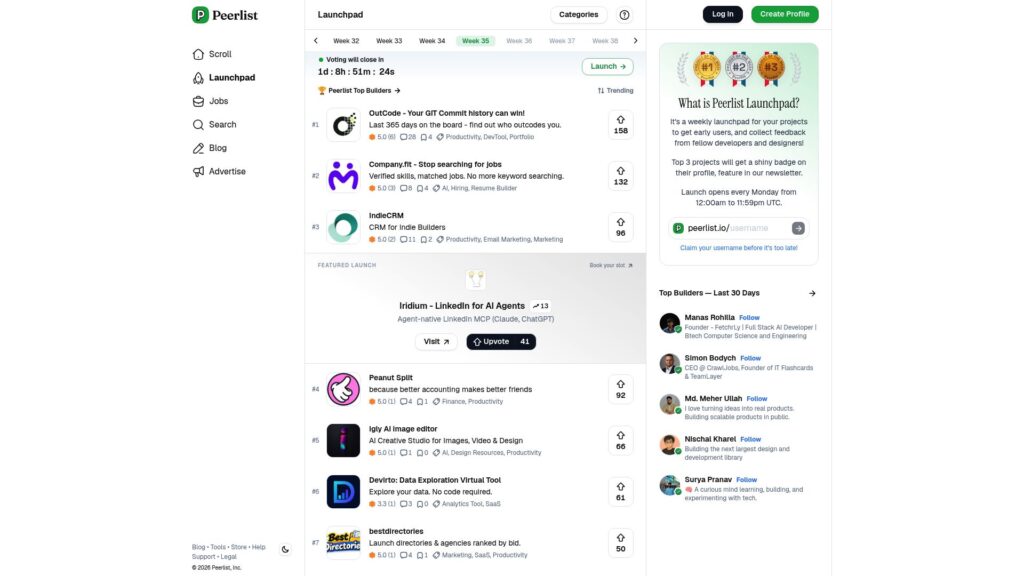
Peerlist Launchpad is one of the startup launch platforms founders can consider when looking for a BetaList alternative. It gives builders a dedicated place to launch their projects, get feedback from the Peerlist community, and connect with other professionals in tech. A verified Peerlist profile is required to launch, and projects go live through the Launchpad.
What User say:
One founder who launched their product on Peerlist described the experience as a way to get early feedback and visibility, while another founder reported reaching 12th place in their first launch. Read the founder’s experience on Reddit
A more recent June 2026 launch also shows founders using Peerlist specifically to connect with other builders and get their products in front of the community. See the LaunchVideo experience on Reddit
4. MicroLaunch
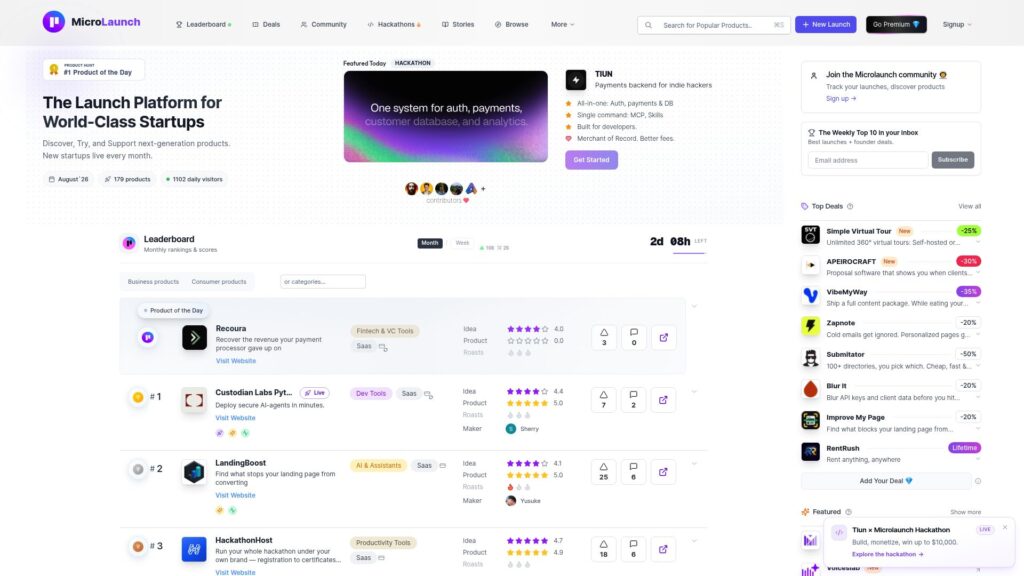
MicroLaunch is one of the startup launch platforms founders can consider as a BetaList alternative when they want more than a short launch-day spike. It focuses on product launches, community feedback, and continued exposure, with launches remaining visible beyond a single day.
What User Say:
One founder who compared MicroLaunch with Product Hunt and Uneed reported that MicroLaunch provided a longer launch experience and a do-follow backlink, while another founder described it as a useful place for showcasing products and getting feedback. Read the founder’s comparison on Reddit
Recent Product Hunt reviews also highlight MicroLaunch for helping early-stage founders get feedback, visibility, and first customers, with users particularly mentioning its supportive community. Read the MicroLaunch reviews on Product Hunt
5. Fazier
Fazier is one of the startup launch platforms founders can consider when looking for a BetaList alternative. It lets startups, SaaS products, AI tools, and side projects launch on the platform, with products appearing in daily launches and leaderboards. Its free option is available, while paid plans offer faster publication and additional promotion.
What User Say:
Public feedback around Fazier is still relatively limited, but founders have shared experiences of using it for launch exposure and feedback. One founder reported reaching #2 Product of the Day after initially seeing slower movement, while another discussion raised questions about the results a launch platform can actually deliver beyond visibility. Read the founder discussion about launching on Fazier.
6. PitchWall (Formerly Betapage)
BetaPage is a platform for discovering and launching early-stage products, making it a relevant BetaList alternative for founders looking to reach early adopters and beta testers. It supports products at different stages, from development and private beta to publicly launched products.
What User Say:
One founder who used BetaPage said it provided decent initial traction from early adopters and that the platform was useful for getting initial feedback. Read the BetaPage reviews on Slant
7. Launching Next
Launching Next is a startup launch platform that showcases new startups, side projects, and tech products to founders and early adopters. It can be a useful BetaList alternative for startups looking for additional exposure, with approved submissions receiving a permanent profile, inclusion in its email newsletter, and promotion through its social channels.
What User Say:
Launching Next features thousands of startups and continues to publish new products in 2026. One founder featured on the platform reported a 6% conversion rate and said the traffic from Launching Next was higher quality than their Product Hunt launch. Read the founder’s experience on Launching Next.
Looking for more Launching Next alternatives? Check out our guide to the 6 Best Launching Next Alternatives in 2026 for Startups.
8. DevHunt
DevHunt is a developer-focused startup launch platform built specifically for showcasing developer tools, APIs, and open-source products. It can be a strong BetaList alternative if your startup is targeting developers, because the audience is more focused than the general product-launch platforms. DevHunt also uses GitHub authentication for voting, helping keep its community centered around real developers.
What User Say:
One founder who launched their company tool, Livecycle, on DevHunt said they appreciated the minimal competition and limited number of weekly slots, which gave their product a more focused launch experience. Read the founder’s review on Product Hunt.
Another user described DevHunt as a place where they could find several useful developer tools, while other reviewers highlighted its developer-focused audience and genuine feedback from GitHub-verified users. Read more DevHunt user reviews.
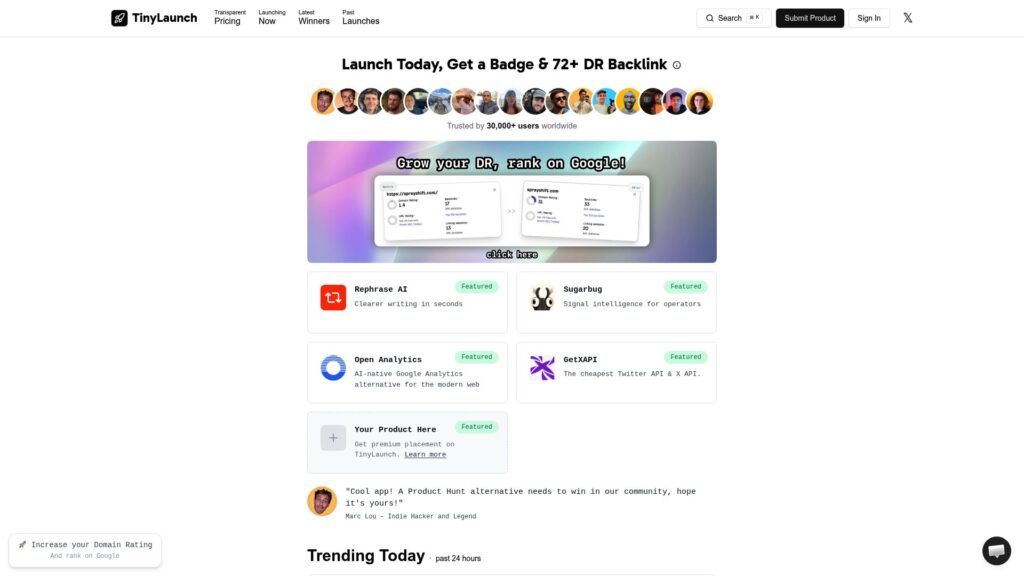
9. TinyLaunch
TinyLaunch is a startup launch platform that helps founders launch products, compete for daily rankings, and gain visibility beyond a single launch day. It can be a useful BetaList alternative for founders looking for exposure, traffic, and a backlink, with free launches available alongside paid options.
What User Say:
One founder who launched on TinyLaunch reported getting around 35 visits from the platform while testing several Product Hunt alternatives. Another founder who reached #1 Product of the Week on TinyLaunch said their product had reached 1,600 users, although that growth was described as organic and not attributed solely to TinyLaunch.
TinyLaunch also features customer experiences on its website, including founders reporting continued traffic after launch and another founder saying the platform generated 300 page views and 13 users within a week. Read more TinyLaunch user experiences.
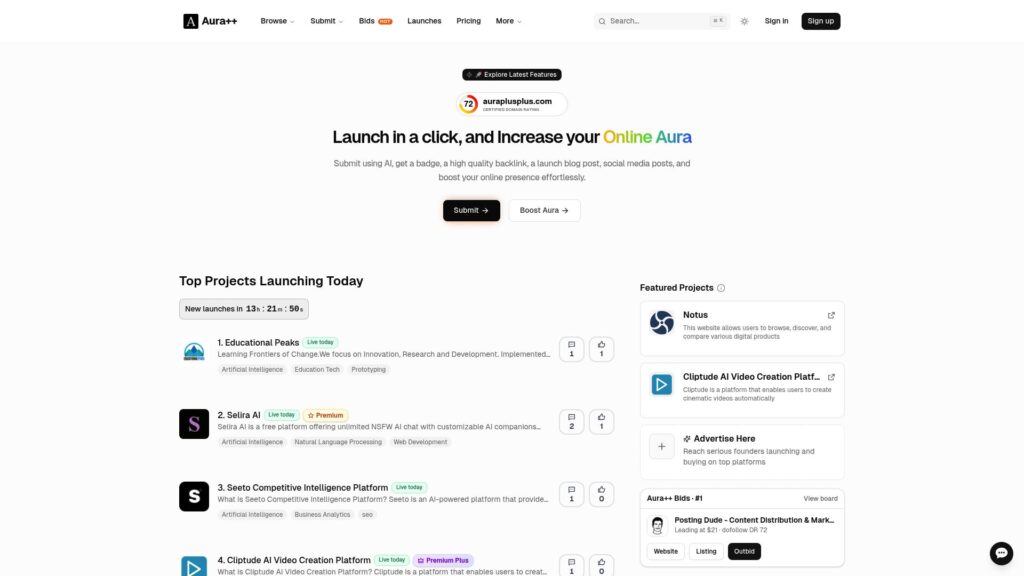
10. Aura++
Aura++ is one of the startup launch platforms founders can consider when looking for a BetaList alternative. It combines product launches with SEO-focused features such as permanent project pages, launch stories, badges, and backlinks. The platform also allows founders to relaunch products, giving them opportunities for continued visibility instead of relying on a single launch day.
What User Say:
Founders using Aura++ have highlighted its longer-term approach to product promotion. One founder said they had launched twice on the platform and valued the “long-term promotion” and automatic relaunches. Another founder described it as more than a submission form, pointing to its launch partners and broader approach to product visibility. See what founders say about Aura++.
Still looking for more ways to get your startup discovered? Explore our guide to the best product discovery platforms for startups in 2026 to find more platforms for building visibility and reaching potential users.
Frequently Asked Questions (FAQs)
1. Is BetaList still worth using in 2026?
BetaList can still be useful for reaching early adopters, but its value depends heavily on your product and audience. Recent founders have questioned whether the platform’s audience actually matches their target customers and whether the resulting traffic converts into users.
2. Can BetaList actually bring users, or just traffic?
It can bring signups and early users, but there is no guarantee. Recent discussions show founders becoming more skeptical of launch platforms that generate visitors without meaningful conversions. This is why it’s worth comparing BetaList with platforms that take different approaches to product discovery, including Foundigy.
3. What if BetaList doesn’t reach my target audience?
That’s a good reason to consider a BetaList alternative. Instead of relying only on a general early-adopter audience, you can choose a platform based on where your potential customers are. For founders looking for search-driven discovery, Foundigy focuses on SEO-optimized product listings designed to remain discoverable beyond the initial launch.
4. Which BetaList alternative is best for long-term visibility?
It depends on your goal. If you want a developer-focused audience, DevHunt may make more sense; if you want a maker-focused launch, Uneed or Fazier may be worth considering. For SEO and long-term product discovery, Foundigy is specifically built around that approach, with optimized listings designed to continue attracting search visibility after the initial launch.
5. Are BetaList alternatives better for long-term product discovery?
Some are. Different startup launch platforms have different models: some prioritize launch-day rankings, while others focus on communities, permanent listings, or search visibility. Foundigy takes the latter approach by combining product discovery with SEO-focused listings, so a product isn’t dependent entirely on launch-day traffic.
Conclusion:
BetaList can help with early exposure, but it isn’t the only option. The right BetaList alternative depends on what you need: launch traction, a targeted audience, or long-term product discovery.
For founders who want their products to remain discoverable through search after launch day, Foundigy is one option worth considering alongside the other platforms above.
Harman Singh is the founder of Foundigy and a digital marketing professional building his career in SEO, content, and the technology space. He is passionate about discovering emerging products, understanding how people find them online, and creating content that makes complex digital topics easier to understand. His work combines his experience in SEO with his interest in startups, technology, and the evolving digital landscape.
