
5 Best E-commerce Store Directories in 2026
My Shopify store has 0 sales after 2 months. What am I doing wrong?
For many new ecommerce founders, the problem isn’t getting the store online. It’s getting people to actually find it.
New stores are competing for attention with established marketplaces like Amazon, Flipkart, and others that already have millions of shoppers browsing products every day. Even if your products are good and your website is ready, that doesn’t mean customers will automatically discover you.
At the same time, shoppers are always looking for new brands, products, and stores. The challenge for founders is finding the right places to put their store in front of people who are already interested in discovering online businesses.
That’s where ecommerce store directories can be useful. They give store owners another channel for getting discovered beyond their own website, search engines, social media, and paid advertising.
In this guide, we’ve rounded up 5 ecommerce store directories worth exploring in 2026, covering what each platform offers, its pros and cons, and whether you can list your store for free or need to pay.
What Are E-commerce Store Directories and Their Benefits?
E-commerce store directories are online platforms that bring different ecommerce stores together in one place, making it easier for people to discover stores they may not find through traditional marketplaces or search engines.
Instead of searching for one specific brand, visitors can browse different stores based on categories, niches, locations, products, ecommerce platforms, or other filters. A directory may show basic information about each store and provide a link to its website, allowing visitors to explore the store and shop directly.
Benefits of Listing Your Store in E-commerce Directories
- Increase store visibility: Put your ecommerce store in front of people who are browsing and discovering new online businesses.
- Generate referral traffic: Visitors can click your listing and land directly on your website.
- Build backlinks: Many directories link back to the listed store, giving you another backlink pointing to your website.
- Support SEO: Relevant backlinks and additional online mentions can contribute to your website’s overall SEO efforts.
- Reach new customers: If a directory attracts shoppers who are interested in your niche, your listing can put your store in front of potential customers.
- Potentially increase sales: More relevant visitors and greater visibility can create additional opportunities to convert visitors into customers.
- Build brand awareness: Being listed alongside other ecommerce stores can help more people become familiar with your brand.
5 Best E-commerce Directories: Quick Comparison
| E-commerce Store Directory | Why Consider It | Free/Paid |
|---|---|---|
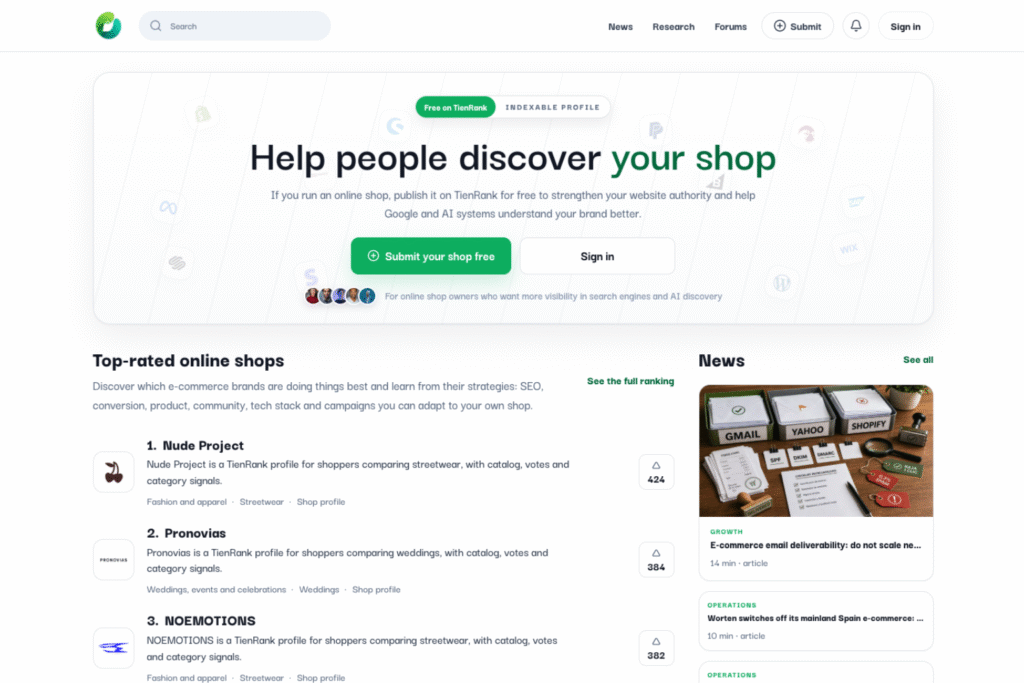
| TienRank | List your business, appear in store rankings, and participate in ecommerce-focused forums and discussions | Free |
| ShoppingOnline.global | Get listed in a large shopping directory with category and country-based discovery across 11,300+ online shops | Free |
| Wikistoria | Get your store discovered through a searchable catalog organized across 88 regions and 103 categories | Not stated |
| BGFashion | Reach fashion-focused shoppers and businesses through a directory built for sustainable and slow-fashion companies | €10 one-time |
| eStoreAlley | Promote your ecommerce brand to both shoppers and stockists through its B2C and B2B community | Free + Paid |
1. TienRank
Pros:
- Free business listing
- Store rankings and discovery
- Ecommerce-focused forums and community
Cons:
- Relatively new platform compared with established ecommerce directories
2. ShoppingOnline.global
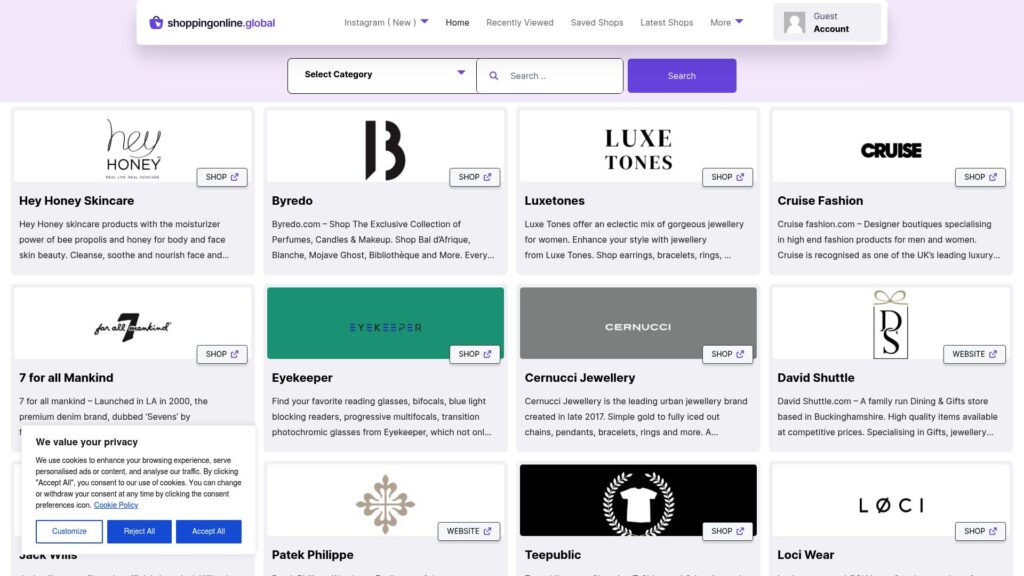
ShoppingOnline.global is one of the e-commerce store directories where businesses can list their online shops for free. Stores can be discovered through different categories and countries, giving businesses another way to reach potential shoppers.
Pros:
Free store listing
Category-based discovery
Country-based discovery
Large online store directory
Cons:
- Broad directory with many different stores
- Traffic and sales are not guaranteed
3. Wikistoria
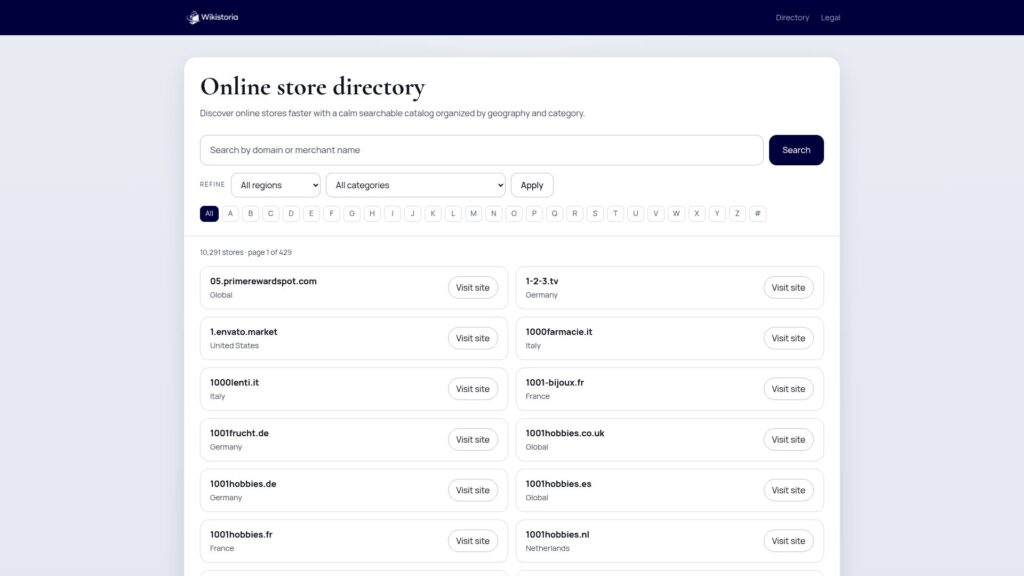
Wikistoria is one of the e-commerce store directories where online stores can be discovered through categories and regions. Its searchable catalog gives ecommerce businesses another place to showcase their stores and reach potential customers.
Pros:
Searchable store catalog
Category-based discovery
Region-based discovery
Cons:
Pricing is not clearly stated
Broad directory with many listed store
4. BGFasion
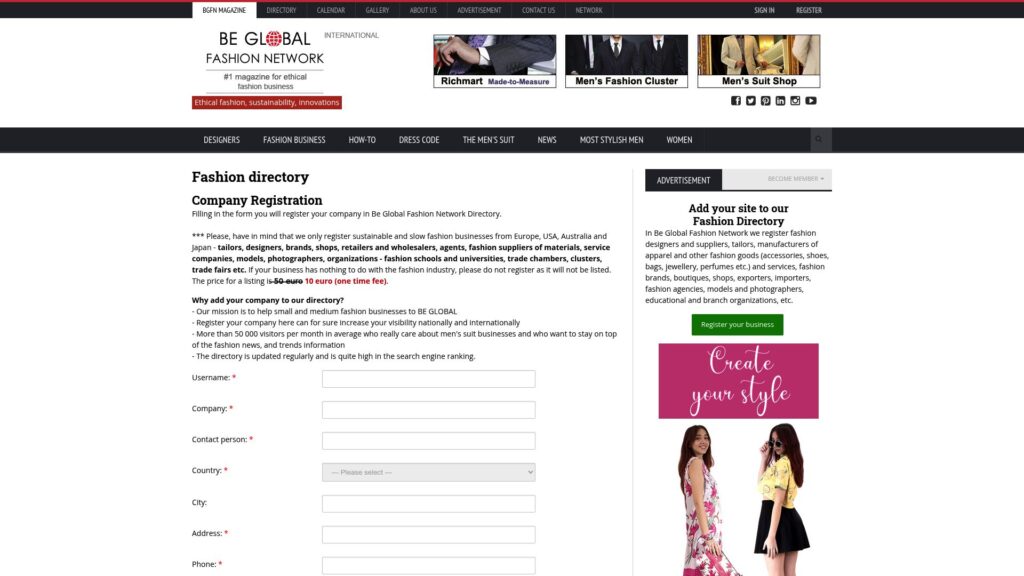
BGFashion is one of the e-commerce store directories focused on fashion, sustainable fashion, and slow-fashion businesses. It gives fashion brands another channel to showcase their stores and reach a relevant audience.
Pros:
- Fashion-focused directory
- Suitable for sustainable brands
- One-time listing fee
- Niche audience
Cons:
- Mainly focused on fashion businesses
- Paid listing
5. eStoreAlley
eStoreAlley is one of the e-commerce store directories where online stores and brands can promote their businesses to shoppers and stockists. It offers both free and paid listing options.
Pros:
- Free listing option
- B2C and B2B exposure
- Suitable for ecommerce brands
- Paid visibility options
Cons:
- Paid plans are available for additional exposure
- More focused on ecommerce businesses
Frequently Asked Questions (FAQs)
1. I launched my Shopify store but barely get any visitors. What should I do?
Start by working on your store’s SEO, product and collection pages, internal linking, and external visibility. One Shopify case shared on Reddit reported going from almost zero traffic to around 600 organic visitors in 60 days after improving site authority through directory submissions and creating collection pages and buying guides. You can also submit your store to ecommerce store directories such as TienRank, ShoppingOnline.global, and Wikistoria to create additional discovery opportunities.
2. Why is my ecommerce store not showing up on Google?
First, check whether your pages are actually indexed in Google Search Console. New stores can take time to gain visibility, especially when the domain has little authority. A Shopify SEO discussion on Reddit also highlighted collection pages, product optimization, internal linking, and backlinks as areas worth checking when pages are not getting visibility.
3. How can I get more people to discover my online store?
Use multiple discovery channels instead of relying only on Google or paid ads. Optimize your product and collection pages, publish useful content, build relevant backlinks, and submit your store to online store directories. Platforms such as BGFashion can also be useful for niche brands, while eStoreAlley offers exposure to both shoppers and stockists.
4. Are ecommerce directories actually worth submitting my store to?
They can be worth trying, particularly for a new store looking for additional visibility and backlinks. They should not be treated as a guaranteed source of sales, but free options such as TienRank and ShoppingOnline.global let you test the channel without a listing cost. Paid options such as BGFashion can make sense when the directory closely matches your niche.
Conclusion
Getting visibility for a new ecommerce store can take time, especially when you are competing with established brands and marketplaces. Ecommerce store directories can give your business another way to get discovered, build backlinks, and reach potential customers.
The platforms covered in this guide, including TienRank, ShoppingOnline.global, Wikistoria, BGFashion, and eStoreAlley, offer different options for getting your store listed. Choose the directories that match your niche, budget, and visibility goals, and use them alongside SEO, content, and other marketing channels.

Harman Singh is the founder of Foundigy and a digital marketing professional building his career in SEO, content, and the technology space. He is passionate about discovering emerging products, understanding how people find them online, and creating content that makes complex digital topics easier to understand. His work combines his experience in SEO with his interest in startups, technology, and the evolving digital landscape.