
6 Best AI Tools Directory to Promote Your AI Product in 2026
You’ve built your AI product. Great. Now try getting people to find it.
That sounds simple until you actually start looking for an AI tools directory where you can submit your product. You search for one, and suddenly there are hundreds of them. Then the problems start.
One directory wants $20 just for a listing. Another wants $50 or more. You find one that looks promising, only to discover that the submission form is broken. Another makes you sign up, verify your email, create a profile, and jump through a few more hoops before you can even submit your AI product.
And some directories leave you wondering whether anyone is actually using them at all. They have thousands of tools listed, but the whole website feels more like an SEO project built to collect pages than a place where people come to discover useful AI tools.
So, where should you actually submit your AI product?
If you’re searching for the best AI tools directory, this list should help. We went through the options and picked 10 AI tools directories worth looking at in 2026.
6 AI Tools Directory Platforms
| Platform | Why Consider It |
|---|---|
| Foundigy | Worth considering if you want your AI product to have a proper, searchable listing rather than just a temporary launch post. |
| AI Tool Hunt | A straightforward option for getting your AI product in front of people who are actively browsing for new AI tools. |
| AI Agent Store | Makes sense if you’ve built an AI agent and want to get it in front of users specifically looking for agent-based tools. |
| Easy With AI | Useful for reaching people who browse AI tools by category and use case rather than searching for one specific product. |
| AITopTools | Consider it if you want another place where your product can be discovered alongside a broad range of AI tools. |
| Tool Finder | Worth a look if you want to put your product in front of people comparing different software and AI tools before choosing one. |
1. Foundigy
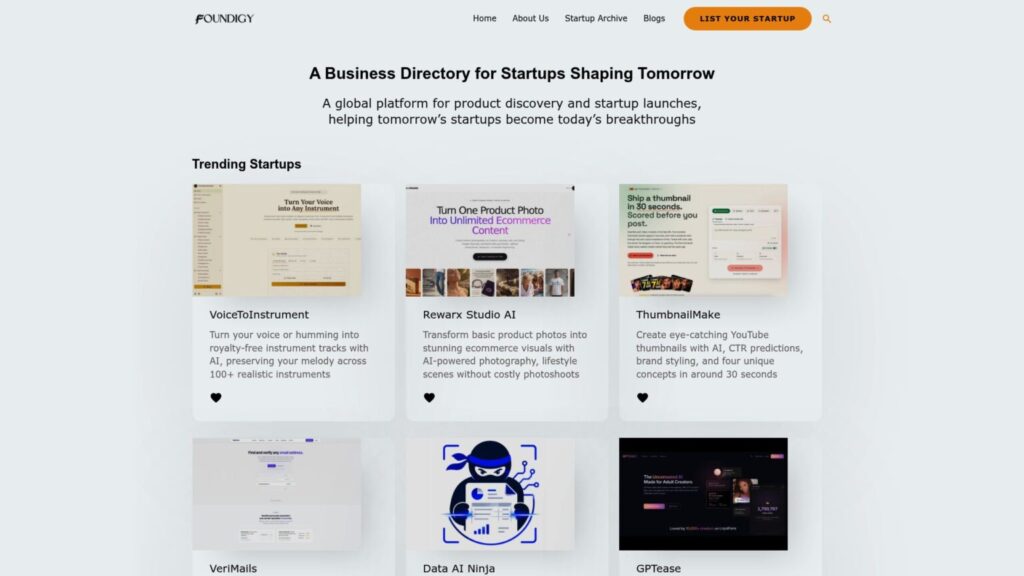
Foundigy is an AI tools directory and product discovery platform where founders can submit AI products, SaaS, software, and other online tools. Instead of treating a submission as just a launch announcement, Foundigy gives each product its own listing page with details about what the product does, its features, use cases, and relevant links.
What makes the listing different is that it is SEO-optimized, with relevant keywords integrated naturally throughout the page. The goal is to make the listing useful not only for someone browsing Foundigy, but also for people searching Google for the type of product you offer.
If you’re looking to submit an AI product and want a dedicated page that can remain discoverable after launch day, Foundigy is worth considering.
Pros:
- SEO-optimized listings: Relevant keywords are integrated into the listing to help match your product with the searches it is relevant to.
- Dedicated product page: Your AI product gets its own listing rather than disappearing into a long submission feed.
- Built for long-term discovery: The listing is designed to remain useful after your initial submission instead of being limited to a one-day launch.
- Useful for early-stage products: You don’t need to wait until your product has a huge user base before submitting it.
- More than an AI directory: Foundigy also covers SaaS, software, automation, productivity, developer, marketing, and other online tools.
- Product details in one place: Visitors can understand what the tool does, its features, and whether it is relevant to them before clicking through.
Cons:
- Still growing: Foundigy is a relatively young platform, so it doesn’t have the same established audience or track record as some older product discovery websites.
- No guaranteed traffic: An SEO-optimized listing doesn’t automatically mean you’ll receive users. Traffic depends on search demand, rankings, and how well the listing matches what people are looking for.
- Best with a clear use case: Products that are difficult to explain or have an extremely broad use case may be harder for visitors to understand from a directory listing.
2. AI Tool Hunt
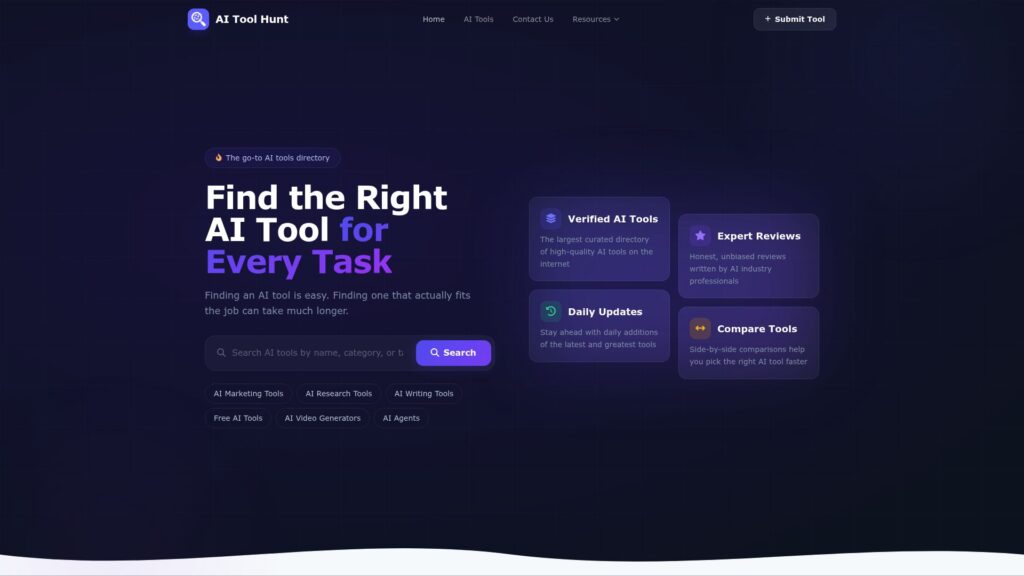
AI Tool Hunt is an AI tools directory focused on helping people discover and explore different AI products. For founders, it provides another place to submit an AI product and put it in front of people who are already looking for AI tools.
If you’re trying to get your product listed across relevant discovery platforms, AI Tool Hunt is worth considering as an additional submission rather than relying on a single directory. It can be particularly useful if your product fits clearly into one of the categories users browse when looking for AI solutions.
Pros:
- Focused on AI tools: Your product is listed alongside other AI products rather than being buried in a general software directory.
- Straightforward discovery: Users can browse AI tools and explore products they may not have come across otherwise.
- Relevant for AI startups: A natural option if you’re specifically looking for an AI tools directory to submit your product to.
- Another discovery channel: Gives founders another place to showcase an AI product instead of depending entirely on social media or launch platforms.
Cons:
- Competition between listings: Your product is competing for attention with many other AI tools listed on the platform.
- Don’t expect instant users: Being listed in an AI directory does not guarantee traffic, leads, or customers.
3. AI Agent Store
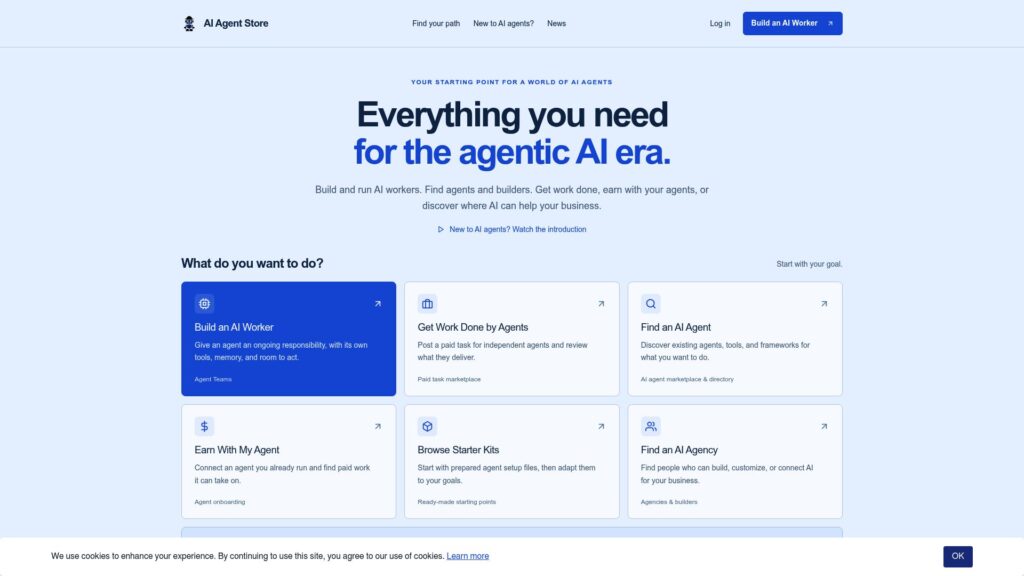
AI Agent Store is a directory focused specifically on AI agents. If you’ve built an AI agent and are looking for a place to submit your AI product, this is more targeted than a general AI tools directory.
The main advantage is relevance: people browsing an AI agent directory are already looking for this particular type of product. That makes it worth considering if your tool actually works as an AI agent rather than simply using AI as one feature.
Pros:
- Highly specific audience: Your product is listed alongside other AI agents instead of being mixed with every type of AI tool.
- Good fit for AI agent builders: Particularly relevant if you’re launching an autonomous agent, AI assistant, or task-specific agent.
- Clearer product positioning: Being listed in a focused AI directory can make it easier for users to understand what type of product you’re offering.
Cons:
- Narrower focus: If your product isn’t really an AI agent, this probably isn’t the right place to prioritize.
- Smaller potential audience: A specialized directory naturally targets a narrower group than a general AI tools directory.
- A listing isn’t a traffic guarantee: You’ll still need a useful product page and a clear description to turn directory visitors into actual users.
4. Easy With AI
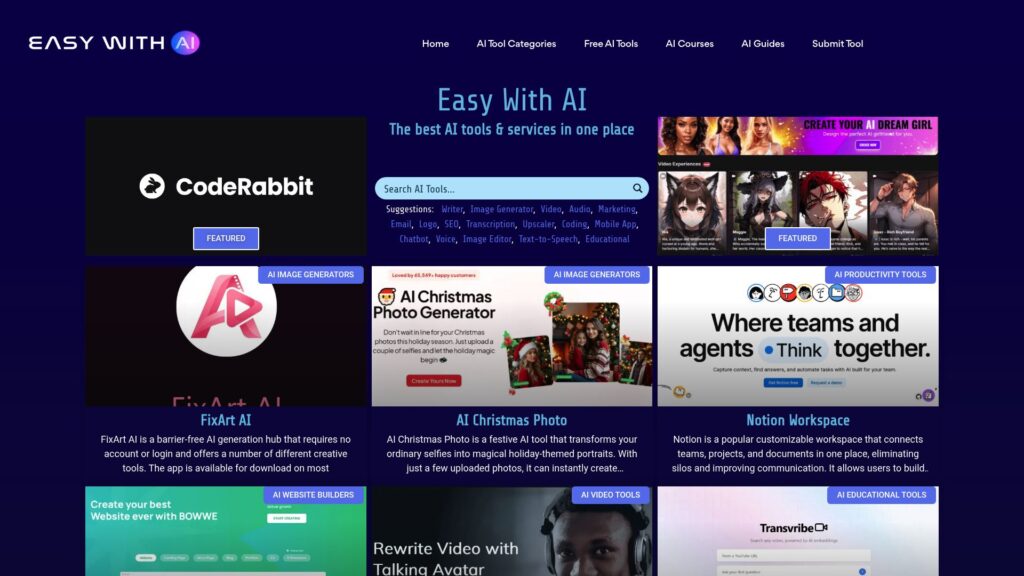
Easy With AI is an AI tools directory built around helping people discover AI products across different categories and use cases. For founders, it can be another place to submit an AI product and put it in front of users who are already browsing for AI-powered solutions.
It’s worth considering if your product fits clearly into a specific category or solves a problem that people are likely to search for. Rather than submitting your product everywhere you can find, a directory like this makes more sense when the audience and use case match what you’ve built.
Pros:
- Focused on AI: Your product is listed in an AI-specific environment rather than a general software directory.
- Category-based discovery: Users can browse different types of AI tools instead of having to know the name of your product beforehand.
- Useful for targeted submissions: A good option to consider when you’re building a list of places to submit your AI product.
- Clear use-case fit: Products with an obvious purpose or category can be easier for users to discover
Cons:
- Lots of competition: Your listing sits alongside many other AI products competing for the same user’s attention.
- Not every listing will generate traffic: Getting your product into an AI tools directory is only one part of discovery; it doesn’t guarantee clicks or customers.
5. AITopTools
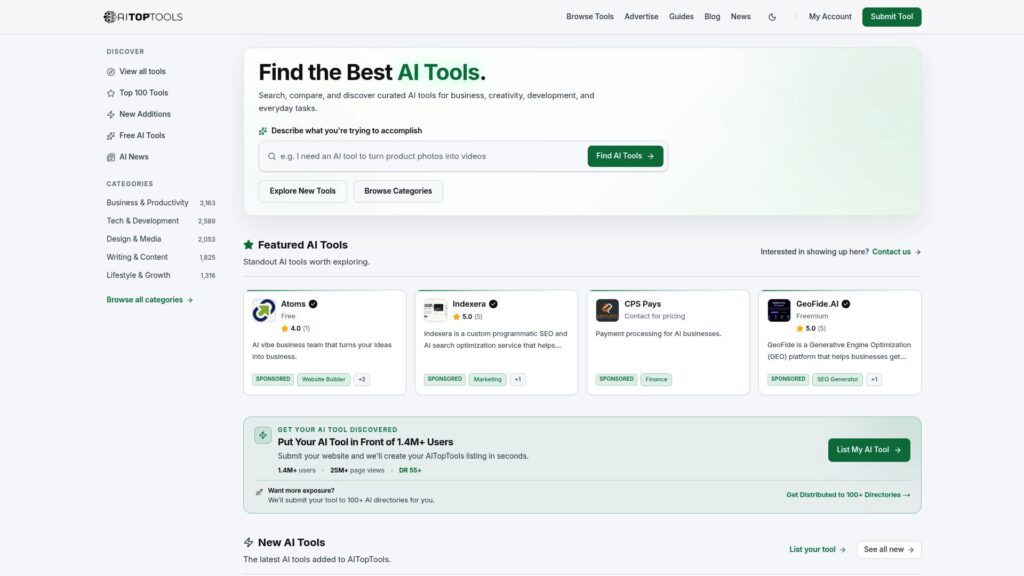
AITopTools is an AI tools directory where users can browse and discover different AI products across a range of categories. For founders, it provides another place to submit an AI product and make it available to people specifically looking for AI-powered tools.
It can be useful if you want your product listed on a dedicated AI discovery platform rather than relying only on your own website, social media, or launch communities. The bigger question is whether the directory’s audience matches your product, so it should be treated as one part of your overall distribution strategy.
Pros:
- AI-focused: Your product is surrounded by other AI tools, making the context immediately relevant to visitors.
- Multiple categories: Useful if your product fits into a specific AI category or use case.
- Another submission opportunity: Gives founders another option when building a list of places to submit an AI product.
- Easy to understand: Visitors can browse different tools without needing to know the exact product name beforehand.
Cons:
- High competition: With many AI products competing for attention, simply getting listed doesn’t mean users will notice yours.
- Traffic isn’t guaranteed: An AI tools directory can provide another discovery channel, but you shouldn’t expect every submission to generate meaningful traffic or customers.
6. Tool Finder
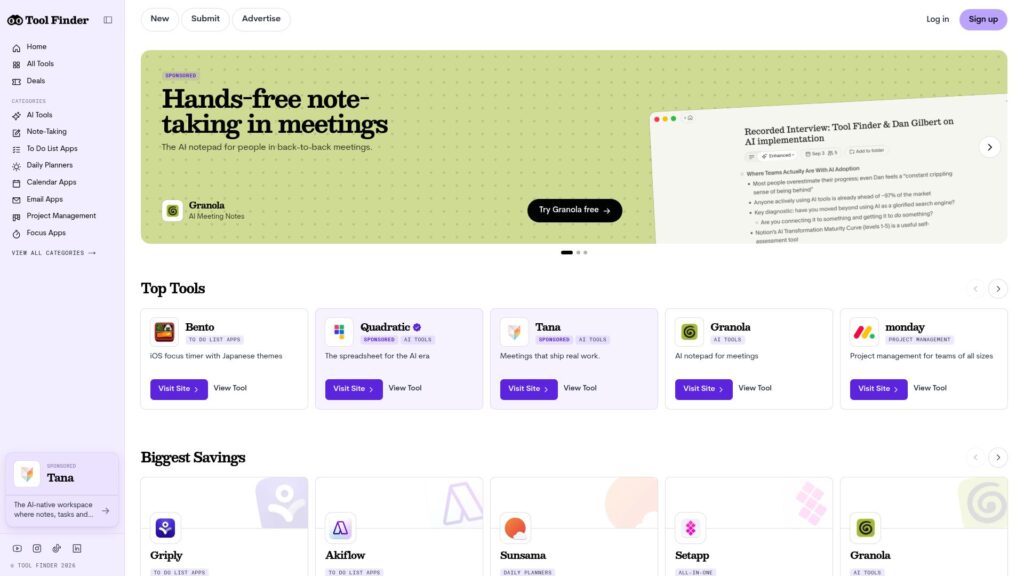
Tool Finder is a discovery platform for finding software and online tools, making it an option for founders who want to put their product in front of people actively looking for solutions. If your AI product fits the platform’s categories, it can be another place to submit an AI product rather than limiting yourself to AI-only directories.
For users, the value is fairly simple: they can explore different tools based on what they need instead of already knowing which product they want. For founders, that gives you another potential discovery channel beyond your own website.
Pros:
- Not limited to one type of AI tool: Useful if your product sits somewhere between AI, SaaS, and other online software.
- Discovery-focused: People can browse tools based on what they need rather than searching only for a specific brand.
- Another option for product distribution: Can complement an AI tools directory submission strategy.
- Relevant for software products: A good fit if your AI product is part of a broader SaaS or software offering.
Cons:
- Less specialized: If you specifically want an AI-only audience, a dedicated AI tools directory may be more relevant.
- Competition from other software: Your product isn’t only competing with AI tools for attention.
- No guaranteed results: A listing can create another opportunity for discovery, but it shouldn’t be treated as a guaranteed source of traffic or customers.
AI directories aren’t the only way to get a new product discovered. If you’re considering launch platforms as well, see our guide to Product Hunt alternatives to explore other options.
Frequently Asked Questions (FAQs)
1. What is the best AI tools directory to submit an AI product?
There isn’t one directory that will work equally well for every AI product. Foundigy, AI Tool Hunt, AI Agent Store, Easy With AI, AITopTools, and Tool Finder each have a different focus. The right one depends on your product, the audience you want to reach, and whether you want an AI-specific or broader software discovery platform.
2. Which AI tools directory is best for AI agents?
AI Agent Store is the most specifically focused option in this list for AI agents. If your product is an AI agent rather than a general AI-powered application, its narrower focus may make it a more relevant place to submit.
3. Should I submit my AI product to multiple directories?
You can. Submitting to several relevant directories gives your product more opportunities to be discovered, but there is little reason to submit everywhere blindly. Look at the audience, submission requirements, costs, and whether the directory actually fits your product before spending your time on it.
4. Do AI directories actually bring traffic?
They can, but there is no guarantee. A directory listing is another discovery channel, not an automatic source of users. Some platforms may be more useful for search discovery, while others may be better suited to people actively browsing for new AI tools.
5. Is an AI tools directory useful for SEO?
It can be, particularly when your product gets a dedicated, indexable page that targets relevant search terms. For example, Foundigy uses SEO-optimized listings with natural keyword integration. However, simply being listed in an AI tools directory does not guarantee search rankings or traffic.
Final Thoughts
Finding an AI tools directory is easy. Finding one that is actually worth your time is the harder part.
You don’t need to submit your AI product to every directory you come across. Start with platforms that actually fit your product, check how the submission works, look at whether there are any costs or unnecessary steps, and then decide where it makes sense to submit.
Foundigy, AI Tool Hunt, AI Agent Store, Easy With AI, AITopTools, and Tool Finder all approach AI and product discovery a little differently. Some are more focused on AI, while others give you a broader place to showcase software and online tools.
The main thing is not to treat a directory listing as a guaranteed source of traffic or customers. Think of it as another way for the right people to come across your product.
And if you’re looking to submit an AI product, start with the directories that make the most sense for what you’ve actually built—not simply the ones with the biggest list of tools.

Harman Singh is the founder of Foundigy and a digital marketing professional building his career in SEO, content, and the technology space. He is passionate about discovering emerging products, understanding how people find them online, and creating content that makes complex digital topics easier to understand. His work combines his experience in SEO with his interest in startups, technology, and the evolving digital landscape.