Best Platform to Launch Your Product in 2026
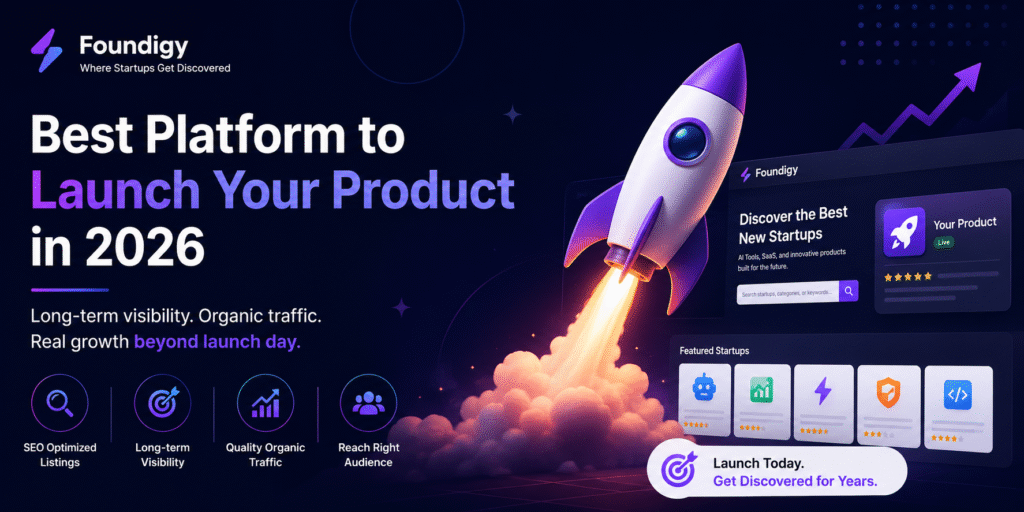
You’ve built the product. You’ve fixed the bugs, refined the user experience, and probably changed the roadmap more times than you can count. Now comes the moment you’ve been working toward—it’s finally time to launch your product. But here’s the question that many founders underestimate: where to launch your product. The reality is that even the best products struggle when they’re launched on the wrong platform. A successful launch isn’t just about getting attention for a day; it’s about making sure your product continues to get discovered long after the excitement fades.
That’s exactly why choosing the right startup launch platform matters. While some platforms are great at creating short-term buzz, today’s founders need something more sustainable. They need a place where their product doesn’t disappear after 24 hours but continues reaching people who are actively searching for solutions. That’s the idea behind Foundigy. Instead of focusing on rankings or daily votes, Foundigy helps founders launch your startup with SEO-optimized listings built for long-term discoverability. In this guide, we’ll explore why Foundigy is becoming one of the best platforms to launch your product in 2026, the challenges founders face after launch, and how an SEO-first approach can help your startup attract quality traffic for months—not just a single day.
Why Choosing the Right Platform to Launch Your Product Matters
Every founder dreams of a successful product launch. You hit the publish button, announce it on social media, share it with your community, and watch new users start signing up. But in reality, launching is only the beginning. What happens after launch day often determines whether your product continues to grow or slowly fades into the background.
The startup ecosystem is more competitive than ever. Thousands of new SaaS products, AI tools, mobile apps, and software solutions are introduced every month. With so many launches happening, simply releasing a great product isn’t enough. If your target audience can’t discover it, your product risks getting lost among hundreds of similar alternatives.
This is why deciding where to launch your product is just as important as building it. The platform you choose directly affects your product’s visibility, the quality of traffic it receives, and the opportunities it has to attract users over time. A platform that only provides short-term exposure may generate an initial spike in visitors, but once that attention fades, founders are often left searching for new ways to bring people back.
Today’s founders are also becoming more strategic about how they launch a startup. Instead of relying on a single launch platform, many are building a complete launch strategy that combines community engagement, social media, content marketing, and search visibility. The goal isn’t just to create excitement—it’s to make sure potential customers can continue discovering the product weeks and months after it goes live.
That’s exactly why long-term discoverability has become such an important factor when choosing a startup launch platform. A platform that helps your product appear in search results, attract users with genuine intent, and remain accessible long after launch day can continue delivering value well beyond the initial announcement.
Why Your Launch Platform Matters
Choosing the right platform can help you:
- Reach users who are actively searching for products like yours.
- Improve your product’s long-term online visibility.
- Generate quality organic traffic instead of relying only on launch-day visitors.
- Build authority through SEO-optimized product listings.
- Increase opportunities for backlinks and brand mentions.
- Keep your product discoverable long after the initial launch.
- Support sustainable growth instead of one-day exposure.
A successful launch isn’t measured by how many people see your product on day one. It’s measured by how many people can still find it months later. And that’s where choosing the right platform can make all the difference.
Common Challenges Founders Face When They Launch a Product
Every founder imagines the perfect launch—new users signing up, positive feedback rolling in, and steady traffic to their website. While that does happen for some startups, the reality is often very different.
For many founders, the excitement of launch day fades much faster than expected. Initial traffic slows down, engagement drops, and the product gradually becomes harder to discover. It’s not because the product isn’t good—it’s because maintaining visibility after launch is one of the biggest challenges in today’s competitive startup ecosystem.
If you’re planning to launch your product, understanding these challenges beforehand can help you build a strategy that delivers results long after launch day.
1. Your Product Quickly Loses Visibility
Launching your product is exciting, but that excitement doesn’t always last. Most product discovery platforms are designed to highlight the newest launches, which means today’s featured product can become tomorrow’s forgotten listing.
As more startups are introduced, older products naturally move down the feed, making them less likely to be discovered by new visitors. This limited window of exposure is one of the biggest concerns founders talk about today.
In fact, many founders have openly shared that 24 hours of visibility isn’t enough. Building awareness, collecting customer feedback, and attracting early adopters takes time. When a product disappears from the spotlight after a single day, it becomes much harder to maintain momentum.
2. Organic Traffic Takes Time to Build
Many founders expect search engines to start sending visitors as soon as their product goes live.
Unfortunately, that’s not how SEO works.
Search visibility is built over time. If your product isn’t listed on platforms that support long-term discoverability, you’re relying heavily on launch-day traffic, social media posts, or paid campaigns to stay visible.
That’s why choosing where to launch your product is such an important decision. The right platform can continue introducing your product to people actively searching for solutions, even months after launch.
3. Paid Acquisition Isn’t Sustainable for Every Startup
Advertising can generate quick results, but it’s rarely a long-term solution for early-stage startups.
Once the ad budget runs out, traffic often drops with it.
For bootstrapped founders, sustainable growth usually comes from building multiple acquisition channels, with organic search being one of the most valuable. That’s why many startups invest in platforms that help them attract consistent, high-intent visitors instead of depending entirely on paid marketing.
4. Reaching the Right Audience Is More Important Than Reaching Everyone
Getting traffic is one thing. Getting the right traffic is something completely different.
A thousand random visitors won’t help your startup as much as a hundred people actively searching for the exact problem your product solves. Users arriving through search often have stronger intent because they’re already looking for a solution, making them more likely to explore your product, sign up, or become customers.
Key Challenges Founders Face
After they launch your product, many founders struggle with:
- Limited visibility after the initial launch.
- Products getting buried under newer listings.
- Difficulty generating consistent organic traffic.
- Rising customer acquisition costs.
- Reaching users with genuine purchase intent.
- Relying heavily on social media or paid advertising.
- Finding a startup launch platform that supports long-term discoverability.
These challenges explain why more founders are rethinking where to launch a product. Instead of relying solely on launch-day exposure, they’re choosing platforms that help their products stay visible, searchable, and discoverable long after the initial launch.
Why Foundigy Is One of the Best Platforms to Launch Your Product
Every startup launch platform promises visibility, but the type of visibility you receive makes all the difference. Some platforms are designed to generate a burst of attention on launch day. That’s great for creating initial buzz, collecting early feedback, and introducing your product to the community. However, once the excitement fades, many founders find themselves asking the same question again: “What’s next?“
At Foundigy, we believe your launch shouldn’t end after 24 hours. Instead of focusing only on short-term exposure, Foundigy is built to help startups remain discoverable long after launch day. Every listing is optimized with search visibility in mind, giving your product more opportunities to reach users who are actively looking for solutions like yours.
Here’s how Foundigy helps founders build long-term visibility:
1. SEO-Optimized Listings Built for Discovery
Every product listed on Foundigy is more than just another directory entry. Each listing is carefully structured with SEO best practices, relevant keyword integration, optimized headings, descriptive content, and organized categories. The goal isn’t to stuff keywords into a page—it’s to create a listing that search engines can understand while helping users quickly learn what your product offers.
This means your listing has a better chance of appearing for relevant searches, allowing you to attract visitors who are already looking for products in your category.
Key Benefits:
- SEO-friendly product pages
- Strategic keyword integration
- Optimized titles and descriptions
- Search engine-friendly structure
- Better opportunities for organic discovery
2. Built for Long-Term Search Visibility
One of the biggest differences between Foundigy and many traditional launch platforms is how visibility is approached. Rather than relying on rankings or daily votes, Foundigy focuses on helping products stay discoverable over time. Your listing remains available, searchable, and indexable, giving search engines the opportunity to continue sending relevant traffic as your product grows.
That’s an important distinction. You’re not competing to stay on top of a leaderboard. You’re building a digital asset that can continue working for your startup long after launch day.
3. Quality Traffic Matters More Than Temporary Traffic
Getting thousands of visitors sounds impressive. Getting visitors who are actively searching for your solution is even better. Foundigy is designed to attract users with intent—people browsing categories, searching for software, or looking for tools that solve a specific problem. These visitors are often more valuable than short-lived traffic because they’re already interested in discovering new products.
In simple words… You’re not playing for rankings. You’re playing for visibility, discoverability, and long-term growth.
4. Real Results, Not Just Promises
The best proof of any platform is the results it delivers. Several startups listed on Foundigy are already receiving quality organic clicks through search engines, showing that SEO-optimized listings can continue attracting relevant visitors beyond launch day.
We’ve also received positive feedback from founders who appreciated the quality of their listings and even mentioned Foundigy on their own website. (How formMill launched on Foundigy and got 50+ signups)
For us, that’s a much stronger indicator of success than a temporary spike in traffic. It shows that listings are creating lasting value.
5. A Smarter Strategy Alongside Product Hunt
Product Hunt remains one of the best places to introduce a new product, generate launch-day excitement, and gather early community feedback. However, many founders have also shared that maintaining visibility after those first 24 hours can be challenging as newer launches quickly take the spotlight. We’ve covered these differences in detail in our Foundigy vs Product Hunt comparison guide (Foundigy vs Product hunt).
That’s why many startups now use a combination of platforms. They use Product Hunt for launch-day momentum and Foundigy for long-term search visibility. The two approaches complement each other.
One helps you make an entrance. The other helps people continue finding your product weeks and months later.
Ready to Launch Your Product?
If you’re looking for where to launch your product, don’t settle for visibility that disappears after a single day. Submit your startup to Foundigy (Get Your Startup Featured) and give your product the opportunity to reach founders, marketers, businesses, and customers who are actively searching for solutions like yours.
Frequently Asked Questions
1. What is the best platform to launch your product in 2026?
The best platform depends on your launch goals. If you’re looking for immediate community engagement, launch platforms with active communities can help generate early feedback. However, if your goal is long-term discoverability and organic traffic, Foundigy is one of the best platforms to launch your product because every listing is designed with SEO and search visibility in mind.
2. Where to launch your product for long-term visibility?
If long-term visibility is your priority, choose platforms that continue driving discovery after launch day. Foundigy helps startups stay visible through SEO-optimized listings, making it easier for potential customers to find your product through search engines long after your launch.
3. Why should I choose Foundigy over other startup directories?
Foundigy is built differently from traditional startup directories. Instead of focusing only on launch-day rankings or community votes, it focuses on helping startups build long-term search visibility. Every listing is optimized with relevant keywords, structured content, and organized categories to improve discoverability.
4. Does Foundigy help with SEO?
Yes. Every listing on Foundigy is SEO-optimized using relevant keyword integration, search-friendly content, structured headings, and categorized product pages. The goal is to improve your product’s discoverability and attract users who are actively searching for solutions like yours.
5. Is Foundigy only for AI and SaaS startups?
No. While Foundigy is popular among AI tools and SaaS products, founders can also submit software products, developer tools, marketing platforms, productivity apps, automation tools, website builders, and many other digital products.
6. How long does my product stay listed on Foundigy?
Unlike platforms where visibility depends on daily rankings or trending feeds, Foundigy provides permanent product listings. This gives your startup ongoing opportunities to be discovered through search engines and category browsing.
7. Why is long-term discoverability more important than launch-day traffic?
Launch-day traffic can create excitement, but it usually lasts for a short period. Long-term discoverability allows your product to continue attracting visitors who are actively searching for solutions, helping generate consistent traffic, leads, and growth over time.

Harman Singh is the founder of Foundigy and a digital marketing professional building his career in SEO, content, and the technology space. He is passionate about discovering emerging products, understanding how people find them online, and creating content that makes complex digital topics easier to understand. His work combines his experience in SEO with his interest in startups, technology, and the evolving digital landscape.