
5 Best Absolutely Free Habit Tracker Apps in 2026

I’ve been looking for a good habit tracker app to build better daily routines, but finding one that gets the basics right isn’t as easy as it sounds. Some apps lock useful features behind subscriptions, others interrupt the experience with ads, and some make simple habit tracking feel unnecessarily complicated. I also wanted an app with reminders that help me stay consistent instead of becoming another source of frustration.
If you’ve faced similar issues, you probably know how difficult it can be to find a habit tracker app free to use without compromising on the features you actually need. Before choosing one, here are a few things worth considering:
Basic features behind paywalls: Some apps limit the number of habits you can track or reserve useful features for paid plans.
Too many ads: Frequent advertisements can interrupt your routine when all you want to do is check off a completed habit.
Complicated interfaces: An app designed to improve your daily routine shouldn’t take too much time or effort to manage.
Unreliable reminders: Missed or poorly timed notifications can make it harder to maintain a consistent schedule.
To make the search easier, I’ve put together five free habit tracker apps worth exploring. We’ll look at what each platform offers, its pros and cons, and available user feedback so you can compare your options and find a daily habit tracker that works for your needs.
5 Best Free Habit Tracker Apps: Quick Comparison
| Platform | Ads Involved | Free or Paid | Available On | Best For |
|---|---|---|---|---|
| Feedstack | No | Free; in-app purchases listed | Android, iOS | Getting reminders to revisit saved content at your chosen time—morning, evening, or bedtime |
| HabitPlus | No | Completely free, according to the developer | Android | Tracking habits, setting reminders, and managing to-do lists |
| Routinic | Yes | Free, no subscription | Android | Planning daily routines with schedules, timers, and offline tracking |
| Table Habit | No | Completely free, open source | Android, iOS, macOS, Windows, Linux | Tracking micro-habits with check-in tables, habit scores, and progress charts |
| OpenHabitTracker | No | Completely free, open source | Web, Android, iOS, macOS, Windows, Linux | Keeping habits, tasks, and notes organized in one tracker |
1. Feedstack
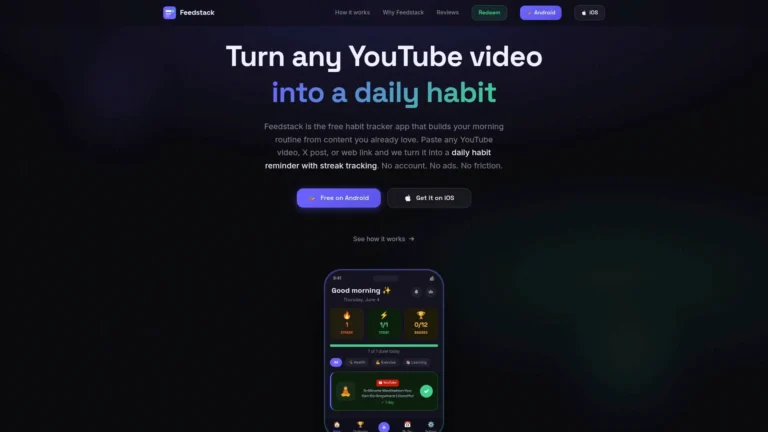
Feedstack takes a different approach to habit tracking. Instead of asking you to create every habit from scratch, it lets you save useful videos, social media posts, and web links and turn them into daily habits. You can schedule reminders for the morning, evening, or bedtime to revisit your saved content, helping you build a routine around the things you want to learn or practise. If you’re looking for a habit tracker app that helps you make better use of saved content, Feedstack offers a different approach to building habits.
For example, if you regularly save workout videos, language lessons, or educational content but rarely return to them, Feedstack can help you create a consistent routine around revisiting those resources.
Explore complete details: Feedstack
Pros:
- Helps you revisit saved content: Feedstack is designed for people who save useful links but often forget to return to them. Its scheduled reminders can help bring that content back into your daily routine.
Cons:
Limited independent user feedback: There aren’t enough verified user reviews to establish recurring complaints or assess how well the app performs over time.
Questions about streak tracking: A commenter in a Reddit discussion asked whether a streak advances when someone simply opens a saved link or confirms they’ve completed the activity. This is a question about how completion works, not a verified app issue.
2. HabitPlus
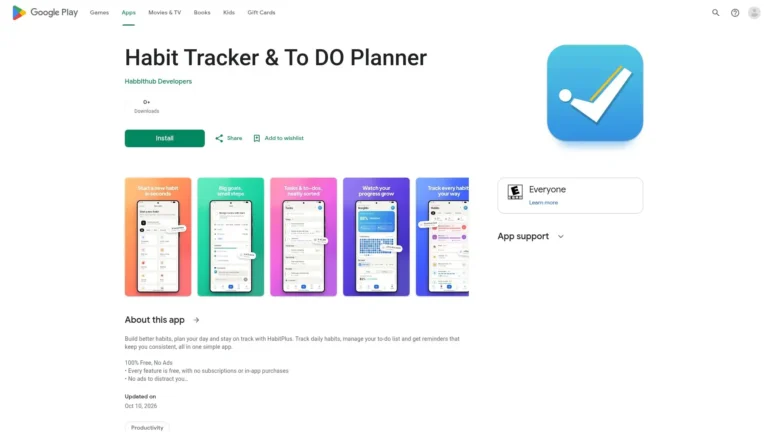
HabitPlus combines habit tracking with a to-do list, making it useful for people who want to manage their daily routines and everyday tasks in one place. You can create daily, weekly, or custom habits, set reminders, track streaks, and review your completion history. The app also includes task priorities and progress tracking, helping you organize your day without switching between multiple productivity tools.
If you’re looking for a habit tracker app free to use that combines routine building with simple task management, HabitPlus is worth considering. It also lets you get started without creating an account, while keeping your habit and task data on your device.
Pros:
Habits and tasks in one place: You can manage your daily habits and to-do lists within the same app, making it a practical option for organizing everyday routines.
Custom reminders and progress tracking: The app supports habit reminders, streaks, completion history, and progress tracking to help you monitor your consistency.
Cons:
Limited independent user feedback: HabitPlus has a very small public footprint, and there aren’t enough independent user reviews to establish recurring strengths or complaints.
Android-focused availability: The version covered here is available on Android, so users looking for a daily habit tracker across multiple platforms may need to consider other options.
3. Routinic
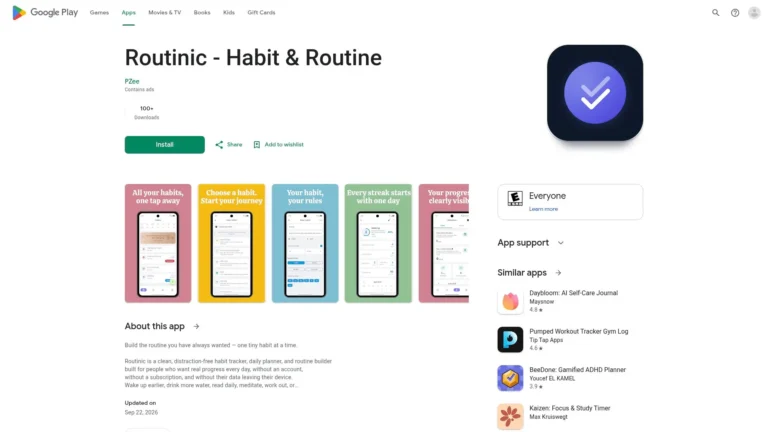
Routinic is a habit tracker app designed to help you organize daily routines, set reminders, and monitor your progress. You can create custom habits or choose from ready-made templates, set schedules, and use built-in timers for activities such as reading, meditation, and workouts. The app also includes streak tracking, completion statistics, and a calendar to help you review your consistency over time.
If you’re looking for a daily habit tracker that works offline without requiring an account, Routinic offers a straightforward way to manage your routines. You can also pause and resume habits when your schedule changes, making it easier to adapt your tracking to everyday life.
Pros:
Works without an account: Routinic stores habit data locally on your device, so you can use its main tracking features without signing up or relying on cloud synchronization.
Combines routines and timers: Built-in timers, scheduled reminders, habit templates, and progress statistics let you manage different parts of your daily routine in one place.
Cons:
Advertisements are included: Routinic contains ads, which may interrupt the experience for users who prefer a completely ad-free habit tracker app.
Limited independent user feedback: The app has a relatively small public footprint, with limited independent reviews available to assess its long-term reliability and overall user experience.
4. Table Habit
Table Habit is a habit tracker app built around a simple table-based system that helps you track small habits and monitor your progress over time. Instead of relying only on streaks, it uses a habit scoring system and growth charts to help you see how consistently you’re following your routines. The app also supports offline tracking, habit categories, and optional syncing across devices through WebDAV.
If you’re looking for a daily habit tracker that works across your phone and computer, Table Habit is worth exploring. Its open-source design and focus on micro-habits make it suitable for people who prefer a straightforward way to track small, repeatable actions without advertisements or account registration.
Pros:
Simple visual habit tracking: Users have praised its clean interface and intuitive design. One reviewer also described how the visual progress system helped them stay motivated to maintain a habit.
Works across multiple platforms: You can use Table Habit on Android, iOS, macOS, Windows, and Linux, with optional WebDAV synchronization between devices.
Cons:
Limited habit measurement options: A user requested a numerical counter for habits that need to be completed multiple times a day, noting that the app’s existing yes-or-no tracking didn’t cover that need. The request was still under consideration in the discussion.
No iCloud sync mentioned: An App Store reviewer requested iCloud synchronization, indicating that users who prefer Apple’s built-in syncing may want to check the available options before choosing the app.
5. OpenHabitTracker
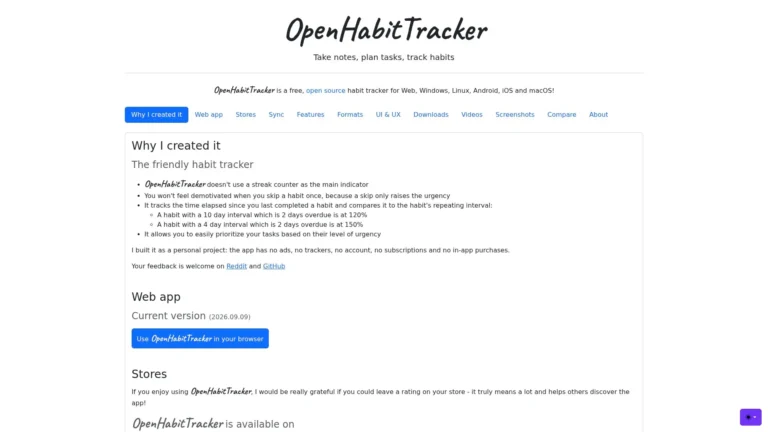
OpenHabitTracker is an open-source habit tracker app that combines habit tracking, task management, and note-taking in one place. Unlike apps that focus mainly on maintaining streaks, it measures how overdue a habit is based on its repeat schedule, helping you prioritize routines without treating every missed day as a failure. You can also organize tasks, add notes, track completion history, and customize how information appears on your screen.
If you’re looking for a habit tracker app free to use across multiple devices, OpenHabitTracker is worth exploring. It works in your browser and on Windows, Linux, Android, iOS, and macOS. Your data stays on your device when using the standard app, and you can set up your own server if you want to sync data across devices.
Pros:
Tracks more than daily streaks: OpenHabitTracker measures habits against their scheduled intervals, which can be useful for routines that don’t need to be completed every day.
Combines habits, tasks, and notes: Users have responded positively to its expanding feature set, and one Reddit commenter praised its interface and straightforward installation. Recent updates also introduced separate tracking modes for repetitions, time, and quantity.
Cons:
No built-in cloud sync by default: The standard app stores data locally. If you want to synchronize your information across devices, you’ll need to configure the self-hosted sync option.
Frequently Asked Questions (FAQs)
1. Which habit tracker apps offer useful features without requiring a subscription?
Table Habit and OpenHabitTracker are free, open-source options without subscription fees. HabitPlus is another option for Android users who want to manage habits and to-do lists together. If you need a habit tracker app free to use, compare the features available in each app before choosing one.
2. Which free habit tracker apps don't show ads?
Feedstack, HabitPlus, Table Habit, and OpenHabitTracker are ad-free options to consider. Routinic includes advertisements. If you prefer a distraction-free experience, Table Habit and OpenHabitTracker are worth exploring.
3. Which habit tracker apps have a simple interface for tracking daily routines?
HabitPlus offers habit tracking alongside to-do lists, while Table Habit uses visual check-in tables and progress charts. OpenHabitTracker combines habits, tasks, and notes in one place. The best daily habit tracker for you will depend on whether you prefer a basic checklist or a more comprehensive organizational tool.
4. Which habit tracker apps offer reminders and help you stay consistent?
Feedstack lets you schedule reminders to revisit saved content, while HabitPlus supports habit reminders and streak tracking. Routinic offers scheduled routines and timers, and Table Habit and OpenHabitTracker provide ways to record progress. Choose a habit tracker app that fits your schedule and the way you prefer to build habits.
Conclusion
Finding the right habit tracker app doesn’t have to mean paying for a subscription or dealing with unnecessary distractions. As we’ve seen, each app offers a different approach to building better routines. Feedstack helps you revisit saved content, HabitPlus combines habits with to-do lists, Routinic focuses on scheduled routines, Table Habit uses visual progress tracking, and OpenHabitTracker brings habits, tasks, and notes together.
If you’re looking for a habit tracker app free to use, consider which features matter most to you, whether that’s reminders, progress charts, offline access, or a simple interface. Ultimately, the best daily habit tracker is one that fits naturally into your routine and makes it easier to stay consistent over time.

Harman Singh is the founder of Foundigy and a digital marketing professional building his career in SEO, content, and the technology space. He is passionate about discovering emerging products, understanding how people find them online, and creating content that makes complex digital topics easier to understand. His work combines his experience in SEO with his interest in startups, technology, and the evolving digital landscape.