
10 Free Open Source Percy Alternatives for Visual Testing in 2026
Visual regression testing has become an important part of modern software development. As web applications become more interactive and design-focused, developers need reliable ways to ensure that UI changes do not accidentally break layouts, components, or user experiences. Percy is one of the most popular visual testing platforms available today, but many teams are now looking for open source Percy alternatives that provide greater flexibility, open-source transparency, and lower costs. Open-source solutions are especially attractive because they allow organizations to maintain complete control over their testing infrastructure while avoiding recurring subscription expenses.
Fortunately, the visual testing ecosystem offers several powerful Percy alternatives capable of detecting UI regressions across browsers, devices, and screen sizes. Whether you’re a startup, enterprise, QA engineer, or frontend developer, these tools can help automate screenshot comparisons and identify visual bugs before deployment. In this guide, we’ll explore the best free Percy alternatives available today. These tools offer robust visual regression testing capabilities and can serve as an excellent alternative to Percy for teams seeking scalable, cost-effective, and customizable testing solutions.
Best & Free Open Source Percy Alternatives in 2026
1. Lastest: Free Visual Regression Testing Tool
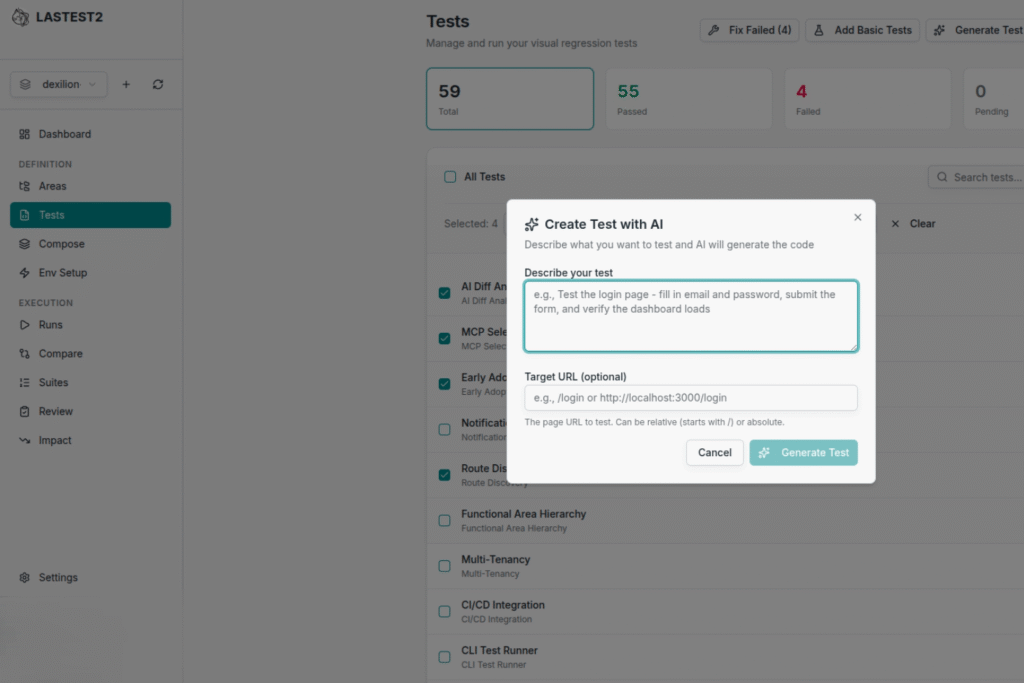
Lastest Free Visual Regression Testing Tool is an emerging solution designed to help developers automate visual regression testing without requiring expensive subscriptions or complex infrastructure. For organizations seeking free Percy alternatives, this platform provides an accessible way to monitor UI changes and identify unexpected visual issues before they reach production.
The primary goal of visual regression testing is to compare screenshots between different versions of an application and detect unintended design changes. This tool accomplishes that objective by providing screenshot comparison capabilities that can be integrated into development workflows. Developers can capture baseline screenshots and compare them against new releases to ensure that interface updates do not introduce layout shifts, broken elements, or inconsistent styling.
One of the reasons this platform deserves consideration among Percy competitors is its focus on accessibility for smaller teams. Many startups and independent developers struggle to justify the recurring costs associated with commercial visual testing solutions. By providing a free solution, this tool lowers the barrier to entry and allows organizations to implement automated visual testing early in their development lifecycle.
Another notable advantage is flexibility. Teams can incorporate visual regression testing into their existing QA processes without significantly altering their workflows. As applications continue to evolve, visual consistency becomes increasingly important. Even minor UI changes can negatively impact user experience, making automated visual testing a valuable safeguard.
For developers searching for an alternative to Percy that emphasizes usability and affordability, this tool offers a practical starting point. While it may not yet have the ecosystem maturity of larger Percy competitors, it demonstrates how open-source and community-driven solutions can provide meaningful value for modern development teams.
Features
- Automated visual regression testing
- Screenshot comparison workflows
- Lightweight implementation
- User-friendly setup process
- Cost-effective solution
- Supports continuous testing
- Useful for startups and small teams
- Visual change detection capabilities
Limitations
- Smaller ecosystem compared to established Percy alternatives
- Fewer enterprise integrations
- Limited advanced analytics
- Growing community support
- Additional customization may be required
2. BackstopJS
BackstopJS is widely regarded as one of the most powerful Percy alternatives available in the open-source ecosystem. Developed specifically for visual regression testing, BackstopJS enables teams to capture screenshots of web applications and compare them against approved baseline images. Its flexibility and extensive configuration options have made it a favorite among frontend developers and QA engineers alike.
Unlike many commercial Percy competitors, BackstopJS gives organizations complete control over their testing infrastructure. Users can run tests locally, integrate them into CI/CD pipelines, and customize testing scenarios according to their specific requirements. This level of flexibility makes it a strong alternative to Percy for organizations that prefer self-hosted solutions and open-source tooling.
One of BackstopJS’s biggest strengths is its support for multiple viewports. Developers can test websites across various screen sizes and device resolutions, ensuring a consistent user experience regardless of how users access the application. The platform generates detailed visual difference reports that clearly highlight any detected changes, allowing teams to quickly identify and address issues.
BackstopJS integrates seamlessly with popular browser automation tools such as Puppeteer and Playwright. This compatibility enables organizations to create highly customized testing workflows while leveraging modern browser automation frameworks. As a result, many teams consider BackstopJS one of the best free Percy alternatives currently available.
Additionally, BackstopJS benefits from a large and active open-source community. Extensive documentation, tutorials, and community resources make it easier for developers to get started and troubleshoot issues. This community support contributes significantly to its popularity among organizations seeking reliable Percy alternatives.
Features
- Open-source visual regression testing
- Multi-viewport screenshot testing
- Puppeteer integration
- Playwright support
- Detailed visual reports
- CI/CD compatibility
- Custom testing scenarios
- Active community support
Limitations
- Requires configuration expertise
- Initial setup can be complex
- Manual baseline management
- Infrastructure maintenance responsibility
- Learning curve for beginners
3. Loki
Loki is another highly respected option among Percy alternatives, particularly for teams that rely on component-driven development. Built with modern frontend workflows in mind, Loki focuses on testing UI components rather than entire web pages. This specialization makes it especially valuable for organizations using Storybook to develop and manage reusable interface components.
As applications become increasingly modular, ensuring visual consistency at the component level is critical. Loki addresses this challenge by capturing screenshots of individual UI components and comparing them against baseline images. This targeted approach allows teams to identify visual regressions early in the development process before they affect larger application interfaces.
One reason many developers choose Loki over other Percy competitors is its deep integration with Storybook. Since Storybook is widely used for component documentation and development, Loki naturally fits into existing frontend workflows. Teams can automate visual testing for every component update, reducing the risk of introducing design inconsistencies.
Loki also supports multiple rendering environments, allowing organizations to test components across different browsers and platforms. This flexibility improves confidence in UI quality while ensuring that visual changes behave consistently under various conditions. For teams looking for free Percy alternatives that prioritize component testing, Loki provides a focused and efficient solution.
Compared to some broader Percy alternatives, Loki may not offer the same level of full-page testing capabilities. However, its component-centric approach is often preferable for organizations embracing modern frontend architectures. As a result, it remains a popular alternative to Percy among React, Vue, and Storybook users.
Features
- Storybook integration
- Component-level testing
- Automated screenshot comparison
- Cross-platform support
- Open-source framework
- CI/CD integration
- Fast execution speed
- Frontend-focused workflow
Limitations
- Best suited for Storybook users
- Limited full-page testing
- Smaller ecosystem
- Requires component architecture
- Less suitable for non-component projects
4. Argos CI
Argos CI is a modern visual regression testing platform that has gained attention among developers looking for reliable Percy alternatives. Built with collaboration and automation in mind, Argos CI helps teams identify visual changes before they reach production. The platform focuses on simplifying screenshot comparisons and integrating visual testing directly into the software development lifecycle.
One of the key reasons developers consider Argos CI among the best Percy alternatives is its seamless integration with Git workflows. Whenever a pull request is created, Argos CI can automatically capture screenshots, compare them against baseline versions, and generate visual reports. This process helps teams review UI changes alongside code changes, reducing the likelihood of visual bugs being introduced into production environments.
Unlike some Percy competitors that require significant infrastructure management, Argos CI offers a more streamlined workflow. Teams can quickly connect repositories, configure testing environments, and begin reviewing visual differences with minimal setup effort. This accessibility makes it particularly appealing to startups and development teams that want a fast implementation process.
Another advantage is its collaborative review system. Visual changes are presented in a clear and organized interface, allowing developers, QA engineers, and designers to approve or reject modifications efficiently. This shared review process improves communication between technical and design teams while ensuring interface consistency.
For organizations seeking free Percy alternatives that balance ease of use with powerful visual testing capabilities, Argos CI presents a compelling option. Although it may not have the same market presence as some larger Percy competitors, it continues to grow in popularity due to its modern approach and developer-friendly experience. As visual regression testing becomes increasingly important in software development, Argos CI offers a practical alternative to Percy for teams focused on automation and collaboration.
Features
- Pull request visual reviews
- GitHub integration
- Automated screenshot comparisons
- Collaborative approval workflows
- CI/CD support
- Developer-friendly interface
- Visual change tracking
- Open-source ecosystem support
Limitations
- Smaller community compared to major Percy alternatives
- Some advanced features depend on hosted services
- Limited customization compared to BackstopJS
- Fewer third-party integrations
- Growing ecosystem
5. Wraith
Wraith is one of the oldest and most respected Percy alternatives in the visual testing space. Originally developed by the BBC, Wraith was created to help development teams compare screenshots across browsers and identify visual inconsistencies before deployment. Despite being an older solution, Wraith remains a valuable tool for organizations that prioritize open-source testing frameworks.
The primary strength of Wraith lies in its browser comparison capabilities. Developers can generate screenshots from different browsers and compare them side by side to identify rendering differences. This feature is especially useful for teams supporting multiple browsers where even minor UI inconsistencies can negatively affect user experience.
Many developers exploring an alternative to Percy appreciate Wraith’s simplicity. Rather than focusing on extensive dashboards and enterprise workflows, Wraith concentrates on delivering reliable screenshot comparisons. This focused approach allows teams to implement visual regression testing without becoming dependent on proprietary ecosystems.
Another factor contributing to Wraith’s popularity among Percy competitors is its open-source nature. Organizations can host and manage their own testing infrastructure while maintaining full control over data and workflows. This independence is particularly attractive for companies with strict compliance requirements or those seeking to minimize software costs.
Although newer visual testing platforms have emerged in recent years, Wraith continues to demonstrate the value of lightweight open-source solutions. Teams searching for free Percy alternatives often appreciate its mature architecture and proven reliability. While it may not include the advanced collaboration features available in some modern Percy alternatives, it remains a practical choice for organizations prioritizing browser-based visual testing.
Features
- Cross-browser screenshot comparison
- Open-source framework
- Visual regression detection
- Lightweight architecture
- Customizable workflows
- Historical project reliability
- Automated screenshot generation
- Independent infrastructure control
Limitations
- Requires Ruby environment
- Less active development community
- Older user interface
- Limited modern integrations
- Smaller ecosystem than newer Percy competitors
6. Playwright Visual Comparisons
Playwright has rapidly become one of the most popular browser automation frameworks, and its built-in visual comparison capabilities make it an excellent choice among Percy alternatives. Organizations already using Playwright for end-to-end testing can leverage visual regression testing without introducing additional tools into their development stack.
Unlike dedicated Percy competitors that focus exclusively on visual testing, Playwright combines browser automation, functional testing, and visual validation within a single framework. This consolidation simplifies testing workflows and reduces the number of tools teams must maintain. As a result, many developers view Playwright as a highly practical alternative to Percy.
Playwright’s screenshot comparison functionality allows developers to capture baseline images and automatically compare them against future test runs. If visual differences exceed acceptable thresholds, the test fails and highlights the affected areas. This automated validation helps teams detect visual regressions early and maintain consistent user experiences.
One major advantage of Playwright is its extensive browser support. Teams can run visual tests across Chromium, Firefox, and WebKit environments, ensuring that applications behave consistently regardless of browser choice. This capability strengthens its position among the leading free Percy alternatives available today.
Additionally, Playwright benefits from strong community support and active development. Frequent updates, extensive documentation, and growing adoption make it a reliable long-term choice for organizations investing in automated testing. For teams already using Playwright, adopting its visual comparison capabilities is often the most efficient path toward implementing visual regression testing.
Among modern Percy alternatives, Playwright stands out because it combines multiple testing disciplines within a single platform. This versatility allows organizations to streamline testing operations while maintaining high-quality user interfaces across releases.
Features
- Built-in visual testing
- Cross-browser support
- Automated screenshot comparison
- Fast test execution
- CI/CD integration
- Active open-source development
- Comprehensive documentation
- Unified testing framework
Limitations
- Requires programming knowledge
- Less specialized reporting than dedicated tools
- Manual baseline management
- Advanced workflows require customization
- Limited visual collaboration features
7. Cypress Visual Testing
Cypress has become one of the most widely adopted end-to-end testing frameworks, and with the help of visual testing plugins, it can serve as a powerful option among Percy alternatives. Many development teams already use Cypress for functional testing, making visual regression testing a natural extension of their existing workflow. Instead of introducing another platform into the testing stack, teams can leverage Cypress to manage both functional and visual testing requirements.
One of the primary reasons organizations consider Cypress among the top Percy alternatives is its ease of adoption. Developers familiar with Cypress can implement screenshot comparison capabilities using community-supported plugins without learning an entirely new platform. This approach reduces onboarding time and allows teams to start detecting visual regressions quickly.
Visual testing in Cypress typically involves capturing screenshots during test execution and comparing them against approved baseline images. Whenever unexpected UI changes occur, the framework highlights the differences, helping developers identify issues before deployment. This process significantly reduces the chances of visual bugs reaching production environments.
Another factor that positions Cypress among strong Percy competitors is its active community. The ecosystem contains numerous plugins, integrations, tutorials, and support resources that make implementation relatively straightforward. Teams can customize visual testing workflows according to project requirements while benefiting from extensive community knowledge.
Organizations searching for free Percy alternatives often appreciate Cypress because it combines testing flexibility with strong developer adoption. Since many teams already rely on Cypress for automated testing, extending its functionality for visual regression testing can be both cost-effective and operationally efficient.
While Cypress visual testing may not offer every advanced feature available in dedicated visual testing platforms, it remains an attractive alternative to Percy for organizations seeking an integrated testing solution. Its combination of automation capabilities, ecosystem support, and accessibility continues to make it one of the most practical Percy alternatives available today.
Features
- Visual testing plugin ecosystem
- Existing Cypress integration
- Automated screenshot comparisons
- CI/CD compatibility
- Strong community support
- Flexible testing workflows
- Extensive documentation
- Easy adoption for Cypress users
Limitations
- Requires third-party plugins
- Additional maintenance effort
- Visual testing is not native
- Reporting features vary by plugin
- Advanced workflows may require customization
8. Resemble.js
Resemble.js is a lightweight image comparison library that has become a foundational tool in many visual testing workflows. While it is not a complete visual regression testing platform by itself, it serves as the comparison engine behind numerous custom testing solutions. For developers seeking highly flexible Percy alternatives, Resemble.js provides the building blocks needed to create tailored visual testing systems.
Unlike many Percy competitors that provide complete end-to-end platforms, Resemble.js focuses exclusively on image comparison. It analyzes screenshots and identifies visual differences between images with impressive accuracy. Developers can integrate the library into custom workflows, CI/CD pipelines, or proprietary testing frameworks to achieve visual regression testing capabilities.
One reason Resemble.js is frequently mentioned among Percy alternatives is its flexibility. Organizations are not constrained by predefined workflows or platform limitations. Instead, they can design testing processes that align perfectly with their technical requirements. This level of customization is particularly valuable for enterprises with unique infrastructure needs.
Another advantage is its lightweight architecture. Because Resemble.js focuses solely on image comparison, it introduces minimal overhead into development environments. Teams can combine it with browser automation tools such as Playwright, Puppeteer, or Selenium to create comprehensive visual testing systems.
For developers seeking free Percy alternatives that prioritize flexibility and control, Resemble.js is an excellent choice. It enables organizations to build highly customized visual testing solutions while maintaining complete ownership of their infrastructure and workflows.
Although Resemble.js lacks built-in dashboards, collaboration tools, and reporting systems commonly found in larger Percy competitors, its image comparison capabilities remain highly respected. For technically skilled teams willing to build their own workflows, it represents a powerful alternative to Percy that can be adapted to virtually any testing environment.
Features
- Advanced image comparison engine
- Lightweight JavaScript library
- Flexible integration options
- Custom workflow support
- Open-source project
- Minimal infrastructure requirements
- High comparison accuracy
- Extensive customization possibilities
Limitations
- Not a complete testing platform
- Requires custom implementation
- No built-in reporting dashboard
- Limited collaboration features
- Technical expertise required
9. Galen Framework
Galen Framework is a unique testing platform that combines layout validation with visual regression testing. Originally developed to test responsive web designs, Galen has evolved into a comprehensive framework capable of verifying visual consistency across different devices and screen sizes. As a result, it remains one of the more specialized Percy alternatives available today.
Responsive design testing is one of Galen’s strongest capabilities. Developers can define layout specifications and verify that web pages render correctly across multiple viewport dimensions. This focus on responsive validation makes Galen particularly valuable for organizations supporting diverse device ecosystems.
Among Percy alternatives, Galen stands out because it goes beyond simple screenshot comparisons. The framework allows teams to define visual and layout expectations using a dedicated specification language. These specifications help ensure that UI elements maintain proper positioning, alignment, and spacing under various conditions.
Many organizations evaluating Percy competitors appreciate Galen’s ability to combine visual validation with layout testing. Instead of relying exclusively on image comparisons, teams can implement more structured testing rules that improve reliability and reduce false positives. This approach is especially useful for complex enterprise applications where responsive behavior is critical.
For companies seeking free Percy alternatives with advanced responsive testing capabilities, Galen provides significant value. Its ability to validate layouts across multiple devices helps teams deliver consistent user experiences while reducing the risk of visual defects.
Although the framework requires some learning and configuration effort, it offers powerful testing capabilities that extend beyond traditional screenshot comparison. For teams willing to invest in setup and training, Galen can serve as a highly capable alternative to Percy and a valuable addition to modern QA workflows.
Features
- Responsive layout testing
- Visual regression validation
- Cross-browser support
- Specification-based testing
- Open-source framework
- Device compatibility testing
- Flexible configuration options
- Enterprise scalability
Limitations
- Learning curve for new users
- Requires specification management
- Smaller community ecosystem
- More complex setup process
- Documentation can be challenging for beginners
10. Visual Regression Tracker
Visual Regression Tracker is a dedicated open-source platform built specifically for managing visual regression testing workflows at scale. Unlike some tools that focus only on screenshot comparison, Visual Regression Tracker provides a centralized environment where teams can store, review, approve, and manage visual test results. This comprehensive approach has made it one of the most promising Percy alternatives for organizations seeking a self-hosted visual testing solution.
One of the biggest advantages of Visual Regression Tracker is its focus on collaboration. Modern software development often involves developers, QA engineers, designers, and product managers working together to ensure interface quality. The platform allows team members to review visual changes, approve updates, and track regression history through a centralized dashboard. This collaborative workflow helps reduce confusion and ensures visual changes are properly reviewed before deployment.
Among Percy alternatives, Visual Regression Tracker stands out because it supports self-hosting. Organizations maintain full control over testing data, screenshots, and infrastructure without relying on third-party services. This level of ownership is particularly valuable for enterprises with strict security, privacy, or compliance requirements. Teams can deploy the platform on their own servers while customizing workflows to match internal development processes.
Another reason many developers consider it among leading Percy competitors is its ability to integrate with existing automation frameworks. Visual Regression Tracker can work alongside Playwright, Cypress, Selenium, and other browser automation tools, enabling organizations to create highly flexible testing pipelines. By combining automation with centralized result management, teams gain a complete visual regression testing ecosystem.
Organizations evaluating free Percy alternatives often appreciate the balance between functionality and flexibility that Visual Regression Tracker offers. Instead of being limited by vendor-specific workflows, teams can customize their testing environments according to project requirements. This adaptability makes the platform suitable for startups, growing businesses, and large enterprises alike.
While the platform may require additional infrastructure management compared to hosted solutions, the benefits of self-hosting, collaboration, and scalability make it a compelling alternative to Percy. For organizations committed to open-source testing strategies, Visual Regression Tracker remains one of the strongest Percy alternatives currently available.
Features
- Centralized visual testing dashboard
- Self-hosted deployment support
- Screenshot history management
- Team collaboration workflows
- Automated comparison capabilities
- CI/CD integration
- Flexible automation compatibility
- Enterprise-ready scalability
Limitations
- Requires infrastructure management
- Initial deployment effort
- Smaller community than some Percy competitors
- Maintenance responsibility remains with users
- Advanced customization may require technical expertise
Conclusion
Choosing the right Percy alternatives depends on your team’s development workflow, budget, technical expertise, and infrastructure requirements. While Percy remains a popular visual testing platform, the open-source ecosystem now offers numerous capable solutions that can deliver similar functionality without recurring subscription costs.
Throughout this guide, we’ve explored some of the most effective free Percy alternatives available today. Tools such as BackstopJS, Loki, Argos CI, Playwright Visual Comparisons, Cypress Visual Testing, Resemble.js, Galen Framework, and Visual Regression Tracker each provide unique strengths for visual regression testing. Some focus on component testing, others emphasize browser automation, while several offer comprehensive screenshot comparison and collaboration features.
When evaluating an alternative to Percy, teams should consider factors such as ease of implementation, CI/CD integration, scalability, community support, and long-term maintenance requirements. Organizations with strong technical resources may prefer highly customizable solutions like BackstopJS or Resemble.js, while teams seeking streamlined workflows may benefit from platforms such as Argos CI or Visual Regression Tracker.
The growing number of Percy competitors demonstrates how rapidly the visual testing ecosystem is evolving. Open-source communities continue to develop innovative solutions that provide flexibility, transparency, and cost savings compared to proprietary platforms. As a result, development teams now have more options than ever when selecting visual regression testing tools.
If your goal is to reduce testing costs while maintaining high UI quality, these free Percy alternatives deserve serious consideration. Whether you’re a startup launching a new product or an enterprise managing large-scale applications, adopting one of these Percy alternatives can help improve software reliability, accelerate release cycles, and ensure a consistent user experience across every deployment.

Harman Singh is the founder of Foundigy and a digital marketing professional building his career in SEO, content, and the technology space. He is passionate about discovering emerging products, understanding how people find them online, and creating content that makes complex digital topics easier to understand. His work combines his experience in SEO with his interest in startups, technology, and the evolving digital landscape.