5 Best AI Contract Review Software for Lawyers in 2026

How much time does your legal team actually spend reviewing contracts?
A contract may look simple at first. Then you start checking the payment terms, termination rights, indemnity clauses, liability limits, confidentiality terms, renewals, and exceptions hidden in different parts of the document. Add multiple versions and tracked changes, and a contract that looked like a quick review can turn into hours of work.
That’s why AI contract review software is getting attention from lawyers and legal teams. These tools can help find important clauses, compare contract versions, highlight possible risks, and summarize key terms without requiring you to search through every page manually.
But AI contract review is not just about finding clauses. What happens when the software flags something that isn’t actually a problem? What if an important issue depends on another clause somewhere else in the agreement? And if the tool suggests a change, can you understand why it made that suggestion before you rely on it?
There are practical questions too. How does the software handle confidential contracts? Can it work with the documents your team already uses? Does it fit into your existing workflow? Most importantly, does it actually save time, or do you end up spending that time checking the software’s work?
Before looking at the different AI contract review software options available, it helps to understand where contract review software can save time, where it can fall short, and which parts of the process still need careful human review.
Where Contract Review Actually Gets Time-Consuming
Contract review can become time-consuming when lawyers have to repeatedly search, compare, and verify information across long or complex agreements. The work is not just about reading the contract it is about understanding what each provision means and whether different clauses create risks together.
Finding important clauses: Lawyers may need to locate payment terms, termination rights, indemnification, liability limits, confidentiality provisions, renewal terms, and other key clauses. In longer agreements, finding everything that matters can take time.
Comparing contract versions: Negotiations often involve multiple drafts with tracked changes, deleted language, comments, and new provisions. Comparing these versions manually can make it harder to spot changes that affect the client’s position.
Identifying potential risks: Broad indemnities, unusual obligations, missing protections, unclear termination rights, or exceptions to liability limits may require closer attention.
Understanding clauses together: A single clause may look acceptable on its own but create a problem when read with another provision. For example, a liability cap may appear reasonable until another clause excludes certain claims from that limit.
Repeating the same review process: Legal teams handling similar contracts may repeatedly check the same terms, compare them against preferred positions, and look for deviations. This repetitive work is where contract review software and AI contract review can potentially save time.
The goal of AI contract review software isn’t to remove the lawyer from the process. It is to reduce the manual work involved in finding, comparing, and analyzing contract terms so lawyers can spend more time reviewing the issues that actually require their judgment.
What AI Can and Can't Do During Contract Review
AI contract review software can handle many of the repetitive tasks involved in reviewing a contract. It can find important clauses, compare different versions, and highlight areas that may need attention. However, it also has limits. Knowing what AI contract review can and cannot do helps set realistic expectations before using these tools.
What AI Can Do
Find key clauses: AI can scan a contract and identify important provisions such as liability, indemnification, termination, confidentiality, payment terms, renewals, and governing law.
Summarize contracts: It can turn a lengthy agreement into a shorter summary of its key terms, obligations, dates, rights, and restrictions.
Compare different versions: AI can highlight what has been added, removed, or changed between contract drafts, making negotiations easier to follow.
Flag potential risks: AI contract review software can point out unusual wording, missing provisions, broad obligations, conflicting terms, or other areas that may deserve a closer look.
Extract important details: AI can pull information such as renewal dates, notice periods, payment obligations, termination conditions, and other contract terms into an organized format.
Suggest changes: Some tools can suggest alternative wording or generate redlines based on predefined rules, contract playbooks, or review instructions.
What AI Can't Reliably Do
Understand every context: The meaning of a clause can depend on other provisions in the same agreement, the type of transaction, and the circumstances surrounding the contract.
Decide whether a risk is acceptable: AI can flag something as potentially risky, but it cannot always determine whether that risk is actually acceptable for a particular agreement.
Guarantee a complete review: Even advanced contract review software can miss information, misunderstand wording, or overlook an issue elsewhere in the document.
Always connect related clauses correctly: A provision may look fine on its own but have a different effect when read together with another clause several pages away.
Keep every document detail accurate: AI can sometimes get names, dates, amounts, deadlines, section numbers, or defined terms wrong when summarizing or analyzing a document. Even a small detail being incorrect can change the meaning of the legal work.
Overall, AI contract review is useful for finding, organizing, comparing, and summarizing contract information. Its limitations become more important when a review requires deeper context, precise document details, or a decision about what a particular provision means.
5 Best AI Contract Review Software: Quick Comparison
| Platform | Why Consider It | Standout Feature |
|---|---|---|
| Robin AI | Consider Robin AI if you want AI contract review software that can find key terms, compare documents, suggest redlines, and work across larger contract repositories. | Contract analysis with source citations: Helps you check AI findings against the original contract and supports review directly in Microsoft Word. |
| Ivo | Ivo is worth considering if your contract review process relies heavily on your own playbooks, previous agreements, and preferred contract positions. | Playbook- and precedent-based review: Uses your existing contracts and review standards to guide AI contract review and redlining. |
| SpotDraft | SpotDraft works well if you want contract review software as part of a broader contract workflow covering drafting, approvals, signatures, storage, and reporting. | AI review inside CLM: VerifAI reviews contracts against your guidelines and can explain findings and suggest redlines. |
| Gavel Exec | Gavel Exec is designed for transactional teams that want to review full commercial agreements using their own playbooks, previous contract language, and market standards. | Precedent-based review: Combines your preferred positions and previous contract language with market benchmarks during contract review. |
| LegalOn | LegalOn is worth considering if you want a focused AI contract review workflow with ready-made playbooks as well as the option to create custom review standards. | Attorney-built playbooks: Offers 50+ pre-built playbooks for common agreements and supports custom playbooks for team-specific contract review. |
1. Robin AI
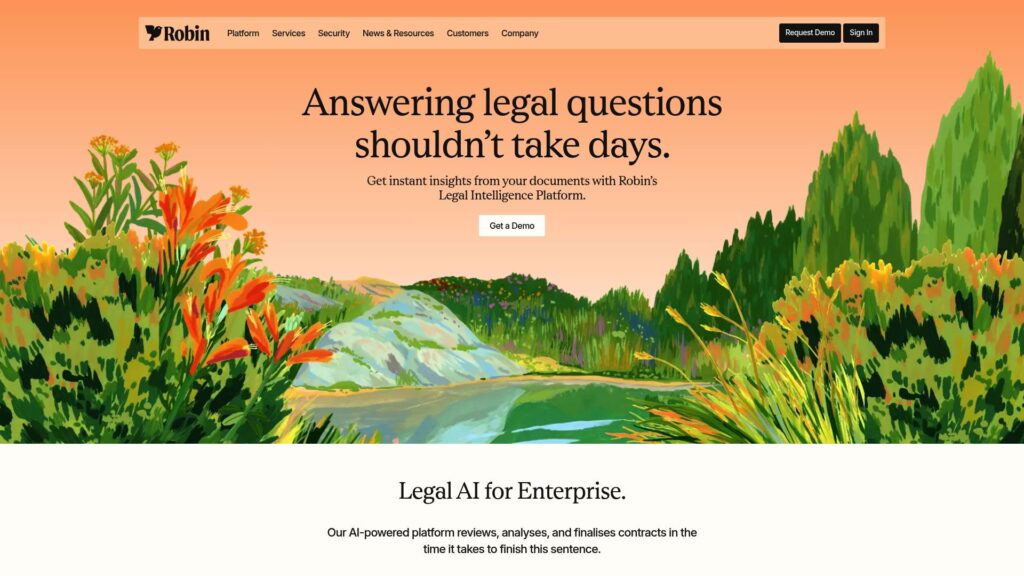
Robin AI is built around the idea of making contract review less manual. Its AI contract review software can analyze agreements, identify key terms, compare documents, work with contract precedents, and help generate or refine redlines. It also provides citations back to the underlying contract, so you can check where an answer or finding came from instead of relying on an unexplained AI response.
For teams reviewing a large number of contracts, Robin AI goes beyond a single-document review. It can search across contract repositories, extract structured information, track obligations such as renewal dates and deadlines, and analyze groups of related contracts. It also offers a Microsoft Word add-in with actions for tasks such as checking defined terms and creating structured contract tables.
Pricing:
Robin AI does not currently publish standard pricing for its software on its website. Instead, prospective customers are directed to book a demo and discuss the platform with the Robin AI team.
What Users Say:
G2 reviewers commonly mention Robin AI’s ease of use and time-saving benefits. Users say it helps with tasks such as finding clauses, summarizing contracts, and identifying potential risks. Some reviewers, however, mention that complex legal language can sometimes be misunderstood or that subtle issues may still require additional checking.
Robin AI also highlights a University of Cambridge case study where an LPA review that previously took around 10 hours was completed in about 5 minutes. This is a customer-reported result published by Robin AI, not an independent performance test, so it should be viewed as an example rather than a guaranteed result.
Pros:
AI contract review and redlining in the same workflow.
Can use existing contract precedents when reviewing agreements.
Provides pinpoint citations so users can verify AI-generated answers against the source document.
Supports Microsoft Word through its Word add-in.
Can search and analyze information across large contract repositories.
Includes tools for tracking obligations, renewals, and deadlines.
Cons:
Pricing is not publicly listed, so you need to contact Robin AI to understand the cost for your team.
The platform is positioned heavily toward business and legal teams rather than casual individual users.
Some features are designed around larger-scale contract workflows, so smaller teams may find that the platform offers more functionality than they immediately need.
Robin’s terms state that uploaded content and platform outputs may be processed for providing and improving its services, including training AI models, while its data-processing documentation describes additional controls and security measures. Teams handling highly confidential contracts should review the company’s current data and privacy terms before uploading documents.
2. Ivo
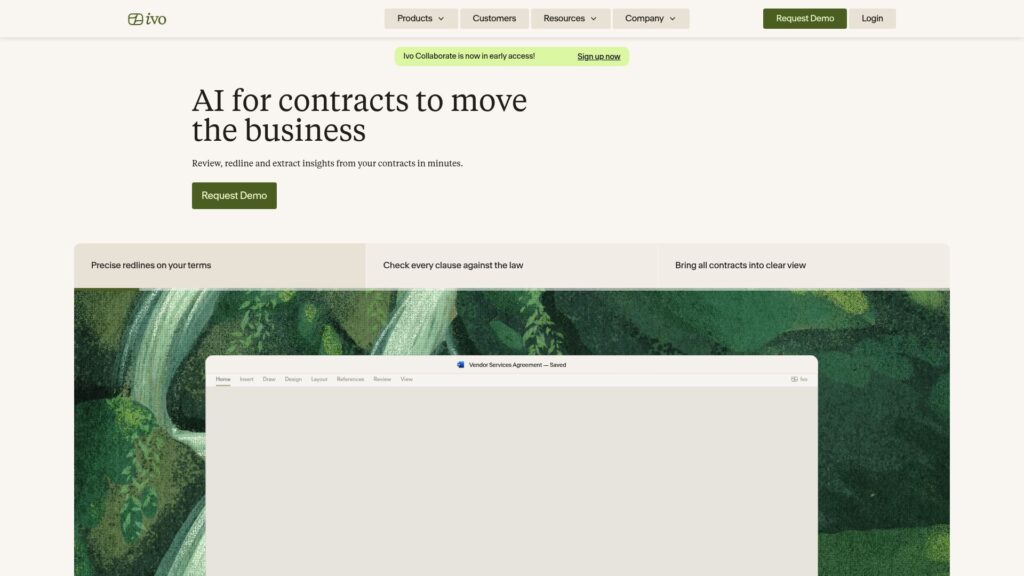
Ivo is an AI contract review software built for teams that want contract reviews to follow their own playbooks, past negotiations, and deal context. Its current Review 2.0 can review an entire agreement, identify where terms differ from a team’s preferred positions, and suggest redlines directly in Microsoft Word or Google Docs. It can also use historical contracts to benchmark the current agreement and consider factors such as contract value, urgency, governing law, and party role when making recommendations.
One useful part of Ivo is its Playbook Builder. If you do not already have a playbook, it can create one from your existing contracts, templates, and internal guidance. You can then review the positions before using them for AI contract review.
Pricing:
Ivo does not publish standard pricing on its website. Pricing is custom-quoted based on factors such as deployment scope, users, contract volume, and integrations, so you need to contact Ivo for a current quote.
What Users Say:
G2 reviewers generally praise Ivo for making contract review faster and easier. Users mention its Word integration, playbook support, intuitive interface, and ability to reduce repetitive review work. One reviewer said it helped reduce the time spent reviewing third-party contracts to a few minutes.
There are limitations too. Reviewers mention occasional AI inaccuracies and bugs, while one user noted that setting up playbooks can take some initial time.
Pros:
Reviews contracts against your own playbooks and previous agreements.
Works directly in Microsoft Word and Google Docs.
Can use deal context and historical contracts during review.
Generates AI-supported redlines and comments.
Playbook Builder can create playbooks from existing contracts.
Cons:
Pricing is not publicly listed.
Building and configuring playbooks can require some initial setup.
User reviews mention occasional AI inaccuracies and bugs.
3. SpotDraft
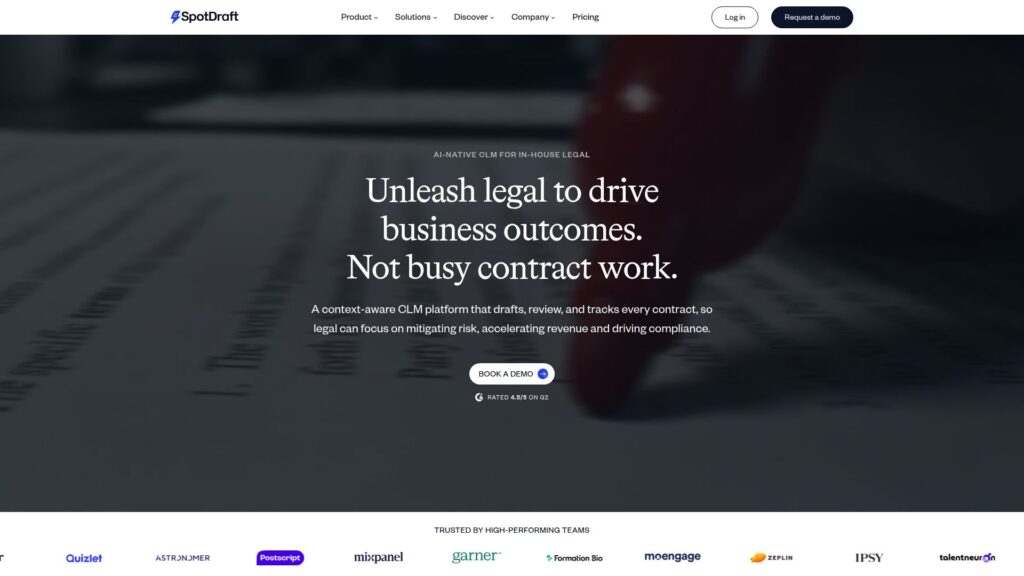
SpotDraft combines contract management with AI contract review through its VerifAI product. VerifAI can review a contract against your own guidelines or playbooks, identify terms that do not meet those guidelines, explain why, and suggest redlines or comments. It works within Microsoft Word, so you can review the agreement without constantly moving between different tools.
What makes SpotDraft different is that the contract review software sits inside a larger contract workflow. Teams can use SpotDraft for drafting, approvals, signatures, contract storage, and reporting, while VerifAI handles the AI-assisted review.
Pricing:
SpotDraft does not publish fixed pricing on its website. Plans are priced based on factors such as the number of users or the volume of contracts, and the company asks customers to request a personalized quote. SpotDraft says implementation, contract migration, and training are included, rather than charged separately.
What Users Says:
SpotDraft has 4.5/5 from 186 G2 reviews. Users commonly praise its easy-to-use interface, contract workflows, automation, and ability to keep contracts organized in one place. Some reviewers also mention that the platform can take time to adapt to when the interface changes, along with occasional smaller usability or feature issues.
Pros:
AI contract review through VerifAI with custom review guidelines and playbooks.
Can highlight where contract terms do not meet your defined guidelines.
Provides explanations and source references for review findings.
Generates suggested redlines and comments.
Works within Microsoft Word.
Cons:
- SpotDraft is a broader contract lifecycle platform, so it may offer more functionality than a team looking only for AI contract review software needs.
- VerifAI’s standalone Word add-in is being deprecated in favor of the newer VerifAI for Teams experience for SpotDraft CLM users.
- Some G2 reviewers mention UI changes and smaller usability issues.
4. Gravel Exec
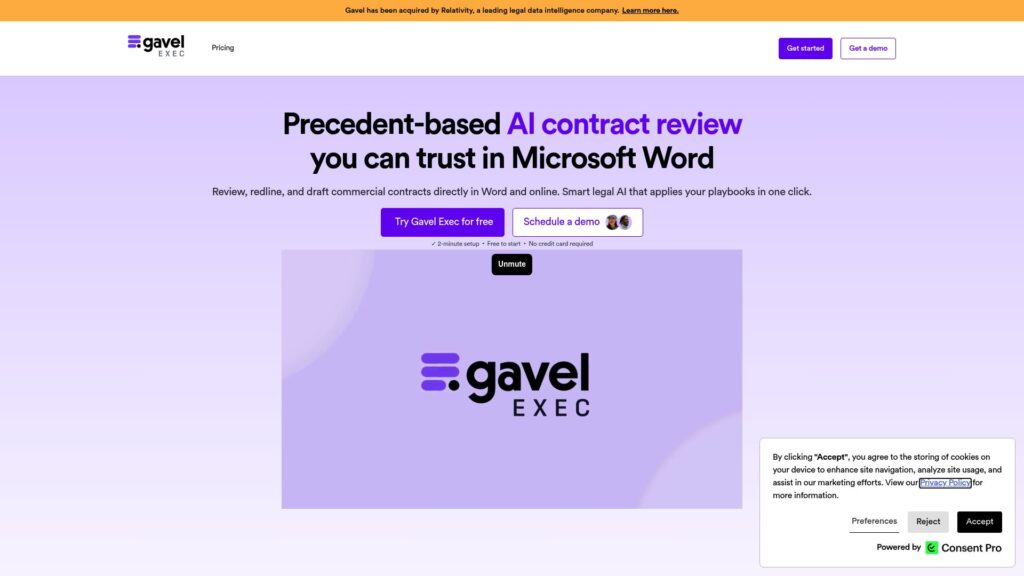
Gavel Exec is an AI contract review software built for transactional lawyers and legal teams. It reviews full commercial agreements in Microsoft Word and online, using your playbooks, previous contract language, and market standards to identify terms that may need attention. It can also create redlines, explain why an issue was flagged, and suggest clause changes without requiring you to move the contract into a separate workflow.
A useful part of Gavel Exec is its focus on precedent-based contract review. Instead of giving completely generic suggestions, it can apply your preferred positions and fallback language when reviewing agreements. It can also benchmark certain terms against market data and prioritize issues that may matter during negotiation.
Pricing:
Gavel Exec currently starts with 25 free queries per user, with no credit card required. The paid plan is $160 per user per month, or $1,740 per user when billed annually, and includes up to 1,000 completions per month. Team pricing is available for teams with 10 or more seats.
What Users Say:
Gavel’s website features feedback from legal professionals who use the platform for contract review and redlining. One customer, a principal at MIA Contract Lawyers, specifically highlights how the tool adapts to their negotiation and redlining approach. Gavel also publishes a 2026 customer case study in which legal counsel at a regulated financial services firm reported reducing contract review time by up to 60%. These are customer-reported experiences published by Gavel, rather than independent performance tests.
Pros:
Reviews and redlines full agreements rather than only individual clauses.
Works directly in Microsoft Word and online.
Can apply custom playbooks and previous contract positions.
Provides explanations for flagged issues.
Can benchmark contract language against market data.
Offers 25 free queries before requiring a paid plan.
Cons:
The $160/user/month price may be significant for smaller teams or individual users.
The platform is primarily designed around commercial and transactional contract work.
Some of its value depends on having useful playbooks, precedent, and review standards to apply.
5. LegalOn
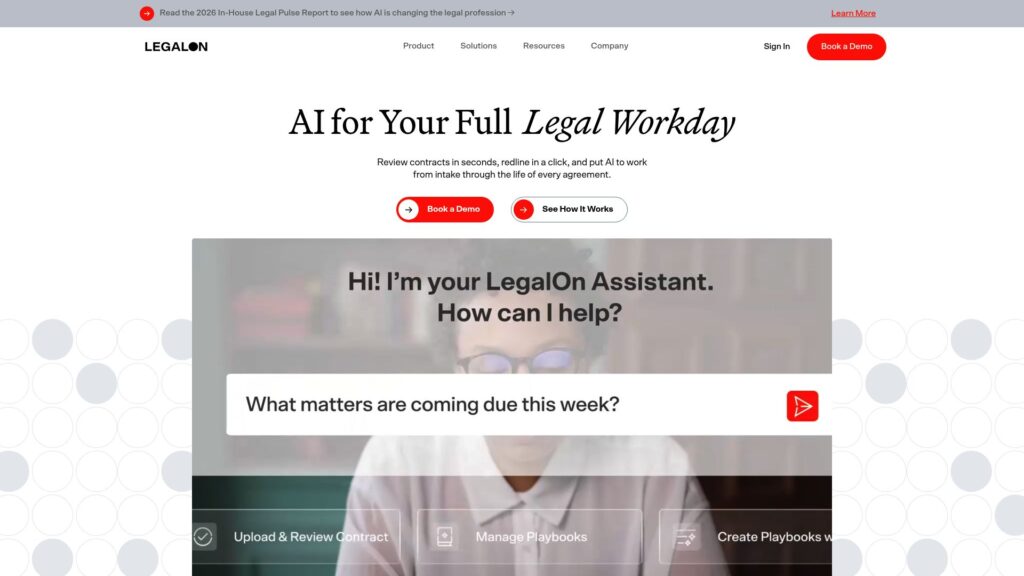
LegalOn is AI contract review software built specifically around contract review, risk identification, and redlining. It can review agreements against attorney-built playbooks, flag potential risks, rank issues by severity, and suggest changes. It also works through Microsoft Word, so the review process can stay close to the document rather than requiring a separate workflow.
One of its main strengths is the use of playbooks. LegalOn offers more than 50 pre-built playbooks for common agreements, while its higher-tier plans allow teams to create custom playbooks based on their own standards. That makes AI contract review less about generic suggestions and more about reviewing contracts against defined positions.
Pricing:
LegalOn does not publish a fixed price on its website. Instead, pricing is based on the team size and the capabilities required, with customers asked to request a quote. LegalOn also offers a free trial where users can test contract review, redlining, and its AI Assistant on their own contracts.
What Users Say:
G2 reviewers generally praise LegalOn for its ease of use, time savings, playbooks, and contract-review workflow. One reviewer said it helped their small legal team review contracts faster, while another highlighted the Word integration and support during playbook setup.
Users also point out some limitations. One reviewer wanted better support for reviewing multiple related documents together, while another said the platform could struggle with heavily customized or non-standard lease formats.
Pros:
AI-powered contract review and redlining.
50+ attorney-built playbooks for common agreements.
Custom playbooks available for teams.
Microsoft Word add-in and web access.
Risks can be ranked by severity.
Free trial available.
Cons:
Pricing is not publicly listed.
More advanced playbook and workflow features are available through higher-tier plans.
Some users report limitations when working with multiple related documents.
If you’re looking beyond contract-specific tasks, you may also want to explore AI legal assistant tools for lawyers that can help with legal research, document analysis, drafting, case-related questions, and other day-to-day legal work. These tools can be useful when your needs go beyond reviewing and redlining contracts.
Frequently Asked Questions (FAQs)
1. Can I trust AI contract review software not to miss an important clause?
AI contract review software can reduce the amount of manual searching, but lawyers should still verify important findings. Gavel Exec reviews entire agreements and flags missing provisions and non-standard clauses against legal precedent, market standards, and approved fallback positions. SpotDraft VerifAI checks contracts against defined guidelines and provides source references for each guideline. Ivo reviews every clause against your playbooks, historical contracts, and deal context. These features can make potential issues easier to identify and verify, but they do not remove the need for legal review.
2. Will I still have to read the entire contract myself?
AI contract review software is mainly designed to speed up the first-pass review rather than remove human judgment. Ivo reviews every word and clause while comparing terms against your team’s standards and previous agreements. Gavel Exec can review full agreements and generate structured redlines and comments across the document. SpotDraft VerifAI highlights whether individual guidelines are met and takes the reviewer to the relevant contract section. This allows lawyers to focus their attention on flagged issues instead of manually searching the entire agreement from the beginning.
3. Can AI contract review software follow my firm's playbook instead of giving generic advice?
Yes. Ivo can review contracts against your playbooks, historical contracts, and deal context, while also turning existing templates and contracts into working playbooks. Gavel Exec applies your playbooks, preferred positions, and fallback language directly during review and redlining. SpotDraft VerifAI lets teams create custom guidelines and playbooks and check contracts against them. LegalOn also provides pre-built playbooks and allows teams to create custom review standards.
4. Can I see why AI contract review software flagged something?
Yes, but the way this is presented differs by platform. SpotDraft VerifAI provides source references for each guideline and explains why a guideline was met or not met. Gavel Exec provides traceable explanations for its review and generates comments based on precedent, playbooks, and negotiation standards. Ivo can build playbooks from existing contracts with citations to the source language, helping teams trace review standards back to their agreements.
5. Can AI contract review software actually produce useful redlines?
Yes. Ivo generates targeted redlines based on your playbooks, negotiation history, and deal context and supports them directly in Microsoft Word and Google Docs. Gavel Exec can redline entire agreements in Microsoft Word using your precedent, playbooks, and fallback positions. SpotDraft VerifAI can suggest redlines and comments when contract language does not meet your guidelines, with the suggested changes available as track changes in Word. LegalOn also focuses on contract review and supports playbook-based review and revisions.
Conclusion
The right AI contract review software depends on how your legal team actually reviews and negotiates contracts. If you need source-backed contract analysis, Robin AI focuses on finding key terms, comparing documents, and supporting review with citations. Ivo is built around playbooks, precedents, and deal context, while SpotDraft combines AI contract review with a broader contract lifecycle workflow. Gavel Exec focuses on precedent-based review and redlining, and LegalOn provides ready-made and custom playbooks for contract review.
AI contract review software can make it easier to find risks, compare clauses, apply your preferred positions, and create redlines, but it should work as part of a lawyer’s review process rather than replace legal judgment. The most useful option is ultimately the one that fits your contracts, review standards, and existing workflow.

Harman Singh is the founder of Foundigy and a digital marketing professional building his career in SEO, content, and the technology space. He is passionate about discovering emerging products, understanding how people find them online, and creating content that makes complex digital topics easier to understand. His work combines his experience in SEO with his interest in startups, technology, and the evolving digital landscape.