Top 10 Product Hunt Alternatives to Launch and Promote Your Startup in 2026
You built the product. You launched it. Now comes the difficult part: getting people to actually discover it.
For many founders, Product Hunt is one of the first platforms that comes to mind. But a launch doesn’t always solve the bigger distribution problem. A product can get attention on launch day and then quickly lose visibility, while founders may still be left looking for ways to reach the right users, get useful feedback, and keep their product discoverable.
That doesn’t mean Product Hunt doesn’t work. It can be valuable for exposure, feedback, networking, and reaching people interested in new products. But it doesn’t have to be your only launch or discovery channel.
That’s where Product Hunt alternatives come in.
Whether you’re looking for a startup launch site, a software discovery platform, a founder community, or a place where your product can remain discoverable after launch, different platforms offer different advantages. We’ve looked at the most useful sites like Product Hunt to help you choose based on what you actually want from your launch—not simply which platform has the biggest name.
| Platform | Strength | Cost |
|---|---|---|
| Foundigy | SEO-optimized product discovery | Free + Paid |
| BetaList | Early adopter reach | Free + Paid |
| Indie Hackers | Founder community | Free |
| Startup Stash | Startup resources | Free |
| AlternativeTo | Software discovery | Free |
| Hacker News | Developer exposure | Free |
| SaaSHub | SaaS discovery | Free + Paid |
| Launching Next | Startup exposure | Free |
| PitchWall | Startup pitching | Free |
| Side Project Ideas | Side project discovery | Free |
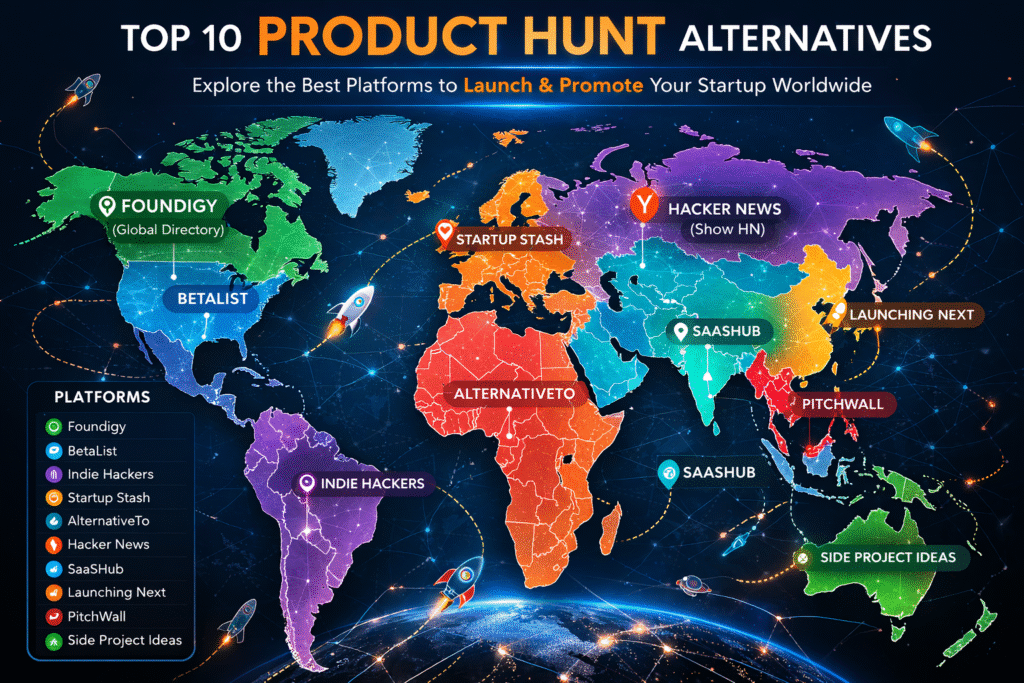
In this guide, we will explore the top 10 Product Hunt alternatives that can help you launch your startup, gain early traction, and improve online visibility
1. Foundigy: SEO-Optimised Product Discovery
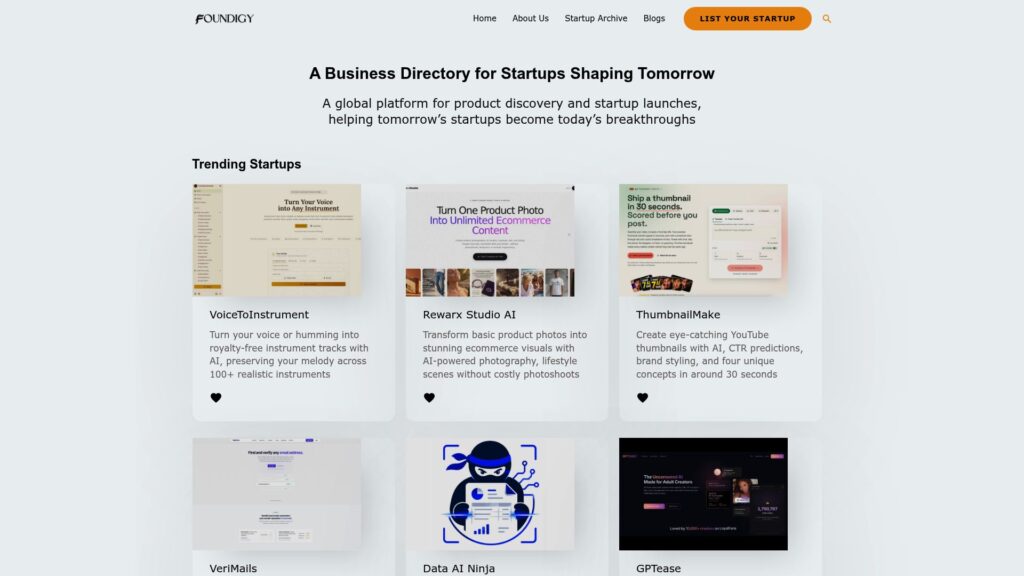
Foundigy is an SEO-optimized product discovery platform for founders who want more than a short launch-day spike. Each listing is built around relevant keywords and search intent, with the goal of creating long-term traffic and visibility through organic search.
Instead of relying mainly on upvotes, rankings, or launch-day attention, Foundigy focuses on making each product listing useful for people who are already searching for related tools and solutions. This makes it one of the Product Hunt alternatives worth considering if you’re looking for a startup launch site with a stronger focus on ongoing discovery.
What User Says:
One early example comes from FormMill, which shared its experience after launching on Foundigy and reported getting 50+ signups from the launch. Read the FormMill launch story
The idea of continuing product discovery beyond launch day has also sparked discussion among founders on Indie Hackers. In the discussion, one founder said their Product Hunt launch brought visibility and feedback, but traffic dropped quickly once the launch was over. Another founder described experiencing “decent traffic on launch day, then basically nothing after that” and said the conversations they had afterward were more valuable than the launch itself.
Other founders raised similar concerns about the 24-hour launch model, with one describing it as limiting and another saying that distribution cannot be a one-day event for a startup without an existing audience. Read the full Indie Hackers discussion
2. Betalist: Early Adopter Reach
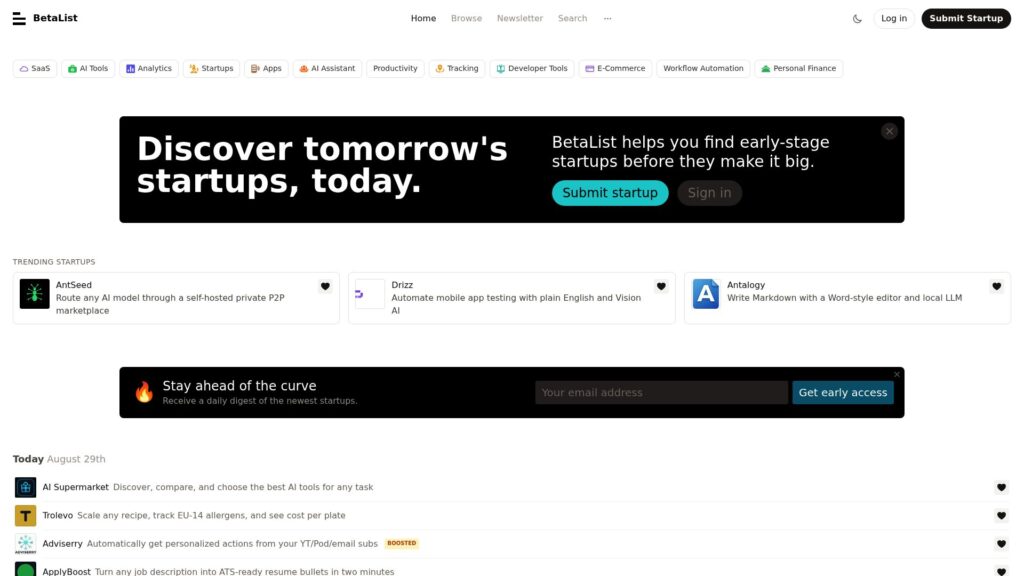
BetaList is a startup discovery platform focused on early-stage products and early adopters. It is particularly useful for founders who want to introduce a pre-launch or newly launched product to people actively interested in trying new startups and joining early-access programs.
If you’re comparing Product Hunt alternatives or looking for sites like Product Hunt to reach early users, BetaList can be a useful option. However, it is more focused on early-stage discovery than ongoing product promotion, so it may not be the best fit if you’re looking for continuous visibility after your initial feature.
What User Says:
BetaList has received mixed feedback from founders. One founder reviewing the platform on Product Hunt said they found it difficult to submit a product and questioned whether the platform generated meaningful users beyond the backlink. Read the founder review on Product Hunt
There are also more positive experiences. One SaaS founder shared that their BetaList feature generated 323 visitors over two months, including 53 signups in the first 10 days. “They noted that most of the traffic arrived during the first few days, but some visitors continued arriving weeks later.” If you’re exploring more options, check out our guide to Top 10 BetaList Alternatives in 2026
3. Indie Hackers: A Community-Driven Product Hunt ALternatives
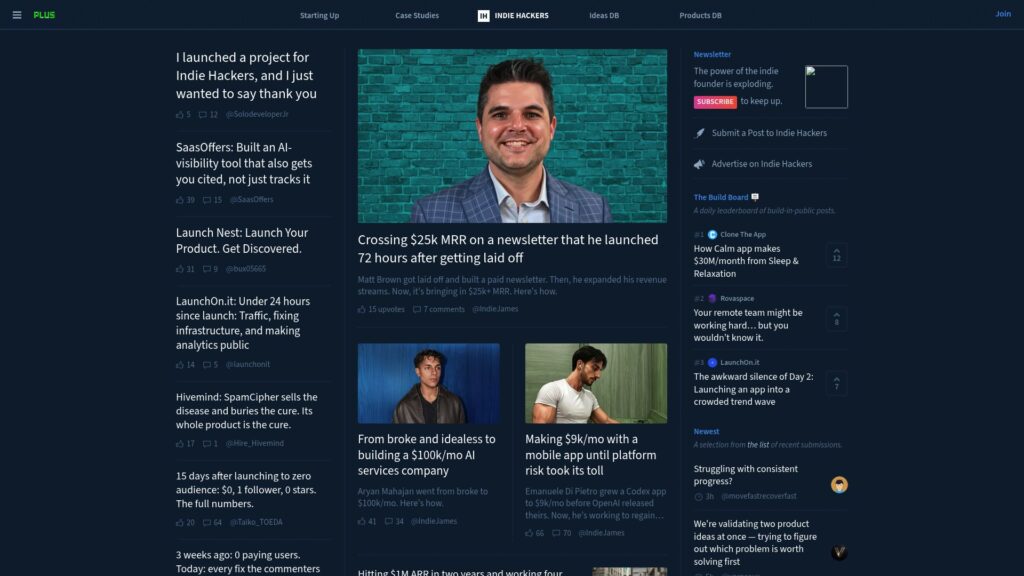
Indie Hackers is a community for founders and indie makers to share products, discuss ideas, exchange feedback, and learn from other builders. Unlike traditional startup launch sites, its strength is the ongoing conversation around building and growing a business.
If you’re comparing Product Hunt alternatives or looking for sites like Product Hunt where you can connect with other founders, Indie Hackers is worth considering. It can be especially useful for bootstrapped startups and indie products where honest feedback and founder-to-founder conversations matter as much as launch traffic.
What User Says:
Founders have shared mixed experiences with Indie Hackers. In a Reddit discussion, one founder described Indie Hackers as “great but slow” while discussing different platforms for launching a SaaS product. Read the discussion on Reddit
Another founder shared their launch experience on Indie Hackers and said that although the launch brought some visitors, the most valuable outcome was a conversation with another professional rather than the amount of traffic itself. Read the founder’s experience on Indie Hackers
4. Startup Stash: Startup Resources
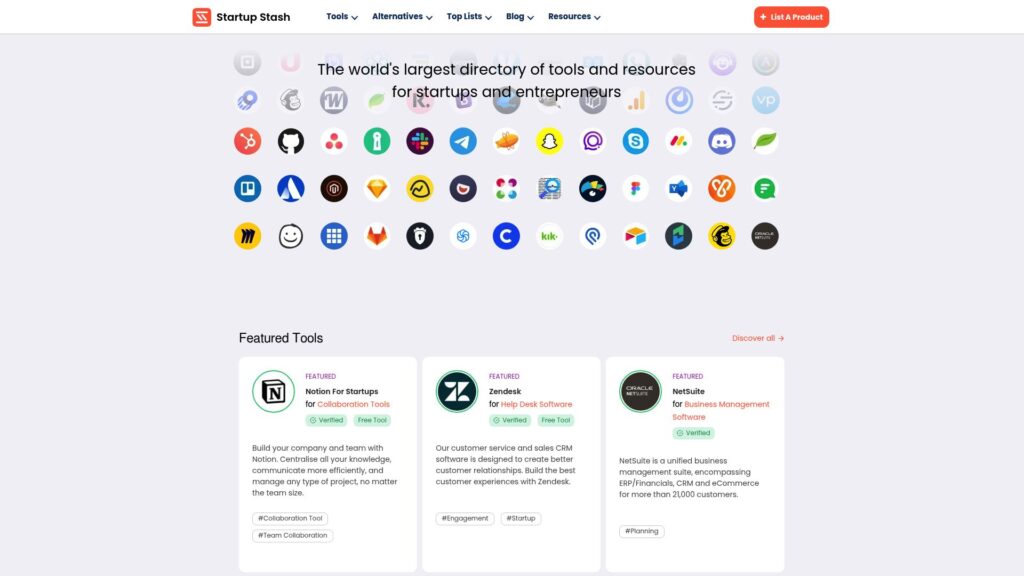
Startup Stash is a curated collection of tools, services, and resources for people building startups. It can be useful when you’re looking for software, services, or other resources to help with different parts of building a business.
What User Says:
Users have praised Startup Stash for its large collection of startup resources and the variety of tools available to explore. One Product Hunt reviewer described it as a useful place for discovering tools, alternatives, and resources for startups. Read the Startup Stash reviews on Product Hunt
There has also been some criticism. A reviewer mentioned the lack of a search function and outdated links or content. Another founder reported being asked for payment after submitting a product and said the cost was not clear beforehand. See the user reviews on Product Hunt
5. AlternativeTo: Software Directory
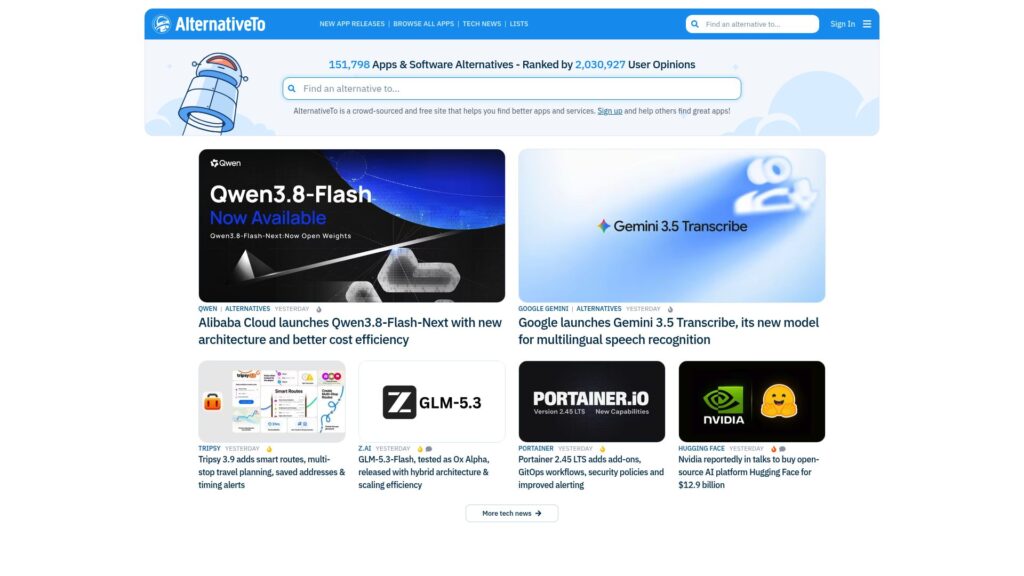
AlternativeTo is a crowdsourced software discovery platform where users can find alternatives to apps and services they already use. You can compare different options, filter them by platform or features, and see community reviews and recommendations.
If you’re exploring Product Hunt alternatives or sites like Product Hunt, AlternativeTo serves a different purpose. Instead of focusing mainly on new launches, it helps people who already know what type of software they need find other options.
What User Says:
Users have shared many positive experiences with AlternativeTo. One reviewer said they use it regularly to find software alternatives and appreciated its community-driven recommendations, reviews, and filters. Read the user reviews on AlternativeTo
Another user described it as an extensive resource for finding alternative software and specifically praised its filtering options and user reviews.
There is also criticism. Some users have complained about advertising, filters, and the platform becoming overcrowded with low-quality AI software. One recent reviewer also said that contributions can sometimes feel like they have little visible effect.
6. Hacker News (Show HN): Developer Exposure
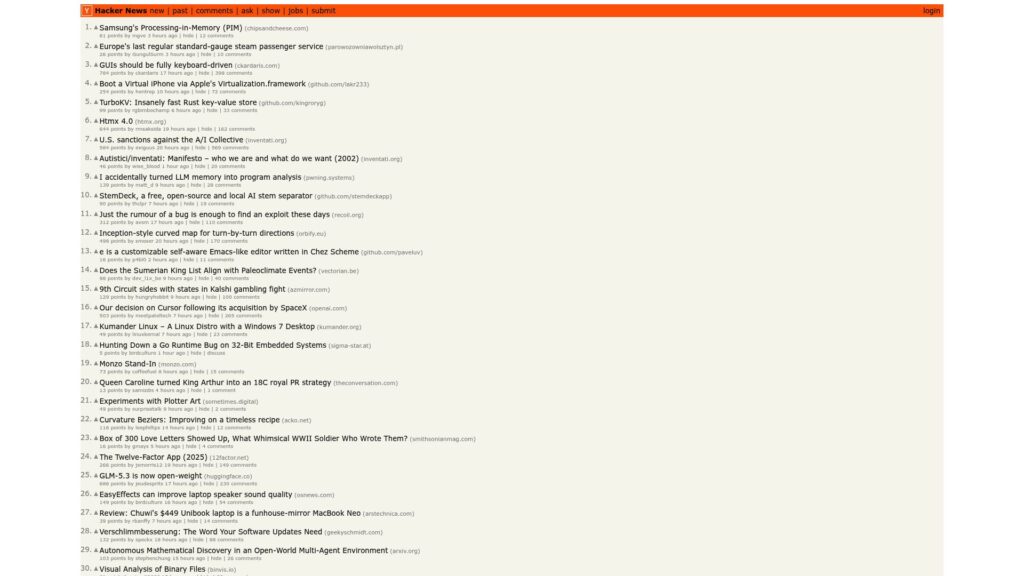
Hacker News is a technology-focused community where founders can share products through Show HN and get their work in front of developers, engineers, and other people interested in technology. It can be a strong option among Product Hunt alternatives if your product has a technical angle and you want direct feedback from a knowledgeable audience.
Unlike many startup launch sites, Hacker News is not built around promotional product listings. Show HN posts are expected to give people something they can actually try, and the community generally favors direct explanations and real technical details over marketing language.
What User Says:
Founders have reported very different experiences with Hacker News. One founder said that Hacker News and Reddit generated better reach and genuine engagement for their product than Product Hunt. Read the founder’s experience on Reddit
Another recent founder discussion described Hacker News as offering “huge organic tech reach and direct feedback,” while also noting that the audience can be highly critical and that posts can quickly get buried. Read the discussion on Reddit
A separate founder reported getting 12,000 visitors in two days, with Hacker News being the main source of the launch traffic. They also received more than 400 upvotes and 100 comments on their Show HN post. Read the full launch breakdown on Reddit
Other founders have also recommended Show HN when discussing alternatives to Product Hunt, particularly for technical products. Read the Product Hunt discussion
7. SaaSHub: SaaS Discovery
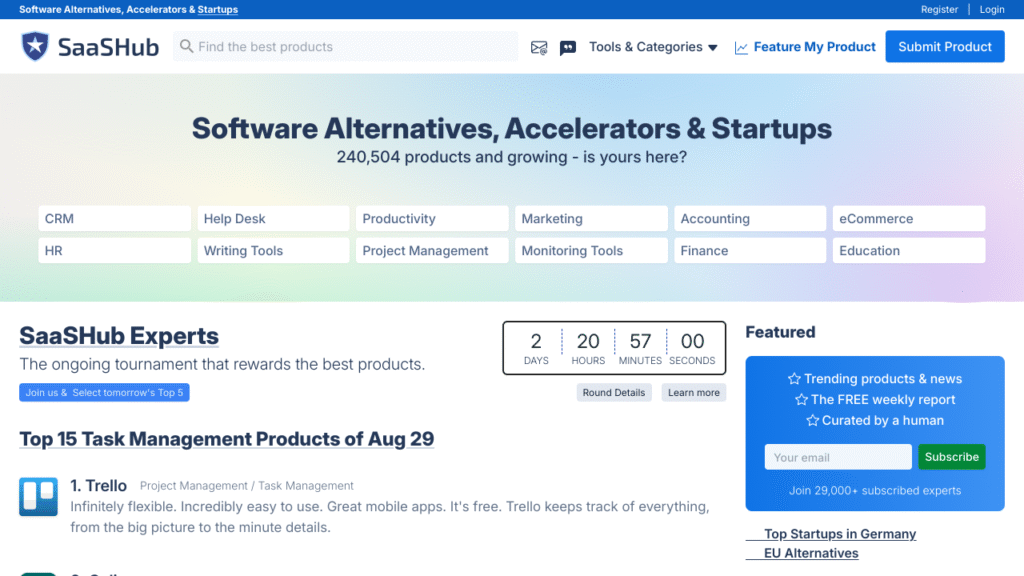
SaaSHub is a software discovery platform where people can find SaaS products, compare alternatives, and explore tools for business and productivity. For founders, it provides another place to showcase a software product to people who are already looking for specific tools or alternatives.
If you’re comparing Product Hunt alternatives or looking for sites like Product Hunt that focus more on software discovery than launch-day attention, SaaSHub is worth considering. It can be particularly relevant for SaaS products that fit into clear categories or compete with established tools.
What User Says
Users have shared positive experiences with SaaSHub. One reviewer said they had been using it for a long time and found it useful for discovering new tools and staying updated on software. Another user said SaaSHub helped them determine which tools were useful for their needs. Read the user reviews on SaaSHub
One founder also reviewed SaaSHub on Product Hunt and said it was “Really fast to approve listings”, adding that the platform provided a free list of recommended product directories. Read the Product Hunt review
A recent Reddit discussion also mentioned SaaSHub as one of the platforms people use to discover less popular SaaS products and niche alternatives rather than only the most well-known tools. Read the Reddit discussion
8. Launching Next: Startup Exposure
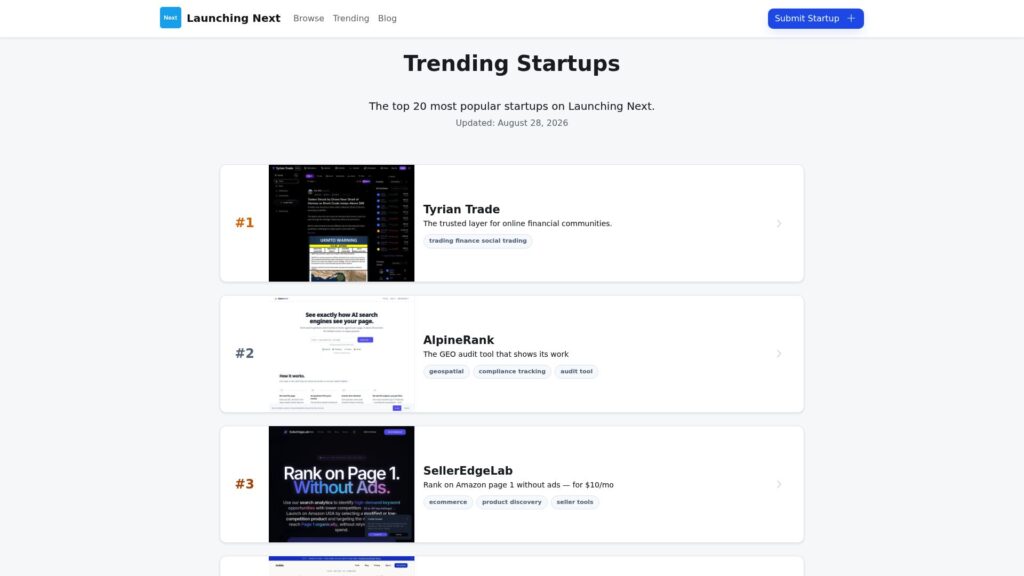
Launching Next is a startup directory where founders can showcase new startups and products to people looking for emerging companies and tools. Unlike launch platforms built around a single day of activity, it focuses more on having your startup listed and discoverable over time.
If you’re exploring Product Hunt alternatives or other startup launch sites, Launching Next can be useful when you want another place for people to discover your startup without depending entirely on launch-day attention.
What User Says:
There is less user feedback available for Launching Next than for some of the larger platforms in this list. One recent comparison describes it as a long-running startup directory with a permanent listing and a smaller audience focused largely on founders and investors. Read the comparison
Another comparison describes the platform as having a simple submission process and relatively fast approval, while noting that its audience and engagement are smaller than larger launch platforms. Read the review
Want to explore more options? Check out our guide to the 6 Best Launching Next Alternatives in 2026 for Startups
9. PitchWall: Startup Discovery
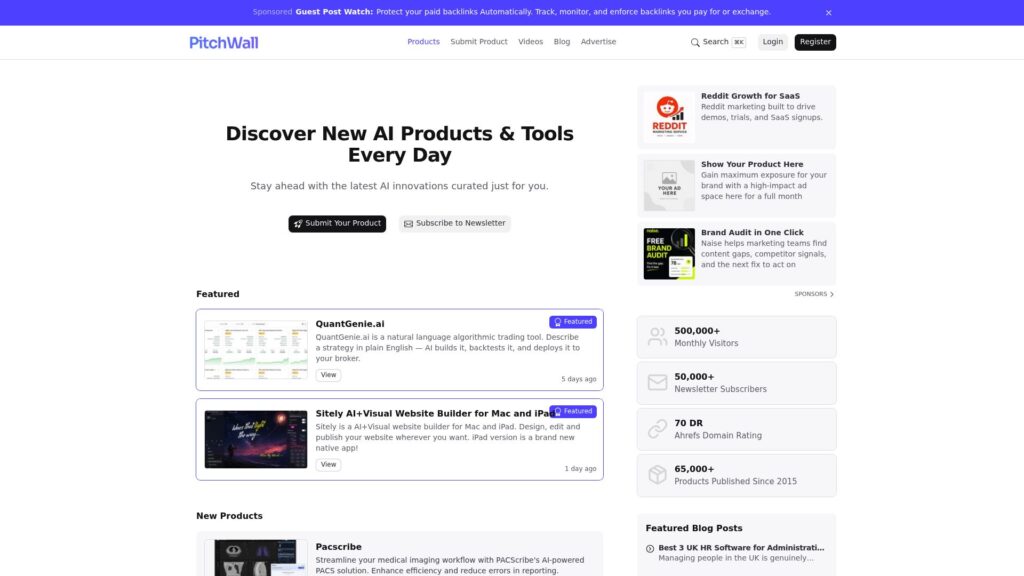
PitchWall is a product discovery platform focused on AI tools, SaaS products, and tech startups. Founders can submit their products for discovery, while users can browse new tools and products across different categories.
If you’re looking for Product Hunt alternatives that combine product discovery with startup exposure, PitchWall is an option worth checking. It offers free product listings as well as paid featured placements, so founders can choose between standard submission and faster visibility.
What User Says:
Founder feedback around PitchWall is limited, but there are some useful experiences available. One founder who submitted their product to several launch platforms mentioned PitchWall alongside BetaList and Launching Next while preparing for a Product Hunt launch. In the discussion, another founder recommended submitting to smaller platforms early because approvals can take time. Read the discussion on Reddit
PitchWall also has older Product Hunt feedback from founders who used the platform to pitch their products. One founder said they liked the concept and had already tried services discovered through the pitches, while another called it a useful tool for early founders. Read the Product Hunt discussion
10. Side Project Ideas: Side Project Discovery
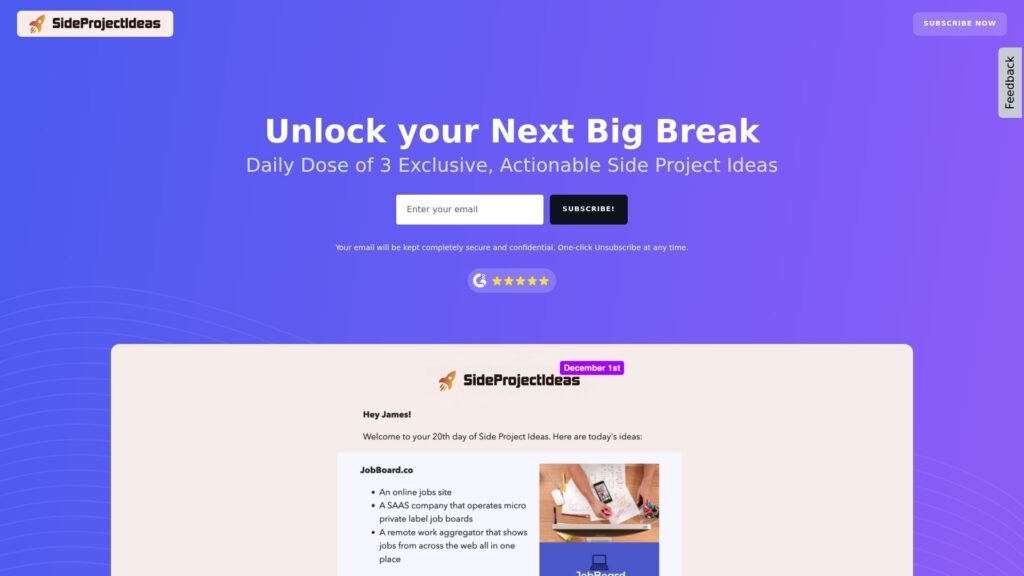
Side Project Ideas is aimed at indie makers and solo entrepreneurs looking for practical project ideas they can actually build. It provides daily ideas along with business concepts and brand inspiration, making it useful before you have a product to launch rather than only after you’ve built one.
If you’re exploring Product Hunt alternatives while still deciding what to build, it offers a different starting point. Instead of submitting an existing product for launch, you can use it to find inspiration, explore potential opportunities, and turn an idea into a side project.
What User Says:
One subscriber, Sam D., described the daily ideas as a “game-changer” for their entrepreneurial journey, saying they received three actionable startup concepts each morning along with market strategies and brand suggestions. Read the testimonial on Side Project Ideas
The platform also says its ideas are designed for solo entrepreneurs and focus on practical, scalable projects suitable for bootstrapped businesses. See how Side Project Ideas works
Frequently Asked Questions (FAQs)
1. Is Product Hunt still worth launching on in 2026?
It can be, especially if your audience includes founders, makers, and tech early adopters. But recent founder discussions show that people are questioning whether the preparation and launch-day effort consistently turns into long-term users. Some are now comparing Product Hunt with SEO, communities, forums, and direct outreach instead. Foundigy can work alongside Product Hunt rather than replacing it. Its focus is different: creating an SEO-optimized product listing designed to remain discoverable through search instead of depending entirely on launch-day attention.
2. Are there Product Hunt alternatives that keep your product visible for longer?
Yes. This is actually one of the clearest reasons founders are looking for alternatives. A recent founder specifically asked for platforms that could provide visibility beyond 24 hours, alongside SEO, backlinks, and active communities. Foundigy is built around that longer-term approach. Each product listing is created using relevant keywords and search intent, giving it the opportunity to attract organic visitors after the initial launch.
3. Does Product Hunt traffic actually convert into users?
Not always. Founders have reported mixed results, with some saying they received hundreds of visitors or upvotes while seeing relatively little lasting user growth. One recent discussion specifically asks whether Product Hunt visitors actually stick around and use the product. Foundigy doesn’t guarantee conversions either. The difference is that its listings are designed around search intent, so the goal is to reach people searching for a particular type of product or solution rather than relying only on people browsing a launch feed.
4. Are there Product Hunt alternatives that are better for SEO and backlinks?
Yes, although the SEO value varies significantly between platforms. This is one of the requirements founders are explicitly looking for when comparing alternatives: free submissions, SEO/backlinks, active communities, and visibility beyond the initial launch. Foundigy puts SEO at the center of its product discovery model. Listings are created around relevant keywords rather than simply publishing a generic product description, with the aim of building long-term search visibility.
5. What if my Product Hunt launch gets traffic but no customers?
That’s a real possibility. Traffic alone doesn’t mean you’ve reached the people who actually need your product. In a recent B2B discussion, a founder said Product Hunt traffic was strong but leaned heavily toward founders and tech enthusiasts rather than the actual business customers they were targeting. This is where search-focused discovery can offer another route. With Foundigy, the listing can target keywords connected to the product, its category, and the problem it solves, so you’re not relying entirely on people discovering it through a launch feed.
6. Is there a Product Hunt alternative for getting targeted users instead of just tech audiences?
There can be, but the right platform depends on who you’re trying to reach. Product Hunt has a strong technology and founder audience, which can be valuable if that’s your ideal customer. For narrower audiences, founders are increasingly discussing other channels where their target users actually spend time. Foundigy’s approach is based less on a single community and more on search-driven product discovery. The idea is simple: instead of waiting for someone to browse a launch page, create a listing around the searches your potential users are already making.
Conclusion
Product Hunt can still be useful, but a launch shouldn’t be the end of your product’s discovery journey.
If you’re looking for a Product Hunt alternatives, the right platform depends on what you’re trying to achieve: early users, feedback, community, backlinks, or long-term visibility. The important thing is not to rely on one launch channel alone.
Foundigy takes a different approach by focusing on SEO-optimized product discovery. Every listing is created around relevant keywords and search intent, giving your product another opportunity to be discovered through search long after launch day.
You can use it alongside Product Hunt, communities, social media, and other channels rather than choosing only one. Because getting your product launched is one thing. Getting people to keep discovering it is the bigger challenge.

Harman Singh is the founder of Foundigy and a digital marketing professional building his career in SEO, content, and the technology space. He is passionate about discovering emerging products, understanding how people find them online, and creating content that makes complex digital topics easier to understand. His work combines his experience in SEO with his interest in startups, technology, and the evolving digital landscape.