
5 Best Peerlist Alternatives for Product Discovery in 2026

Will you get real users, or just a spike of launch-day engagement? That’s the question most founders should be asking before choosing where to launch their product. Getting a few upvotes, comments, and clicks on launch day feels great, but what happens after the excitement dies down? Does the platform keep sending visitors, help your product get discovered later, or give you a valuable backlink that continues working for you? Uneed is one option, but depending on your goal, another launch platform may give you better results. We compared the most relevant Uneed alternatives based on traffic potential, launch process, backlinks, audience, and what each platform is actually best suited for.
Peerlist Alternatives Worth Considering in 2026
| Platform | Price | Dofollow Backlink? | Linking Domain DR | Launch Frequency |
|---|---|---|---|---|
| Foundigy | Free / Paid | Yes | 21 | Ongoing |
| PeerPush | Free / Paid | Yes | 74 | Ongoing |
| OpenHunts | Free / $9.90+ | Yes | 71 | Weekly |
| LaunchIgniter | Free / Paid | Yes | 74 | Weekly |
| ShinyLaunch | Free | Yes | 55 | Ongoing |
1. Foundigy
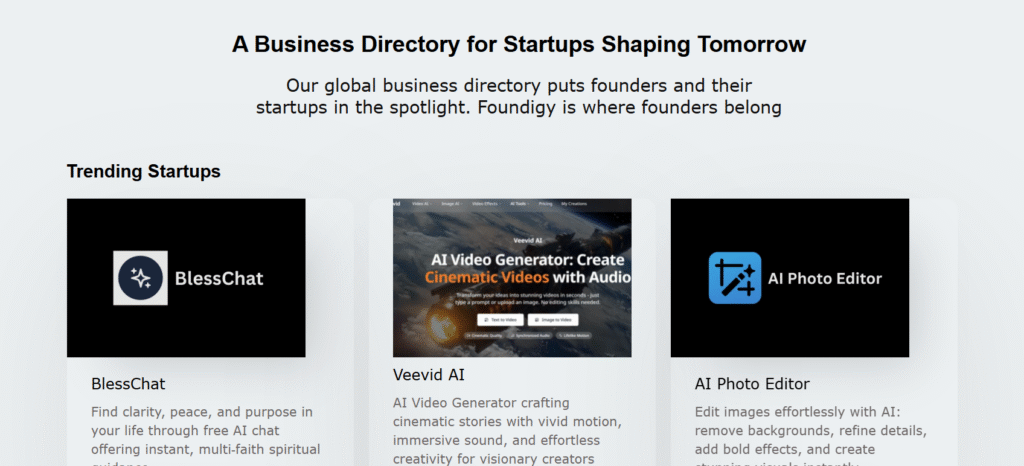
Foundigy is for founders who might be thinking, “I don’t just want launch-day attention. I want people to find my product when they’re searching for a tool like mine.”
Its listings are built around SEO and product discovery, with specific keywords related to the product and its offering, helping the listing appear in Google search results when users are searching for those tools or solutions.
If you’re comparing Peerlist alternatives, Foundigy is worth considering for longer-term discovery beyond launch day.
Foundigy vs. Peerlist: Quick Comparison
| Feature | Foundigy | Peerlist |
|---|---|---|
| Discovery model | SEO + product discovery | Community + launch |
| Visibility | Can continue beyond launch day | Primarily launch-focused |
| Search-focused listings | Yes | Limited |
| Launch frequency | Ongoing | Weekly |
2. PeerPush
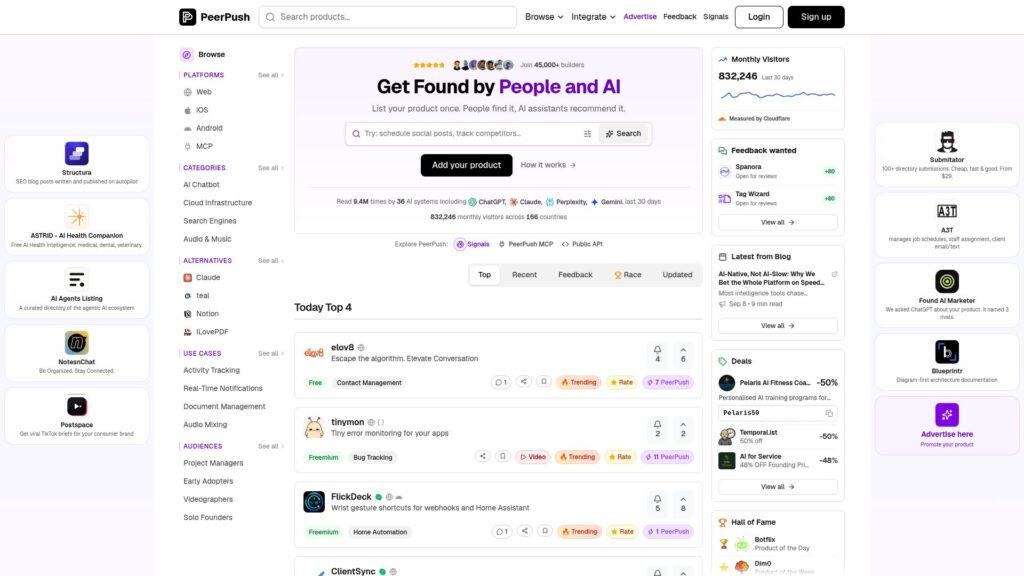
PeerPush takes a different approach to product discovery by making product information structured and accessible to both people and AI assistants. Products can include details such as use cases, audiences, pricing, and platforms, helping AI systems understand and discover them more easily.
It also goes beyond a one-time launch with product updates, community engagement, and ongoing discovery features, making it an interesting option among Peerlist alternatives.
PeerPush vs. Peerlist: Quick Comparison
| Feature | PeerPush | Peerlist |
|---|---|---|
| Discovery model | AI + product discovery | Community + launch |
| Visibility | Ongoing | Primarily launch-focused |
| Search-focused discovery | Yes | Limited |
| Launch frequency | Ongoing | Weekly |
3. OpenHunts
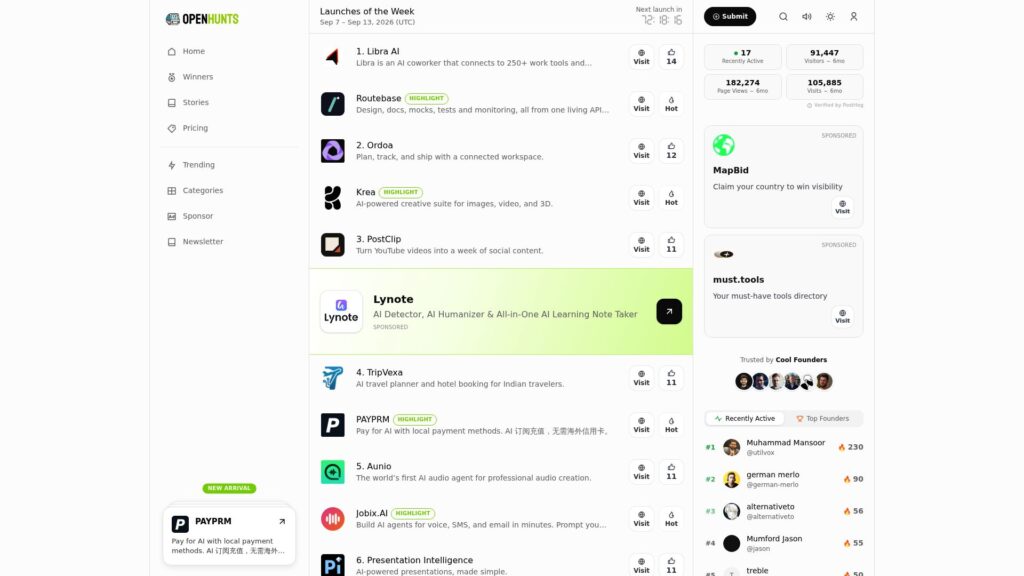
OpenHunts is a product launch and discovery platform focused on helping new products get noticed by makers and early adopters. It features weekly launches, giving founders a dedicated place to showcase what they’ve built and put it in front of people interested in discovering new products.
For founders exploring sites like Peerlist, OpenHunts offers a straightforward way to get their product in front of an active launch-focused audience.
OpenHunts vs. Peerlist: Quick Comparison
| Feature | OpenHunts | Peerlist Launchpad |
|---|---|---|
| Main focus | Product discovery | Project launches |
| Audience | Makers & early adopters | Professional community |
| Page purpose | Showcase products for discovery | Showcase projects during a launch |
| Discovery format | Weekly launch listings | Weekly launch window |
| Launch frequency | Weekly | Weekly |
4. LaunchIgniter
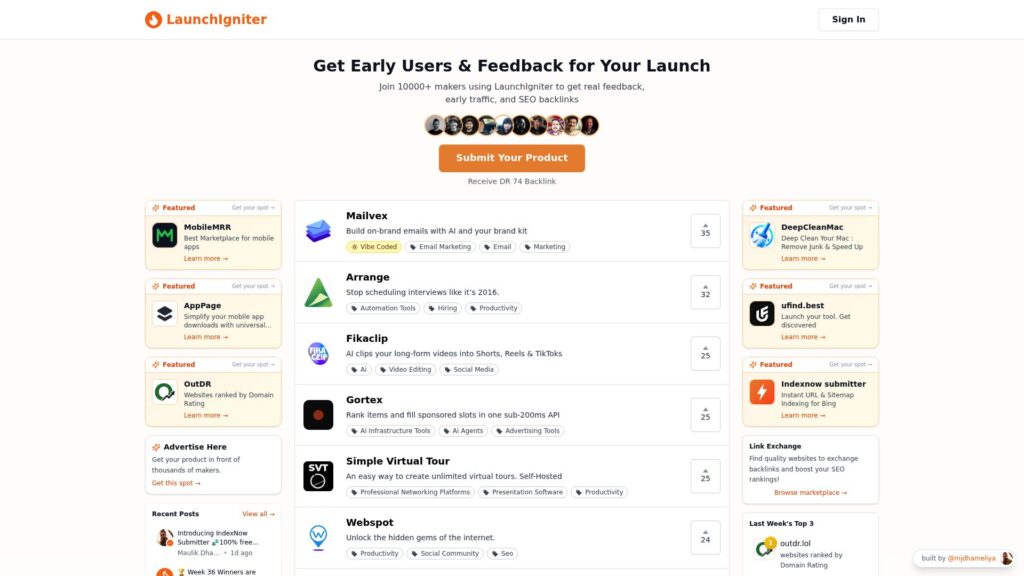
LaunchIgniter is built around one thing many founders struggle with after building a product: getting early users and useful feedback. The platform connects new products with makers and early adopters, giving founders a place to showcase their launch and collect feedback from people who are interested in trying new products.
If you’re comparing Peerlist alternatives, LaunchIgniter is worth considering when early traction and user feedback are higher priorities.
LaunchIgniter vs. Peerlist: Quick Comparison
| Feature | LaunchIgniter | Peerlist |
|---|---|---|
| Main focus | Early users & feedback | Project launches |
| Audience | Makers & early adopters | Professional community |
| Core value | Feedback and user interaction | Visibility and recognition |
| Launch format | Weekly launch environment | Weekly launch window |
| Launch frequency | Weekly | Weekly |
5. ShinyLaunch
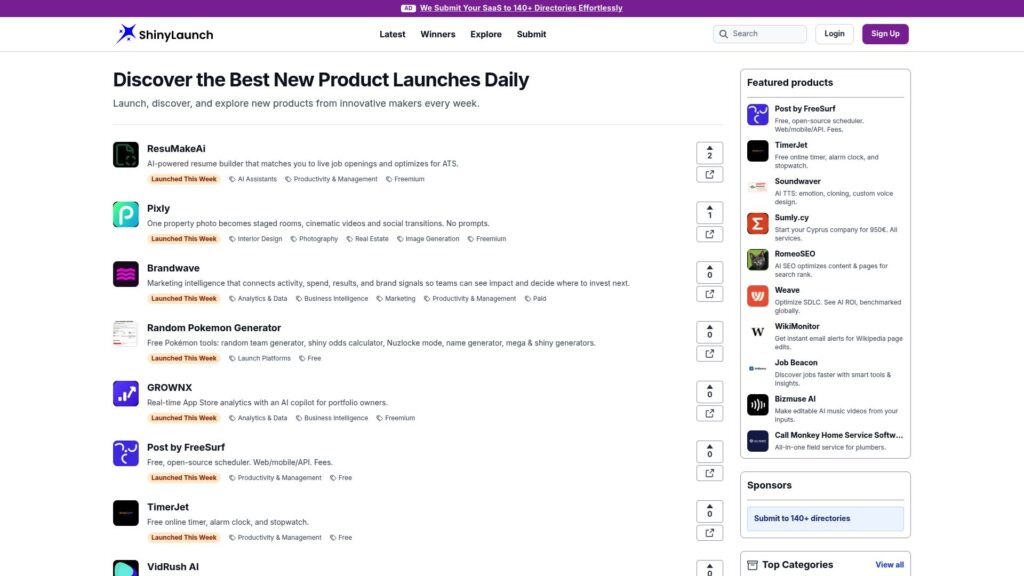
ShinyLaunch takes a community-driven approach to product launches, where new tools and apps can get attention through community voting and discovery. It gives founders a simple place to showcase what they’ve built while allowing users to explore and support products they find interesting.
For founders checking out Peerlist alternatives, ShinyLaunch is a good option if community attention and product discovery are the main goals.
Want to explore more options? Check out our guide to the 10 best product discovery platforms for indie hackers in 2026.
ShinyLaunch vs. Peerlist: Quick Comparison
| Feature | ShinyLaunch | Peerlist Launchpad |
|---|---|---|
| Main focus | Community voting & discovery | Project launches |
| Audience | Product enthusiasts & early adopters | Professional community |
| Core value | Community attention | Visibility & recognition |
| Discovery format | Community-driven product discovery | Weekly launch window |
| Launch frequency | Ongoing | Weekly |
Frequently Asked Questions (FAQs)
1. Is Peerlist Launchpad worth using?
Yes, Peerlist Launchpad can be useful for getting your product in front of the Peerlist community, collecting feedback, and gaining recognition. However, the results can vary depending on your product, launch timing, and how actively you engage with the community.
2. What are the best Peerlist alternatives?
Some good options include Foundigy, PeerPush, OpenHunts, LaunchIgniter, and ShinyLaunch. Each platform has a different focus, from SEO-driven product discovery to community launches and early user feedback.
3. Can Peerlist alternatives bring real users, not just views?
They can, but there are no guarantees. Results depend on the platform’s audience, your product, and how well your listing matches what users are looking for. Platforms focused on ongoing discovery may also provide opportunities to reach users after the initial launch.
4. What should I do if my product doesn't get traction on Peerlist?
Don’t rely on one launch platform. Try other Peerlist competitors, promote your product in relevant communities, improve your landing page, and use platforms where your target users are already looking for products like yours.
Conclusion
Peerlist Launchpad can be a useful way to introduce a product to a professional community, but it isn’t the only option. The right platform depends on what you’re trying to achieve — whether that’s product discovery, early users, feedback, or ongoing visibility.
From SEO-focused listings to community-driven launches, these Peerlist alternatives offer different ways to get your product in front of potential users. The best approach is to test the platforms that match your goals rather than relying on a single launch.

Harman Singh is the founder of Foundigy and a digital marketing professional building his career in SEO, content, and the technology space. He is passionate about discovering emerging products, understanding how people find them online, and creating content that makes complex digital topics easier to understand. His work combines his experience in SEO with his interest in startups, technology, and the evolving digital landscape.